Investing in Brunswick County, North Carolina: where motivated sellers show up in the court record
A county with a median age of 56.1, a lot of paid-off homes and 19 municipalities. Here is what that means for estates, divorces, foreclosures and tax sales.
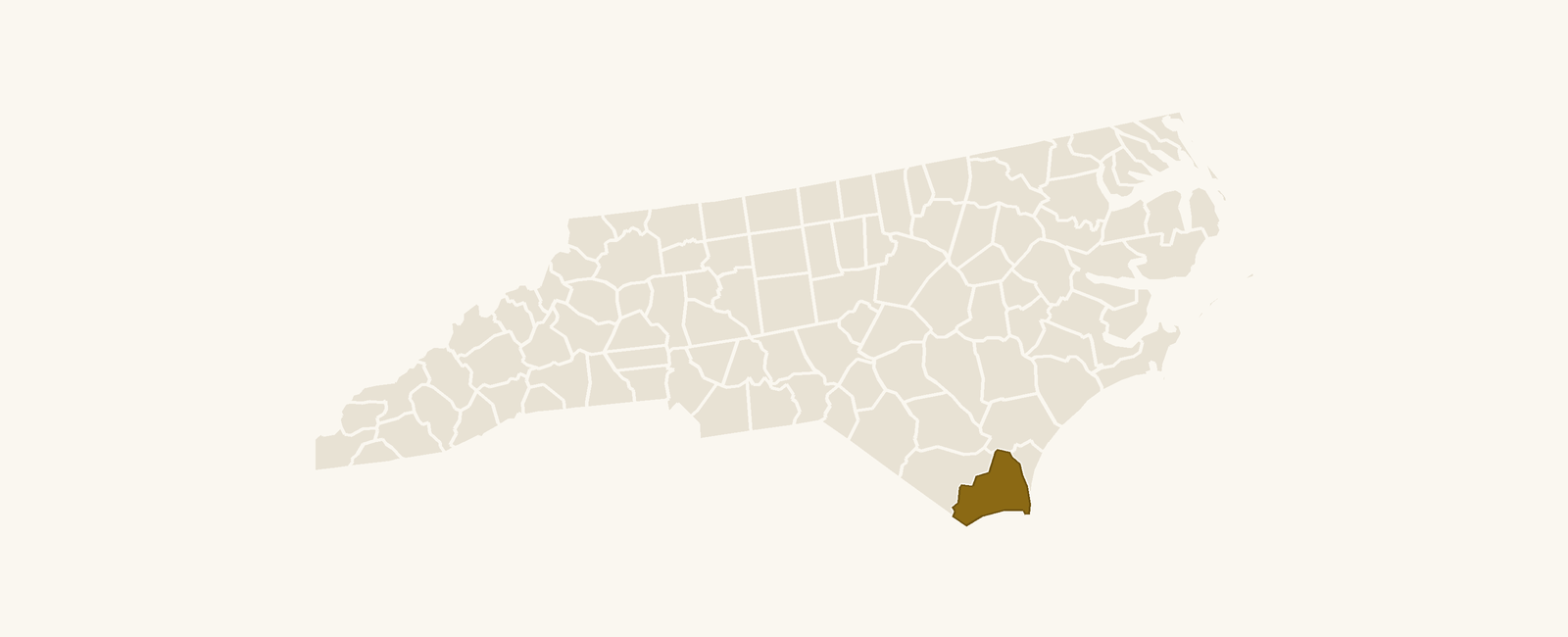
What the housing looks like for Brunswick County real estate investing
Brunswick County has 145,889 residents and 93,977 housing units. The median home value is $315K, and 84% of homes are owner-occupied. That is a market built around people who own where they live, not around renters.
Mostly single-family. About 69% of homes are single-family detached, against 61% nationally. Only 1% were built before 1940 (U.S.: 12%), so you are not likely to be pricing out century-old plumbing and knob-and-tube wiring. Repair budgets still matter, but the surprises tend to come from deferred maintenance rather than from ancient construction.
A spread-out county. Brunswick County has 19 municipalities, more than any other county in North Carolina. Leland is the largest by population, followed by St. James and Oak Island, per the 2022 figures in the county data book. Expect very different buyer pools and price points from one town to the next, so do not treat the county as one market.
The county seat is Bolivia, and the main employers in 2021 included the Brunswick County Board of Education, county government, Wal-Mart, Progress Energy and Novant Medical Center. Those are stable local paychecks, but a large part of the population is not working at all, which shapes who is selling and why.
Source: U.S. Census ACS 2023
Why an older, equity-rich county changes who sells
The median age here is 56.1, compared with 38.9 nationally. About 33% of residents are 65 or older, nearly double the U.S. figure of 17%. That one fact should shape how you spend your time.
Paid-off homes mean real equity. 42% of owner-occupied homes have no mortgage (U.S.: 39%). When one of those homes enters an estate or a divorce, there is often no lender pushing a deadline. The motivation comes from heirs who live elsewhere, co-owners who disagree, or a family that does not want to maintain a house.
What that means for your offers. A seller with plenty of equity cannot be moved by a lowball number and a closing date alone. What tends to help is certainty, flexibility on timing and a willingness to take the house as it sits. Those can be worth more to a tired executor than a few extra points of price.
The flip side is that foreclosure may be a smaller share of your opportunities here than in a market with thin equity. Plan to work estates, divorces and tax-delinquent properties alongside pre-foreclosure, not instead of it.
Vacancy and slowing permits: read demand carefully
31% of housing units in Brunswick County are vacant, against 10% nationally. Census vacancy counts can include seasonal and second homes, so a high figure does not automatically mean abandoned houses or soft demand. It does mean you should look closely at what a specific property is and who would buy or rent it.
New construction offers another signal. The county permitted 4,457 new housing units in 2025, a 27% drop from 2024. Fewer new units can mean less competition from builders for your resale or rental, but it can also reflect cooling demand. Treat it as one input, not a conclusion.
For buy-and-hold. HUD's Fair Market Rent figures for the Wilmington, NC area are $1,426 a month for a 2-bedroom and $1,983 for a 3-bedroom. Run those against the $315K median home value and your own insurance, tax and repair costs before you assume a rental works. Your numbers should come from the specific house, not the county median.

Which court filings tend to come before a sale here, and why
A filing is not a lead by itself. It is a sign that a property owner is in a situation that may end in a sale. Here is what each type usually means.
- Probate. An owner has died and an estate is being opened. With this many older owners, this is a central source of sales. Heirs often live out of state and want a clean, quick exit, though some want to keep the house.
- Divorce. A shared home may need to be sold or one spouse bought out. Equity is often high in a county with this many paid-off homes, but emotions run high too.
- Pre-foreclosure. A lender has started the process after missed payments. The owner may have months of options, including catching up, selling or a loan workout.
- Tax sale. Unpaid property taxes can lead the county to foreclose and sell at auction. Owners at this stage may be overwhelmed, absent or unaware.
- Partition. Co-owners, often heirs who inherited together, cannot agree, and one asks a court to force a sale or division.
These are public court records. Keystone Court Data delivers them with the owner and property already matched, county by county; you can see how it works for this county on the Brunswick County page.
How the process works in North Carolina, in plain terms
Mortgage foreclosure. North Carolina commonly uses a non-judicial power-of-sale process, where a hearing before the clerk of superior court is part of the path to a sale. After a foreclosure sale, there is an upset bid period: once the sale is reported to the clerk, others have 10 days to raise the bid, and each upset bid starts a new 10-day period. The rules are in Chapter 45 of the North Carolina General Statutes. An attorney can explain how those deadlines apply to a given case.
Probate. Estates in North Carolina are handled through the clerk of superior court in the county. Once appointed by the clerk, an executor named in a will, or an administrator, has the authority to act for the estate. Whether a sale needs extra court approval depends on the will and the situation, so a family attorney is the right person to answer that.
County tax foreclosure. Brunswick County sells properties with unpaid taxes at a Property Tax Foreclosure Auction. It is held on the steps of the courthouse in Bolivia, rain or shine, and you must attend in person. The winning bidder pays a 5% deposit right after the auction by cash, certified check, cashier's check or money order. Personal checks are not accepted.
Afterward comes a ten-day upset bid period, and each upset bid must beat the previous one by 5% or a set minimum, whichever is greater. Bidders are personally liable for their bids, and sales are final and as-is. If you fail to complete a winning bid, you forfeit the deposit, the property is resold, and you may be barred from future county foreclosure sales.
How to approach owners respectfully and legally
The people behind these filings are grieving, divorcing or behind on bills. Lead with honesty. Say who you are, that you buy houses, and that there is no pressure. Many owners will say no, and that is fine.
Letters and visits first. A short, plain letter is usually less jarring than a cold call, especially to a family that just lost someone. Do not imply you are connected to the court or a lender.
If you do phone. Check the National Do Not Call Registry and honor it, and follow North Carolina telemarketing rules and the federal rules the FTC enforces. Keep your own internal do-not-contact list and respect it right away. Call at reasonable hours and stop when asked.
Know your limits. You are not giving legal or tax advice. Encourage owners to talk to an attorney, especially in estate and partition situations where several people hold an interest. A seller who feels informed is more likely to close with you.
What to look for before you make an offer
The tax calendar. Brunswick County tax bills are due September 1 and can be paid without interest through January 5. Taxes become delinquent on January 6, with 2% interest added. The FY2025 rate is 34.20 cents per $100 of value, so build the carrying cost of taxes into your numbers.
The 2027 revaluation. The county reappraises every four years. The last was effective January 1, 2023, and the next is effective January 1, 2027. If you plan to hold, expect assessed values, and bills, to move. Appeals go first to an informal review and then to the Board of Equalization and Review, and must be received before the Board adjourns, which can be as early as April 1.
Title and who can sign. In an estate, confirm with the seller's attorney who has authority to sell. In divorce or partition, more than one person may need to agree. Have your own attorney review before you commit money.
The house itself. With little pre-1940 stock, focus on deferred maintenance and whether the home will rent or resell in its specific town. Check the numbers against HUD rents and your own repair costs, not against a county average.
Questions investors ask
Is Brunswick County a good place to invest in real estate?
It can be, if you match your strategy to the county. The population skews old and many homes are owned free and clear, which favors estate and divorce sales with equity. Vacancy is high and permits fell from 2024 to 2025, so verify demand for each property.
Can I buy a house at the Brunswick County tax foreclosure auction without attending?
No. The county holds auctions on the courthouse steps in Bolivia and bidders must attend in person. You pay a 5% deposit immediately by approved methods, and personal checks are not accepted.
What happens after I win a bid at the auction?
A ten-day upset bid period follows, during which someone else can bid higher by the required increase. You are personally liable for your bid and the sale is as-is. Failing to complete a winning bid costs you the deposit and may bar you from future county foreclosure sales.
Why does probate matter so much in Brunswick County?
About 33% of residents are 65 or older, and the median age is 56.1. That means more estates over time, often with heirs living elsewhere who want a simple sale. Treat families kindly and let them involve their attorney.
Can I call owners I find in court filings?
You can, but follow the National Do Not Call Registry and North Carolina and federal telemarketing rules. Many investors start with a respectful letter instead. Always stop contact when someone asks.
See Brunswick County leads for 7 days, free
Real court filings with the owner and property matched. No credit card.