Investing in Cumberland County, North Carolina: where motivated sellers show up in the court record
A young, military-linked county with a lot of renters and mostly newer single-family homes. Here is what that means for the owners who end up in probate, divorce, foreclosure or tax trouble.
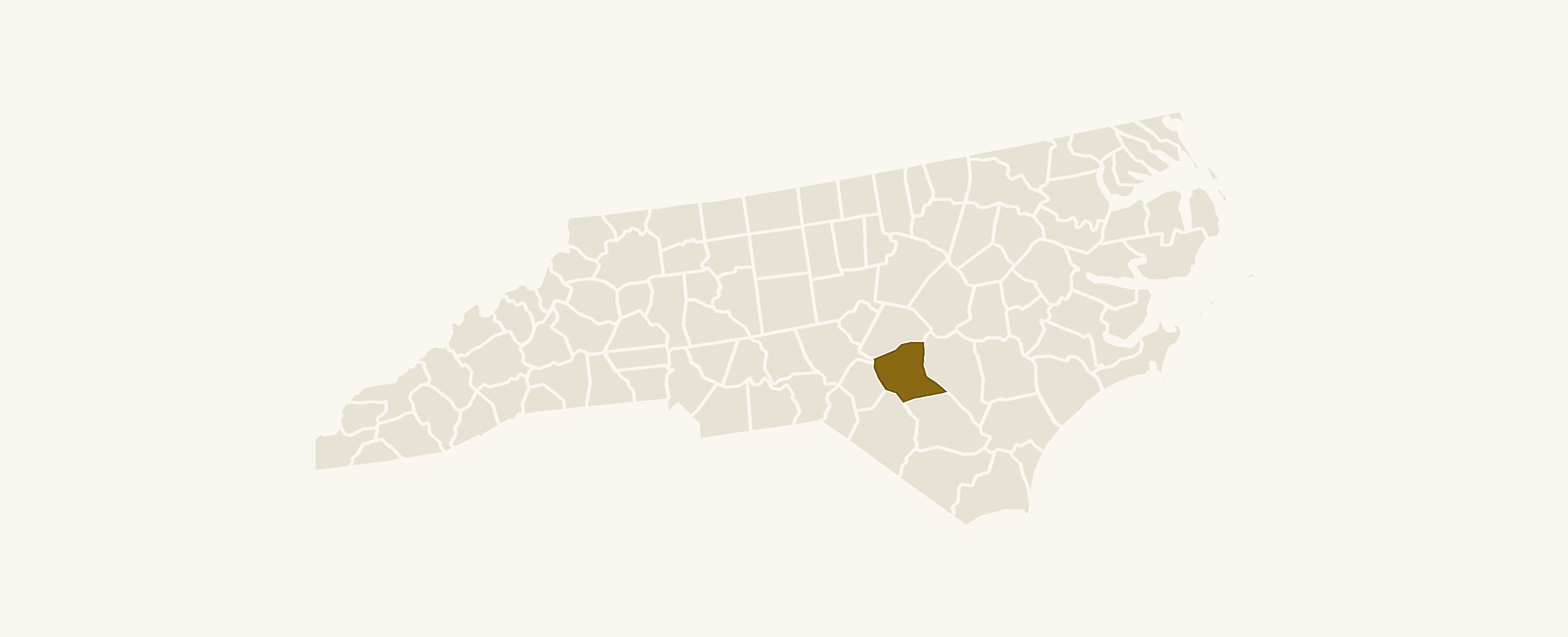
What Cumberland County real estate investing looks like
Cumberland County has 143,184 housing units for a population of 336,749, and only 54% of homes are owner-occupied. That is the first thing to absorb if you are looking at Cumberland County North Carolina real estate investing: close to half the housing is rented, so many of your future sellers will be landlords, not people living in the house.
The housing itself is fairly modern and simple. About 65% of homes are single-family detached (U.S.: 61%), and just 2% were built before 1940 (U.S.: 12%). The median home value is $184K, and 10% of units are vacant, the same as the U.S. figure.
The population is young. The median age is 31.8 against 38.9 nationally, and 13% of residents are 65 or older (U.S.: 17%). Fayetteville, the county seat, had almost 208,000 residents in the 2020 Census and is the sixth largest city in North Carolina, per the city.
The local economy explains much of this. The city says adjacent Fort Bragg adds about $4.5 billion a year to the regional economy. Other major employers include defense contractors, Cape Fear Valley Health System, the Cumberland County Public School System, and Goodyear Tire and Rubber Company. Sources: Census ACS and the City of Fayetteville.
Source: U.S. Census ACS 2023
What the rent and permit numbers say for buy-and-hold
HUD's Fair Market Rent for the Fayetteville area is $1,251 a month for a two-bedroom and $1,667 for a three-bedroom. Those are benchmarks, not promises, but they give you a starting point for testing whether a house can carry its costs after repairs. See HUD's Fair Market Rent data.
New supply is arriving. Cumberland County permitted 1,547 new housing units in 2025, up 26% from 2024 (Census Building Permits Survey). More new construction gives tenants and buyers alternatives, so an older rental you buy has to compete on condition and price.
Because most homes are newer single-family houses, a three-bedroom with a sound roof and HVAC is the product many renters here are shopping for. A cheap purchase that needs a full systems replacement can erase the advantage.
Which court filings come before a sale here, and why
Court records in Cumberland County are public, and several kinds of filings point to owners who may need to sell. What matters is what each one means for the person behind it.
- Pre-foreclosure: A lender has started the process after missed payments. The owner may still have time and options, so timing and tone matter.
- Probate: An owner has died and the estate is being opened. Heirs often live elsewhere and may not want to manage or keep the house.
- Divorce: A couple may need to split or sell a home. Pressure to settle can be high, and emotions higher.
- Tax sale: Unpaid property taxes can lead to collection and foreclosure by the county.
- Partition: Co-owners, often heirs, disagree and ask a court to divide or sell the property.
Equity looks different here. Only 33% of owner-occupied homes are owned free and clear (U.S.: 39%). In an estate or divorce, you will more often meet a house with a mortgage still attached, so the equity may be smaller than you assume and payoff amounts matter early.
Property taxes in Cumberland County become due each year on September 1 and must be paid by January 5 to avoid interest, penalties, or collection proceedings, according to the county's tax rates page. For owners who are struggling, that calendar creates a natural pressure point at the start of each year. The county's tax foreclosure sales page says the sales are run by an outside attorney for the Tax Administration Office and directs questions to that office, so do not build your plan around tax sales alone.

How the process works in North Carolina, in plain terms
Foreclosure is generally not run through a full lawsuit. In North Carolina, most home loans use a deed of trust, and lenders typically foreclose under a power of sale, with a hearing before the clerk of superior court. After a sale, there is an upset bid period when others can raise the bid: once the sale is reported to the clerk, others have 10 days to file an upset bid, and each upset bid starts a new 10-day period. The rules are in Chapter 45 of the North Carolina General Statutes.
Probate runs through the clerk of superior court. The clerk oversees estates, and a personal representative (an executor if there is a will) manages the estate. In North Carolina the heirs hold title to the house, but the representative can take possession of it or sell it when that is in the best interest of administering the estate (G.S. 28A-13-3, 28A-15-1, 28A-15-2). The representative may need proper authority before selling, and some estates have more than one heir who must agree. Never assume one family member can sign for everyone.
Divorce, partition and tax matters each have their own rules and sequence. A divorce may leave a home to be sold or bought out under a court order or agreement. A partition can end in a court-supervised sale. If you are unsure whether someone can legally sell, stop and ask a real estate attorney before you sign anything.
How to approach owners respectfully and legally
Most people on the other end of these filings are grieving, stressed or embarrassed. A short, honest note or call that says who you are and that you buy houses, with no pressure and no invented deadline, goes a long way. Offer to answer questions and let them say no.
Follow the calling rules. If you phone owners, respect the National Do Not Call Registry and North Carolina's telemarketing rules, and keep your own do-not-contact list. The FTC explains the federal rules in its Telemarketing Sales Rule guidance. When in doubt, a letter is lower risk than a cold call.
Be straight about what you are. Say you are an investor, not an agent working for them. Encourage heirs and divorcing spouses to talk with an attorney or tax adviser. Deals that survive that conversation are the deals that close and don't come back to haunt you.
What to look for before you make an offer
Start with who can sign. For an estate, confirm that the person selling has authority. For a divorce or partition, find out whether a court order or all co-owners must approve. Have a title company and attorney confirm this before you commit money.
Next, work out the real equity. With fewer owners mortgage-free, expect a payoff, possibly a second lien or back taxes, and build those into your number. Then look at the house: with few pre-1940 homes, the big costs are more likely roof, HVAC, water damage or rental wear than very old wiring or plumbing.
Test the exit. If you plan to rent, compare your numbers against the $1,251 and $1,667 HUD benchmarks. If you plan to resell, remember that new construction is adding supply. They are public records, and Keystone Court Data delivers them with the owner and property already matched so you can spend your time on conversations rather than paperwork.
Questions investors ask
Is foreclosure in North Carolina handled by a judge?
Most North Carolina foreclosures on deeds of trust go through a power-of-sale process with a hearing before the clerk of superior court, not a full lawsuit. By statute, notice of the hearing must be served at least 10 days before it, and once the sale is reported to the clerk, others have 10 days to file an upset bid. An attorney can explain the steps and deadlines in a given case.
Who handles probate in Cumberland County?
Estates are overseen by the clerk of superior court. The heirs hold title to the house, and the personal representative, or executor if there is a will, can sell it under a will's power of sale or, to pay the estate's debts, through a special proceeding before the clerk (G.S. 28A-15-1, 28A-15-2). Make sure whoever is selling has the authority before you make an offer.
Does Fort Bragg make Cumberland County a good rental market?
The city says Fort Bragg adds about $4.5 billion a year to the regional economy, which supports local housing demand. HUD's Fair Market Rent is $1,251 for a two-bedroom and $1,667 for a three-bedroom in the Fayetteville area. Run your own numbers on each property, since rents and condition vary.
When are property taxes due in Cumberland County?
Taxes are due each year on September 1 and must be paid by January 5 to avoid interest, penalties, or collection proceedings, per the county's tax rates page. Owners who fall behind may face collection steps after that date.
Can I call homeowners I find through court filings?
You can, but you must follow the National Do Not Call Registry and North Carolina's telemarketing rules. Be honest about who you are, keep it low pressure, and stop if asked. Many investors start with a respectful letter instead.
See Cumberland County leads for 7 days, free
Real court filings with the owner and property matched. No credit card.