Investing in Durham County, North Carolina: where motivated sellers show up in the court record
Durham County owners carry more mortgage debt than the national average, the housing stock is newer, and rents are high. Here is what that means for finding and treating motivated sellers.
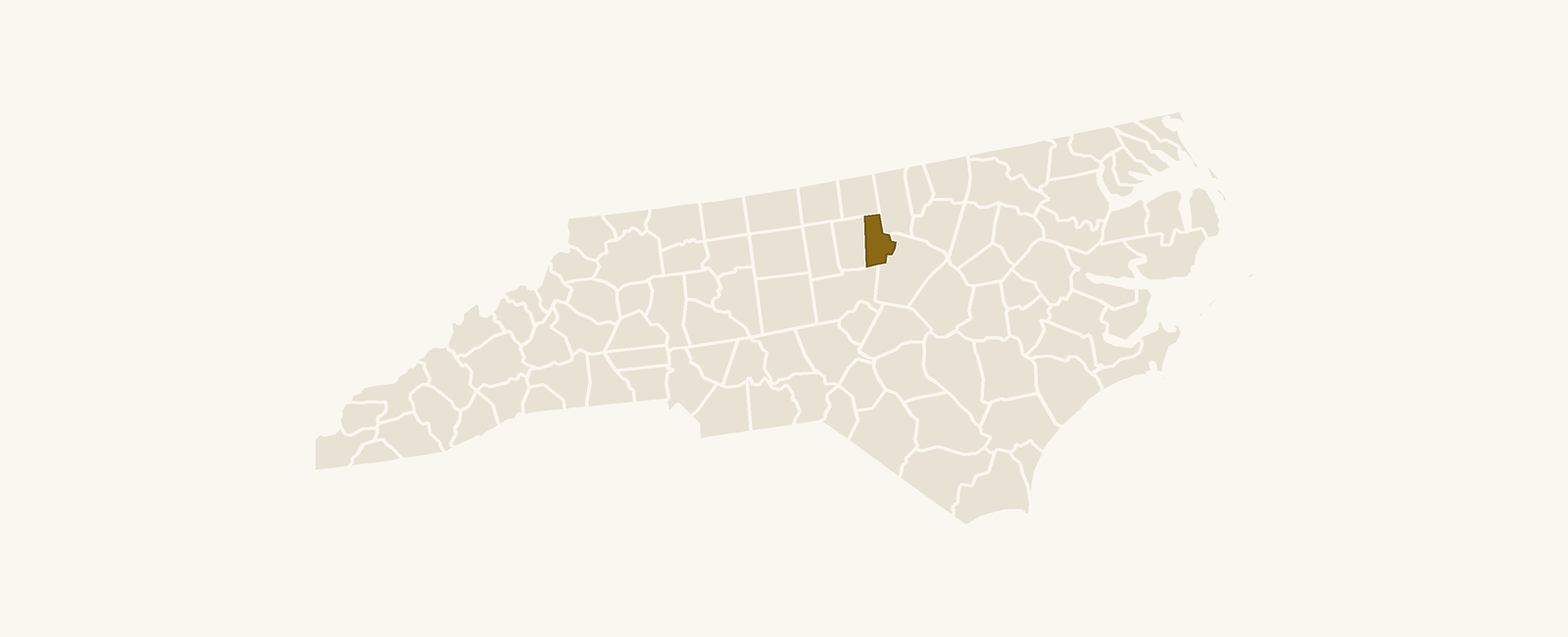
What Durham County's housing looks like for investors
Only 29% of owner-occupied homes in Durham County are owned free and clear, compared with 39% nationally. For Durham County North Carolina real estate investing, that is the number to keep in mind first. Many owners still carry a mortgage, so a sale in a hard situation often has less equity cushion than you might see in an older, slower-moving market.
The county has about 329,405 residents and 149,150 housing units. Of the homes, 55% are owner-occupied, and 55% are single-family detached (U.S.: 61%). So a good share of the market is attached housing, apartments and rentals, which changes what a typical deal looks like.
Demand looks steady. Vacancy is 7% against 10% nationally. The median age is 35.8 (U.S.: 38.9), and residents aged 65 or older are 14% of the population (U.S.: 17%). The median home value is $352K.
The housing stock is newer. Just 5% of homes were built before 1940 (U.S.: 12%), so you will meet fewer century-old houses with surprise repairs. New construction is active too: 4,772 units were permitted in 2025, a change of +64% from 2024. That is competition for your finished product if you flip, and a reason to price carefully.
Rents support buy-and-hold math. HUD Fair Market Rent in the Durham-Chapel Hill area is $1,711 a month for a 2-bedroom and $2,117 for a 3-bedroom. The area economy is diversified, with Duke University, Cisco Systems, IBM Corporation, Fidelity and the Veterans Administration among its largest employers, plus strengths in biotechnology, life sciences, financial technology and information technologies.
Source: U.S. Census ACS 2023
Which court filings come before a sale in Durham County
A court filing is often the first public sign that an owner may need to sell. Each type tells you something different about the owner's situation and timeline.
- Pre-foreclosure: a lender has begun the legal process after missed mortgage payments. The owner may want a way out before a sale is held.
- Probate: an owner has died and the estate is being opened. Heirs may live elsewhere and may not want to keep or manage the house.
- Divorce: Durham County has a Family Court office on the 6th floor of the courthouse that handles divorce filings and child custody and support (non-DSS). A shared home often has to be sold or bought out.
- Tax sale: unpaid property taxes lead to a foreclosure by attorneys assigned by the Tax Collector.
- Partition: co-owners, often heirs, cannot agree about a property, and one asks the court to force a resolution.
Because only 29% of owners here are mortgage-free, expect pre-foreclosure and divorce situations to come with a lender payoff. In estates, equity varies from house to house. Do not assume any of these filings means a deal. They are a reason to start an honest conversation.
These records are public. If you want them already matched to the owner and property, Keystone Court Data delivers Durham County leads in that form.
How the process works in North Carolina, in plain terms
North Carolina mortgage foreclosures generally run through a power-of-sale process that is overseen by the Clerk of Superior Court, rather than a full lawsuit in most cases. After a sale, the law allows a window for higher bids to come in: once the sale is reported to the clerk, others have 10 days to file an upset bid, and each upset bid starts a new 10-day period. Notice of the hearing must be served at least 10 days before it, and a North Carolina attorney can explain how those deadlines apply to a given case.
Tax foreclosures follow their own path. In Durham County, delinquent-tax foreclosures are handled by private attorneys assigned by the Tax Collector. Sales are held on the second Tuesday of every month at 12:00pm, run by a court-appointed Commissioner. The high bidder puts up a 10% deposit in cash or by certified check with the attorney.
A winning bidder may temporarily leave the deposit by personal check, but it must be replaced with cash or certified funds within two hours. Properties are sold as-is. Redemption by the owner is possible even after the sale, as long as the court has not yet confirmed it.
Estates go through the Clerk. Probate in North Carolina is handled by the Clerk of Superior Court. An executor or administrator usually needs authority from the court before selling estate property, and the exact powers depend on the will and the situation. An attorney can confirm what a particular representative can sign.
Know the tax calendar. Tax bills are usually mailed in August, and taxpayers have until January 5 of the following year to pay without penalty. Durham County's most recent reappraisal was effective January 1, 2025, and state law requires reappraisal at least every eight years. Owners who feel stretched by a new valuation may be more open to talking, and some may appeal to the Board of Equalization and Review.

Durham County neighborhoods of opportunity: reading the local economy
Durham County's tax districts include the City of Durham, Morrisville, Raleigh and Chapel Hill, among others, and the county seat is Durham. That spread means your buyers and renters come from several directions, including university, hospital, research and technology employers.
Think about your exit before you think about your offer. With rents at $1,711 for a 2-bedroom and $2,117 for a 3-bedroom under HUD's figures, a rental exit can make sense for a home bought at a fair price. A resale exit has to compete with the large number of new units now permitted.
The county's young median age and 55% owner-occupancy suggest a market with many renters and many first-time owners. Match the finished product to that reality instead of assuming every buyer wants a large single-family home.
How to approach Durham County owners respectfully and legally
The people behind these filings are often dealing with a death, a divorce or a debt. Lead with courtesy. Say who you are, why you are writing, and that there is no pressure.
- Be honest about what you do. Say you are an investor who buys homes, and never imply you represent a lender, court or government office.
- Respect timing. For an estate, give the family room. A short, kind letter often works better than repeated contact.
- Follow phone rules. If you call, scrub numbers against the National Do Not Call Registry and follow North Carolina telemarketing rules and federal TCPA rules. Calling at reasonable hours and honoring any request to stop is the baseline.
- Suggest advice. Encourage owners to talk with an attorney, a housing counselor or a tax adviser, especially when a lender or a court deadline is involved.
- Put terms in writing and never rush someone to sign.
In foreclosure situations, North Carolina law restricts certain deals with owners facing foreclosure, such as ones where the owner stays on as a tenant or keeps an option to buy the house back. Have an attorney review your purchase agreement and process before you use it.
What to look for before you make an offer
Understand who can sell. In a probate case, confirm who has legal authority. In a divorce, both spouses or a court order may be needed. In partition, several heirs may all have to agree. A title professional or attorney can confirm this before money moves.
Check the payoff against the price. With fewer owners mortgage-free than the national average, the loan balance may eat much of the sale price. Work out whether the owner can realistically net something from your offer.
Budget for the property, not the neighborhood. Only 5% of Durham County homes predate 1940, so many homes are younger, but age alone does not tell you the roof, HVAC or foundation condition. Inspect each one. For tax sale properties, remember they sell as-is and the deposit is due at the sale.
Plan for the tax bill. Unpaid taxes can add up, and the property tax calendar affects who owes what at closing. Confirm prorations and any outstanding amounts with a closing attorney.
If you want a steady stream of matched records to work from, see how Keystone works and the North Carolina coverage, and compare options on the pricing page.
Questions investors ask
Is Durham County a good place for real estate investing?
It has a median home value of $352K, vacancy of 7% (U.S.: 10%) and rents of $1,711 for a 2-bedroom and $2,117 for a 3-bedroom under HUD figures. A diversified employer base adds to demand. New construction is also active, so price your exits carefully.
When are Durham County tax foreclosure sales held?
They are held on the second Tuesday of every month at 12:00pm. A court-appointed Commissioner runs the sale, and the high bidder puts up a 10% deposit in cash or by certified check. Properties are sold as-is.
Can an owner still get their house back after a tax foreclosure sale?
Redemption is possible even after the sale, as long as the court has not yet confirmed it. Under North Carolina law, an increased bid can be filed within 10 days after the commissioner reports the sale, and the sale cannot be confirmed until those 10 days have passed. An attorney can explain the timing in a given case.
Who handles probate in Durham County?
The Clerk of Superior Court oversees estates in North Carolina. An executor or administrator generally needs court authority to act, and the extent of that authority depends on the will and the case. Have an attorney confirm what the person can sign.
Can I call owners I find through court filings?
You can, but you must follow the National Do Not Call Registry, North Carolina telemarketing rules and federal rules. Keep calls honest, brief and respectful, and stop when asked. A letter is often a gentler first contact.
See Durham County leads for 7 days, free
Real court filings with the owner and property matched. No credit card.