Investing in Buncombe County, North Carolina: where motivated sellers show up in the court record
A county with a lot of older homeowners, plenty of free-and-clear equity and an unusually high vacancy share. Here is what that means for the sellers you meet and how to treat them.
What Buncombe County housing looks like for an investor
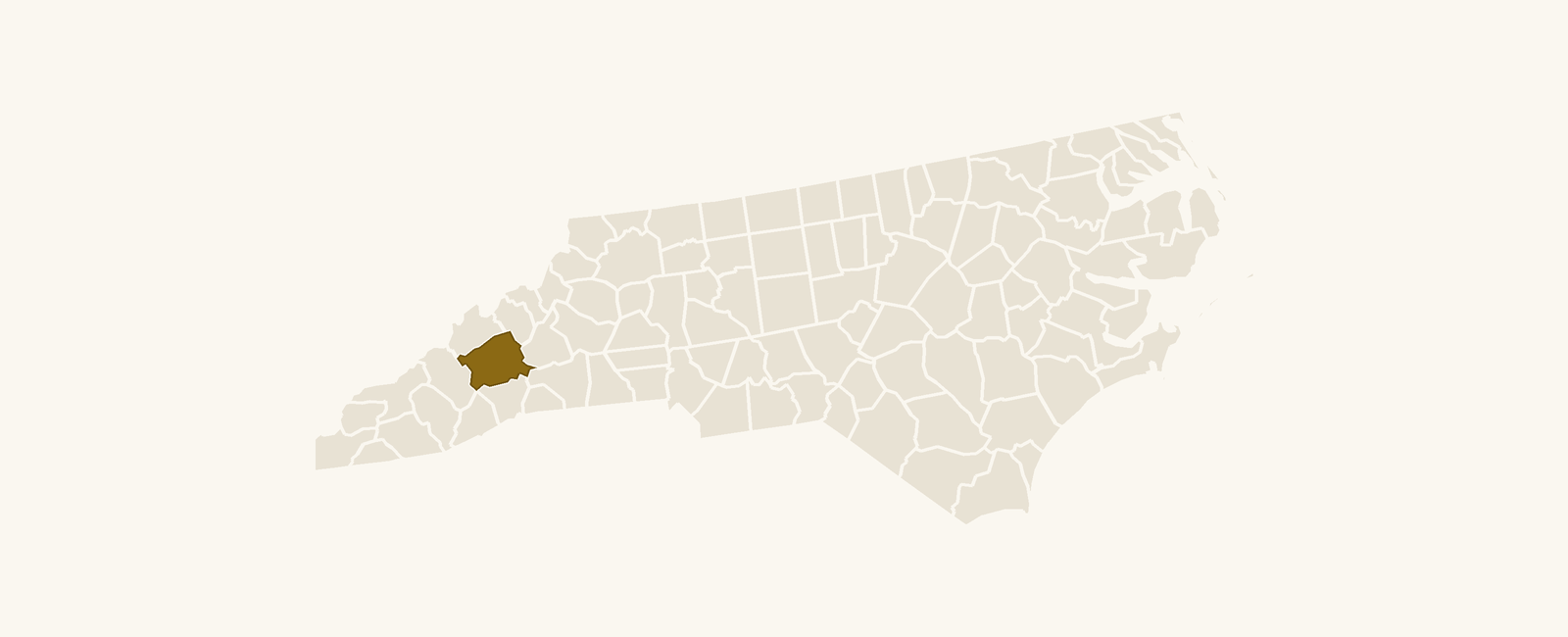
Buncombe County has 132,191 housing units and a population of 271,790, with Asheville as the county seat. If you are researching Buncombe County North Carolina real estate investing, start with the figures that differ most from the national picture.
Equity is the headline. The median home value is $360K, and 43% of owner-occupied homes are owned free and clear, compared with 39% across the U.S. About 64% of homes are owner-occupied. When an owner with no mortgage dies, divorces or falls behind on taxes, there is often a lot of value in the property to talk about.
The owners skew older. Residents 65 or older make up 21% of the population (U.S.: 17%), and the median age is 42.4 against 38.9 nationally. That raises the odds that a given seller is an heir, an executor or a family handling a parent's house.
Vacancy is unusually high. Of the housing units, 22% are vacant, while the U.S. figure is 10%. That number does not tell you why units are empty, and it can include seasonal and other uses. Treat it as a reason to underwrite demand carefully on each deal, not as a count of distressed houses.
Rents and supply matter for buy-and-hold. HUD's Fair Market Rent for the Asheville area is $1,835 a month for a 2-bedroom and $2,231 for a 3-bedroom. About 64% of homes are single-family detached (U.S.: 61%), so most of what you will see is a house, not a condo. New permits came to 2,028 units in 2025, a change of -44% from 2024, which suggests fewer new homes are competing with the existing stock.
Source: U.S. Census ACS 2023
Which court filings come before a sale here, and why
Each filing type below reflects a different kind of pressure on the owner. Knowing the pressure tells you how to talk to the person.
- Probate: An owner has died and the estate has to be settled. Heirs may live out of state, may not want the house, or may need cash to settle debts and split value fairly.
- Divorce: A couple often needs to turn a jointly owned home into cash or buy one another out. Timing and privacy matter a great deal.
- Pre-foreclosure: A lender has started the foreclosure process. The owner may want to sell before a forced sale, but may also be overwhelmed.
- Tax sale: Property taxes went unpaid and the county is using foreclosure as a last-resort collection method.
- Partition: Co-owners, often heirs who inherited together, cannot agree on what to do and one asks the court to force a resolution.
Given the share of older owners and free-and-clear homes in this county, probate, partition and tax-related situations are especially worth understanding. These are owners whose problem is rarely a lack of equity. It is usually time, paperwork, disagreement or neglect.

How the process works in North Carolina, in plain terms
Probate. In North Carolina, estates are handled through the Clerk of Superior Court in the county where the person lived. An executor named in a will, or an administrator the court appoints, generally has to be formally recognized before they can sell real estate. Whether a sale needs further court approval depends on the will and the circumstances, so confirm with an attorney.
Mortgage foreclosure. North Carolina lenders commonly use a power of sale process that runs through a hearing before the clerk, rather than a full lawsuit. After a sale there is an upset bid period: once the sale is reported to the clerk, others have 10 days to raise the bid, and each upset bid starts a new 10-day period. The rules are in Chapter 45 of the General Statutes, and an attorney can confirm the current deadlines.
Tax foreclosure. Buncombe County processes tax foreclosures two ways: in-rem, handled by the Tax Department and County Attorney, or mortgage-style, referred to an outside attorney. A tax foreclosure can begin any date after January 5th of the year being collected, and sales are advertised in a newspaper of general circulation before the sale date.
How the sale itself runs. Tax foreclosure sales are public auctions on the front steps of the county courthouse, at the discretion of the assigned commissioner conducting the sale. Property goes to the last and highest bidder, as is and without warranty, and may be subject to further outstanding taxes and assessments not included in the judgment. A deposit of up to 20% of the bid is due after the sale, with the balance due at the end of the 10-day period and confirmation of the sale.
Divorce and partition. Divorce in North Carolina has its own requirements, including a separation period before an absolute divorce, and dividing property is handled separately. Partition is a court proceeding that can order a sale when co-owners disagree. Because the rules and timing vary, ask an attorney before you rely on any of them.
Approaching owners respectfully and legally
Lead with the person, not the property. Someone who just lost a parent or is going through a divorce does not need a pitch. A short, honest note that explains who you are, what you do and that there is no pressure works better than urgency.
Follow the phone and mail rules. If you call, check numbers against the national Do Not Call Registry and your own internal list, honor requests to stop right away, and follow North Carolina telemarketing rules and the FTC's Telemarketing Sales Rule. Mail and in-person visits come with their own manners, so respect a closed door.
Be clear about what you are. If you are an investor who plans to buy the house, say so. If you are a wholesaler who plans to assign the contract, say that too. Never imply you are affiliated with a court, a lender or the county.
Do not give legal advice. You can explain your offer. You should point owners to an attorney for questions about the estate, the divorce or the foreclosure, and let them take their time.
What to look for before making an offer
Authority to sell. In an estate, confirm who is actually allowed to sign. A relative who lives in the house may not be the person with legal authority. Have a closing attorney verify this before money moves.
Title and taxes. A tax sale property may be subject to further outstanding taxes and assessments not covered in the judgment, so your title work needs to be thorough. Co-owners in a partition situation each have an interest, so every one of them has to agree or the court has to order the sale.
Condition and repair budget. About 11% of Buncombe homes were built before 1940 (U.S.: 12%), so age is not unusual here, but individual houses still vary widely. Never assume condition from a filing. Inspect before you commit, especially on an as-is auction purchase.
Demand and exit. With 22% of housing units vacant, ask who your buyer or tenant will be for this particular house. Compare your numbers with the HUD rent figures above, and remember that fair market rent is a benchmark, not a promise.
Valuation. If an owner thinks the assessed value is wrong, the Board of Equalization and Review hears appeals of valuation and taxable property. That is the owner's right, and a good reason to be careful about leaning on an assessed value in your own math.
These filings are public. If you would rather not assemble them yourself, Keystone's Buncombe County page shows how leads arrive matched and ready, and you can try a county free for 7 days with no credit card.
Questions investors ask
Is Buncombe County a good place to invest in real estate?
It depends on your strategy. The median home value is $360K and many owners hold their homes free and clear, which means equity, but vacancy is 22% against 10% nationally. Underwrite each property's demand and condition individually rather than relying on county-wide averages.
Can an executor sell a house in North Carolina?
Often yes, but only someone with legal authority from the Clerk of Superior Court can sign. Whether the sale needs additional court approval depends on the will and the facts, so a closing attorney should confirm before you contract.
How do Buncombe County tax foreclosure sales work?
They are public auctions on the courthouse steps, sold as is to the last and highest bidder. A deposit of up to 20% of the bid is due after the sale, and the balance is due at the end of the 10-day period and confirmation. The property may also carry further taxes and assessments not included in the judgment.
Why do probate and partition matter so much here?
Residents 65 or older make up 21% of the population (U.S.: 17%), and 43% of owner-occupied homes have no mortgage. Inherited homes often end up with several heirs who must agree on a sale, and when they cannot, partition can follow.
Can I cold call people in these situations?
You can only call within the law. Check the National Do Not Call Registry, follow North Carolina telemarketing rules and the FTC's Telemarketing Sales Rule, and stop when asked. Many investors prefer a short, courteous letter for sensitive situations like a death or divorce.
See Buncombe County leads for 7 days, free
Real court filings with the owner and property matched. No credit card.