Investing in Pitt County, North Carolina: where motivated sellers show up in the court record
Pitt County has a young, renter-heavy market built around a university town. Here is what that means for the sellers you meet and the filings that come before a sale.
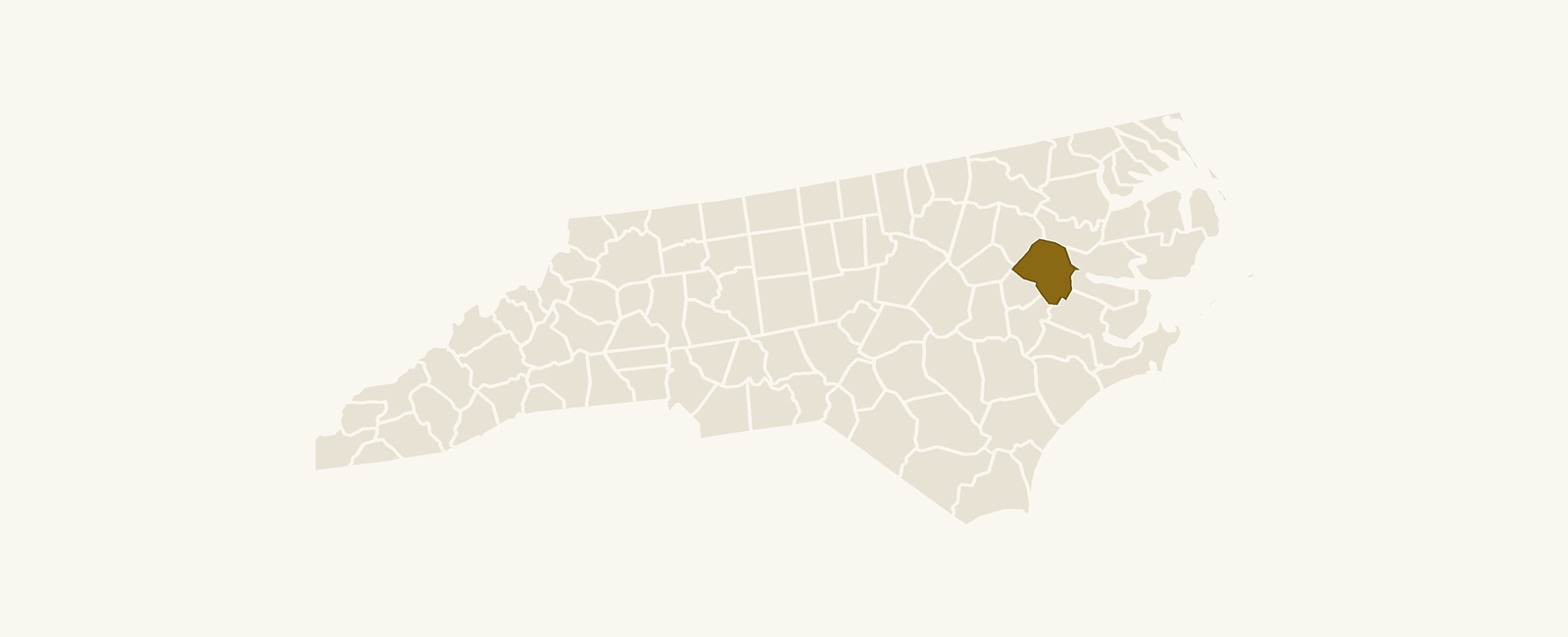
What Pitt County real estate investing looks like on paper
Pitt County has 81,656 housing units for 172,279 people, and just 51% of those homes are owner-occupied. That is a rental-heavy market, which is what you would expect in a county where East Carolina University and Pitt Community College anchor the economy. If you are researching Pitt County North Carolina real estate investing, start there: you will meet landlords, heirs and out-of-town owners as often as you meet people selling the home they live in.
The housing stock is newer than the national average. Only 3% of homes were built before 1940 (U.S.: 12%), so you are less likely to price in the worst of century-old wiring and plumbing. Repair budgets still matter, but the surprises tend to be about deferred maintenance on rentals rather than ancient systems.
Single-family houses are not the whole market. About 48% of homes are single-family detached (U.S.: 61%), so apartments, townhomes and other types make up a larger share than in a typical county. Know which product you are buying before you make an offer.
The median home value is $194K, and 10% of housing units are vacant, which matches the U.S. figure. Median age is 33.6 against 38.9 nationally, and 14% of residents are 65 or older (U.S.: 17%). Employers such as Grady-White Boats, Avient, Thermo Fisher Scientific and Catalent sit alongside the university, which gives the county a steadier base than a single-industry town.
Source: U.S. Census ACS 2023
Rents, permits and what they say about buy-and-hold demand
HUD sets Fair Market Rent for the Greenville area at $1,095 a month for a 2-bedroom and $1,465 for a 3-bedroom. Those are benchmarks, not guarantees, but they give you a sanity check when a seller tells you what a unit "easily rents for."
New supply is steady, not surging. Pitt County permitted 1,285 new housing units in 2025, a change of -1% from 2024. Builders are still adding homes, so a flipped or rehabbed house competes with new construction. A buy-and-hold deal has to work on its own numbers rather than counting on scarcity.
With a young population and a student and hospital workforce, rental demand is part of the story. Still, vacancy sits at 10%, so do not assume every unit fills itself. Underwrite conservatively.
Which court filings come before a sale in Pitt County
Distress shows up in the court record before it shows up on a listing. Here is what each filing type means for a seller in this county.
- Pre-foreclosure: A lender has started the legal process after missed payments. The owner may be open to a sale that clears the debt, but timing is tight.
- Probate: An owner has died and an estate is opening. Heirs often live elsewhere and may not want to manage a house in Greenville or one of the smaller towns.
- Divorce: A shared home has to be sold or bought out. Both spouses usually want a clean, fair result.
- Tax sale: Unpaid property taxes have moved toward foreclosure. The owner may be overwhelmed rather than unwilling.
- Partition: Co-owners, often heirs, disagree about what to do with a property and one asks a court to force a resolution.
Equity is the reason these filings matter here. About 36% of owner-occupied homes are owned free and clear (U.S.: 39%). When a long-time owner dies or a couple splits, a house with no mortgage can sell at a discount and still leave the sellers with real money, which makes a fair, quick, as-is offer attractive to them.
Because 14% of residents are 65 or older, probate is a steady source of sales, though the county skews younger than the nation. Do not build a plan that depends on estates alone. Divorce and pre-foreclosure matter more in a county with this many younger households and renters.
These filings are public records. Keystone delivers them with the owner and property already matched; see the Pitt County page for what is offered here.

How the process works in North Carolina, in plain terms
Mortgage foreclosure is largely not run like a lawsuit. North Carolina is a power-of-sale state, and a foreclosure typically goes through a hearing before the clerk of superior court rather than a full trial. Notice requirements, hearings and the upset bid period are set by statute: notice of the hearing must be served at least 10 days before it, and once a sale is reported to the clerk, others have 10 days to raise the bid, with each upset bid starting a new 10-day period. The court handling the case or an attorney can confirm the deadlines in a given case.
Probate runs through the clerk of superior court. An estate is opened, a personal representative is appointed, and that person's authority determines whether and how the house can be sold. Whether court approval is needed depends on the will and the circumstances, so an executor or administrator should check with an estate attorney.
Tax foreclosure follows the county calendar. Pitt County mails property tax bills in July and they are due September 1, and any early-payment discount, if offered, runs July 1 through August 31. Taxes are not delinquent until January 6, when 2% interest and enforced collections begin. Unpaid real estate taxes are advertised each March, which starts the tax foreclosure process.
After the county refers a property to an attorney, a commissioner or substitute trustee conducts the sale. Sales are held on the Third Street steps of the Pitt County Courthouse in Greenville, rain or shine. The county collects taxes for Ayden, Bethel, Falkland, Farmville, Greenville, Grifton, Grimesland and Simpson, so a delinquent property can be in any of those places or in the county outside them.
An owner who disagrees with a property's assessed value can appeal to the Board of Equalization and Review, with a spring deadline for new appeals in 2026. Mention this to an overwhelmed owner as something to ask a professional about, not as advice you give.
How to approach Pitt County owners respectfully and legally
The people behind these filings are grieving, separating or behind on bills. Lead with honesty: who you are, that you buy houses, and that there is no pressure. Let them say no and mean it.
Be careful with the phone. If you call, follow the federal Do Not Call rules and North Carolina's telemarketing rules, and keep your own do-not-contact list. A personal letter is often better received, especially by a family that has just lost someone.
Do not give legal advice. Do not tell an heir they can sell before the estate allows it, or tell a homeowner in foreclosure what a court will do. Suggest they speak with an attorney or a HUD-approved housing counselor, and put your offer in plain writing.
For partition and divorce, remember that more than one person decides. Be even-handed with everyone involved and never play one co-owner against another.
What to look for before you make an offer
Confirm who can actually sign. In an estate, that is the personal representative with proper authority. In a divorce or partition, it may take agreement from several parties or a court order. Have a title company or attorney confirm before you spend money on a deal.
Check the condition against your rent assumptions. If you plan to hold, compare your numbers with the $1,095 and $1,465 HUD benchmarks for a 2-bedroom and 3-bedroom, and remember that new construction competes with your unit. If you plan to sell, remember that the median home value is $194K, so your buyer pool shapes your ceiling.
Treat tax foreclosure as a cash, as-is purchase. Properties sell as is with no warranties, and the county does not refund deposits due to bidder misunderstanding. A winning bidder must immediately pay a 10% deposit, personal checks are not accepted, and the property is re-auctioned if payment is not made at the close. Pitt County does not offer financing, and a defaulting winner forfeits the deposit. Have your funds and title review ready before you bid.
If you want these filings delivered matched to owners and properties, you can see how Keystone works and try a county free for 7 days with no credit card.
Questions investors ask
Is Pitt County a good place for a buy-and-hold investor?
The numbers support it in part. Only 51% of homes are owner-occupied, HUD sets Fair Market Rent at $1,095 for a 2-bedroom and $1,465 for a 3-bedroom, and the economy is anchored by East Carolina University and Pitt Community College. But 10% of housing units are vacant and new permits were close to flat in 2025, so underwrite each property carefully.
When do Pitt County property taxes become delinquent?
Bills are mailed in July and due September 1, and taxes are not delinquent until January 6. At that point 2% interest and enforced collections begin. Unpaid real estate taxes are advertised each March, which starts the tax foreclosure process.
How are Pitt County tax foreclosure sales run?
The county refers the property to an attorney, and a commissioner or substitute trustee conducts the sale on the Third Street steps of the courthouse in Greenville. The winning bidder must pay a 10% deposit immediately, and personal checks are not accepted. Properties sell as is, so confirm details with an attorney before bidding.
Can an executor sell a house in North Carolina?
Often yes, but it depends on the will, the court's appointment of the personal representative, and whether any approval is required. The clerk of superior court handles probate. The executor should talk to an estate attorney before signing a contract.
Can I call homeowners who appear in these filings?
You can, but follow federal Do Not Call rules and North Carolina telemarketing rules, and stop when someone asks. Many investors prefer a short, respectful letter for families dealing with a death or a divorce. Never pressure anyone or give legal advice.
See Pitt County leads for 7 days, free
Real court filings with the owner and property matched. No credit card.