Investing in Cabarrus County, North Carolina: where motivated sellers show up in the court record
A county with mostly single-family homes, a lot of mortgage debt, and a tax calendar that creates its own kind of distressed seller.
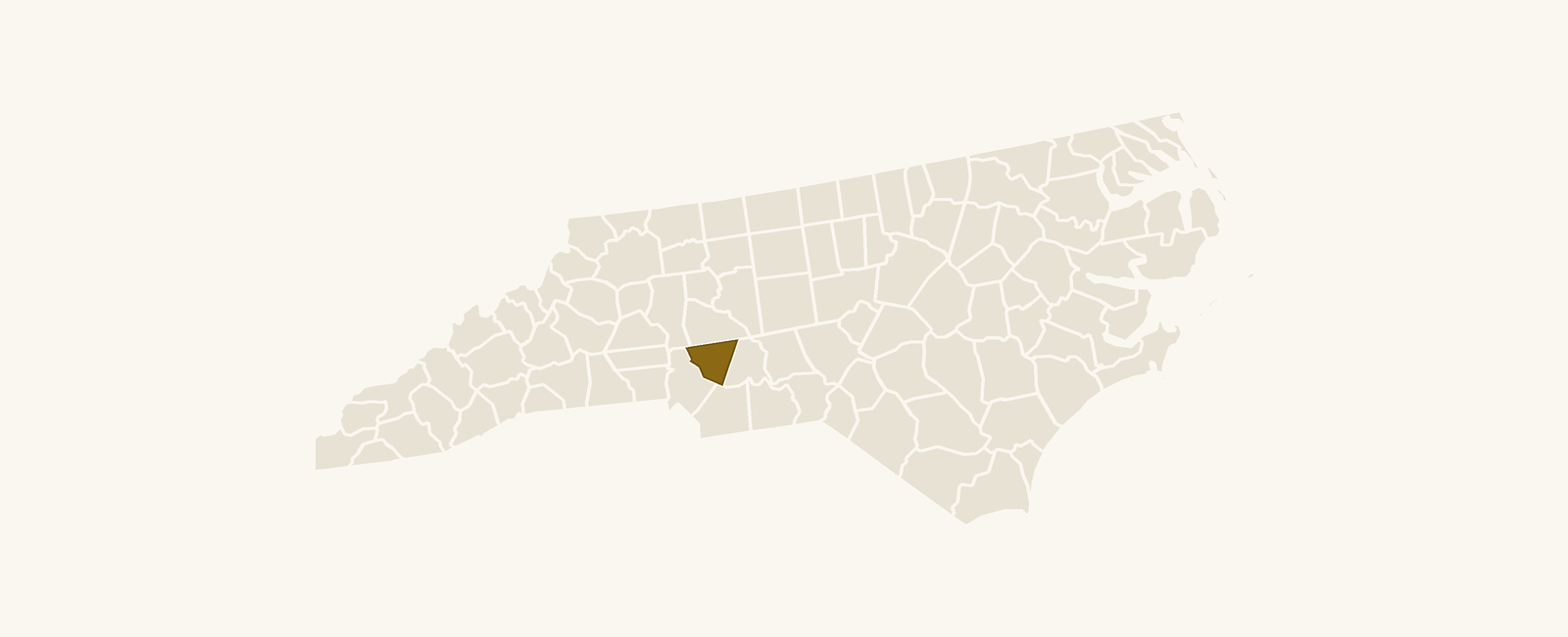
Cabarrus County North Carolina real estate investing starts with the housing stock
Cabarrus County has 91,339 housing units and 231,262 residents, and 77% of those homes are single-family detached. The U.S. figure is 61%. If you buy, rehab or rent houses, the county's inventory leans your way.
The homes are comparatively new. Only 7% were built before 1940, against 12% nationally. Concord, the county seat, sits about 18 miles northeast of Charlotte in the Piedmont, and Kannapolis is the second largest of six municipalities. Mount Pleasant, Harrisburg, Midland and Locust are smaller. Expect fewer century-old money pits than in many older Eastern markets, though you should still budget for roofs, HVAC and deferred maintenance on any house you have not walked.
Values and rents set the math. The median home value is $319K. HUD's Fair Market Rent for the Charlotte-Concord-Gastonia area is $1,686 for a 2-bedroom and $2,076 for a 3-bedroom. Those figures are a reference point for buy-and-hold underwriting, not a guarantee of what a given house will rent for.
Supply is cooling. New housing units permitted in 2025 came to 1,991, a 20% change downward from 2024. Vacancy runs 12% of housing units against 10% nationally. Fewer new permits can mean less competing new construction, while the vacancy figure is a reminder to check demand street by street instead of assuming it.
Source: U.S. Census ACS 2023
What less free-and-clear equity means for the deals you chase
Across the U.S., 39% of owner-occupied homes have no mortgage. In Cabarrus County it is 29%, and 72% of homes are owner-occupied. More of your potential sellers owe money on the house.
Equity is not guaranteed. A seller facing foreclosure, divorce or an estate sale may owe a lender a large part of the price. Before you spend time on a negotiation, ask whether the numbers can work for the lender, the seller and you. A short sale or an offer that pays off the loan and leaves the family something is often the realistic path.
Probate is still real, but not oversized. Residents aged 65 or older are 13% of the population here against 17% nationally, and the median age is 37.7 against 38.9 for the U.S. This is a younger county. Estate sales will still happen, but expect them to be one source among several instead of the main one, and expect heirs who live out of town or have their own jobs and families.
Which court filings tend to come before a sale here, and why
Each filing tells you something different about the person on the other side. Reading it correctly keeps you from pitching the wrong thing.
- Pre-foreclosure: The owner has fallen behind on a mortgage or deed of trust and the lender has started the legal process. Time pressure is real, and so is embarrassment. Many owners want options but fear scams.
- Probate: Someone has died and the estate is being opened. The house may be vacant, and the people deciding are often grieving family members who also have to settle other affairs.
- Divorce: A marital home may need to be sold or one spouse bought out. Both spouses often have to agree, and emotions run high.
- Tax sale: Property taxes went unpaid long enough that the county moved to collect through a foreclosure sale.
- Partition: Co-owners, often heirs, cannot agree on what to do with a property and one has asked a court to resolve it.
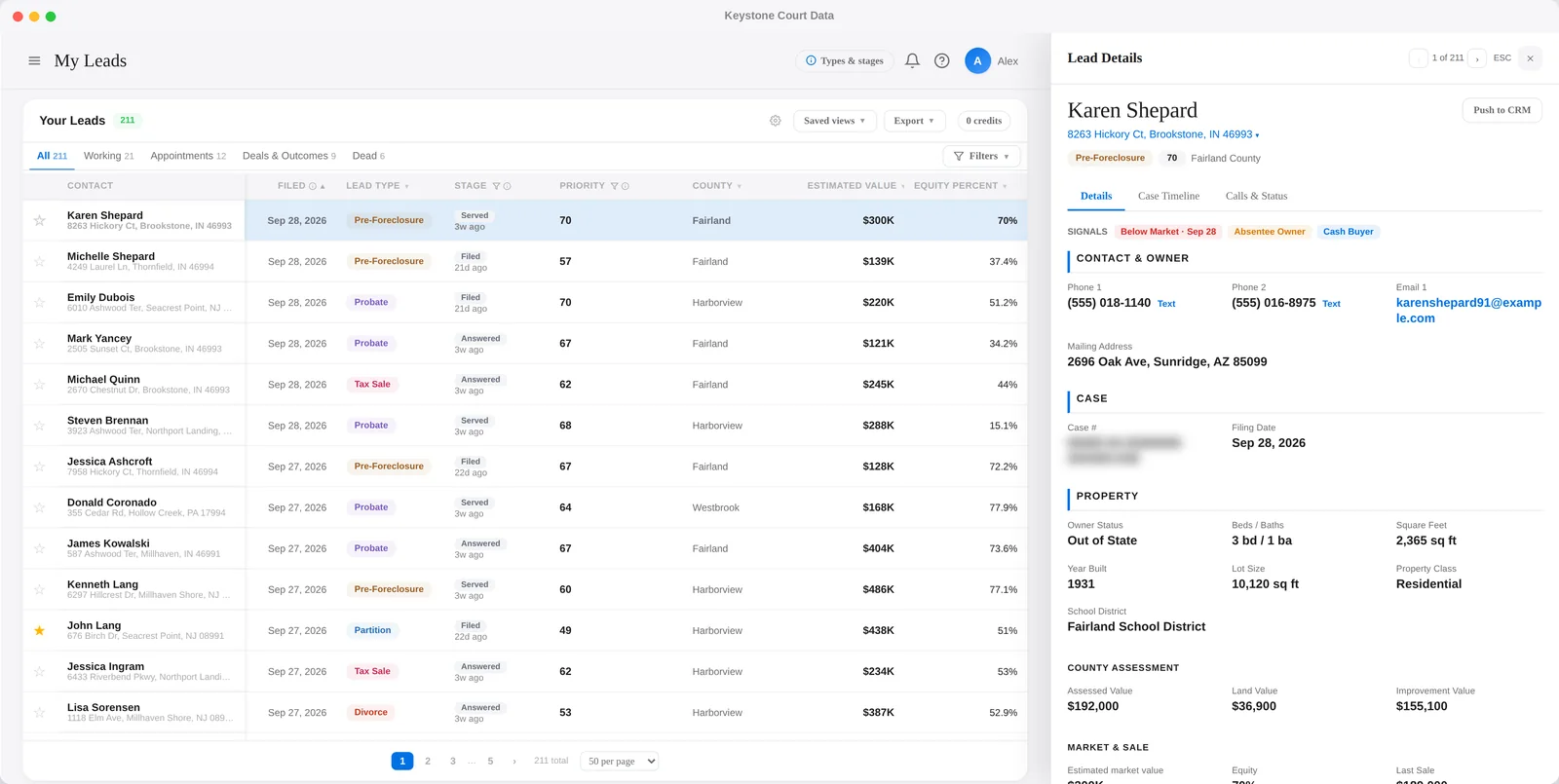
Keystone tracks all five of these in Cabarrus County. If you want to see how the county looks in practice, the Cabarrus County page has the details, and it can be tried free for 7 days with no credit card.
How the process works in North Carolina, in plain terms
Mortgage foreclosure. North Carolina generally handles foreclosure on a deed of trust through a power-of-sale process that runs through the clerk of superior court, not a full lawsuit. By statute, notice of the hearing must be served at least 10 days before it, and notice of the sale must be posted at least 20 days before the sale. A North Carolina attorney can explain the timing in a given case.
Probate. Estates are handled by the clerk of superior court in the county. An executor named in a will, or an administrator appointed when there is no will, generally has to be formally authorized before selling real property, and whether a sale needs further court approval depends on the will and the circumstances. Do not assume the first family member you speak with has the authority to sign.
Divorce. North Carolina requires a period of separation before a divorce, and the division of property is handled separately from the divorce itself. A house can sit in limbo for a long time. Keep your timeline flexible and talk to the parties through their attorneys if they have them.
The county tax calendar. Tax bills are due September 1 and become delinquent if not paid by January 5. Interest is 2% for January and 3/4 of 1% each month after. The county tax rate is 57.6 cents per $100 of value, and Cabarrus has adopted a four-year revaluation schedule, though state law requires revaluation at least every eight years. Owners who disagree with a new value can ask for informal review, then the Board of Equalization and Review, which must be requested within 30 days of the Notice of Real Estate Assessed Value or before the board adjourns, usually in late April. A reassessment can push a stretched owner behind on taxes.
Tax foreclosure and sheriff sales. Cabarrus County's tax foreclosure sales are properties sold because of delinquent tax liens, after other collection efforts have been exhausted. Bidding opens at the amount of delinquent taxes, interest and legal costs, and bidders must attend in person. The highest bidder must put down a 20% deposit in cash, money order or certified funds, and the county offers no financing. Each sale carries a 10-day upset bid period, and every upset bid must be at least 5% over the last bid with a minimum increase of $750. Final payment is due at the foreclosure attorney's office on delivery of the Commissioner's deed, within 30 days after the upset bid period ends. Owners or lienholders can stop a sale by paying taxes and fees in full up to the day of sale.
The Sheriff's Office also holds real property execution sales on the front steps of the Cabarrus County Courthouse in Concord, with a deposit of 10% of the bid in cash, or a letter of credit from a bank, required and the balance due on tender of the deed.
How to approach owners respectfully and legally
Lead with the person, not the filing. Someone in foreclosure or an heir settling a parent's estate does not need a script. Introduce yourself plainly, say why you are contacting them, and offer to answer questions. If they say no, thank them and stop.
Phone calls have rules. Respect the National Do Not Call Registry and North Carolina's telemarketing rules, including any restrictions on calling times and on repeated contact. Keep your own internal do-not-contact list and honor it. A handwritten letter or a short, honest note is often better received than a cold call anyway.
Be careful with foreclosure language. Homeowners in distress are a target for fraud, so never promise to stop a foreclosure, never ask for fees up front, and never pressure someone to sign on the spot. If the seller has an attorney, a housing counselor or an executor involved, work with them. For general consumer guidance on avoiding foreclosure rescue scams, the FTC and CFPB publish helpful material.
Do not give legal advice. You can explain what you would offer and how you would close. Tell the owner to ask an attorney about their rights and deadlines.
What to look for before you make an offer
- Who can sign. In an estate, confirm the person has legal authority to sell. In a divorce or partition, confirm every owner is on board or that the court has ordered the sale.
- What is owed. With 29% of owner-occupied homes free and clear, many sellers have a loan. Have a title professional confirm liens, back taxes and anything else attached before you commit.
- Tax timing. A property near the January 5 delinquency date, or already past it, may have less room for a slow closing. Remember that an owner can stop a tax foreclosure by paying in full up to the sale date.
- Condition. Newer-than-average housing stock does not mean no repairs. Walk the house and price roofs, systems and deferred work conservatively.
- Exit strategy. If you plan to rent, compare your expected rent to the HUD figures of $1,686 for a 2-bedroom and $2,076 for a 3-bedroom, and test the deal with a vacancy cushion since vacancy here is 12%.
- Cash needs at a sale. A tax foreclosure purchase requires a 20% deposit and no county financing. A sheriff's execution sale requires a 10% deposit in cash or a bank letter of credit. Have funds ready or skip those auctions.
For more on how Keystone delivers county filings with the owner and property already matched, see how it works, or review North Carolina coverage and pricing.
Questions investors ask
Is Cabarrus County a good place for single-family investing?
The housing mix favors it. 77% of homes are single-family detached, against 61% nationally, and the median home value is $319K. Check each neighborhood's demand and condition yourself, because county averages will not tell you about a specific street.
Do I need a lot of cash to buy at a tax foreclosure sale in Cabarrus County?
You need enough for a 20% deposit in cash, money order or certified funds, and the county offers no financing. The sale also has a 10-day upset bid period, and the remaining balance is due at the foreclosure attorney's office when the Commissioner's deed is delivered, within 30 days after the upset bid period ends.
Can I call homeowners in foreclosure or probate?
You can, but follow the National Do Not Call Registry and North Carolina's telemarketing rules, and stop when someone asks you to. Many investors prefer a short, respectful letter because the people involved are often dealing with debt or grief.
How does the county's tax calendar create motivated sellers?
Bills are due September 1 and become delinquent after January 5, with 2% interest for January and 3/4 of 1% each month after. Owners who fall behind face growing costs and, eventually, a tax foreclosure. Revaluation can also raise bills, and appeals to the Board of Equalization and Review must be requested within 30 days of the assessment notice or before the board adjourns, usually in late April.
Does a low number of free-and-clear homes mean fewer deals?
Not fewer deals, but tighter ones. With 29% of owner-occupied homes owned free and clear against 39% nationally, more sellers owe a lender, so the numbers have to cover the payoff before there is room for you or the seller.
See Cabarrus County leads for 7 days, free
Real court filings with the owner and property matched. No credit card.