Investing in Johnston County, North Carolina: where motivated sellers show up in the court record
A working investor's guide to a county of mostly single-family homes, newer housing stock and less equity cushion than the national average.
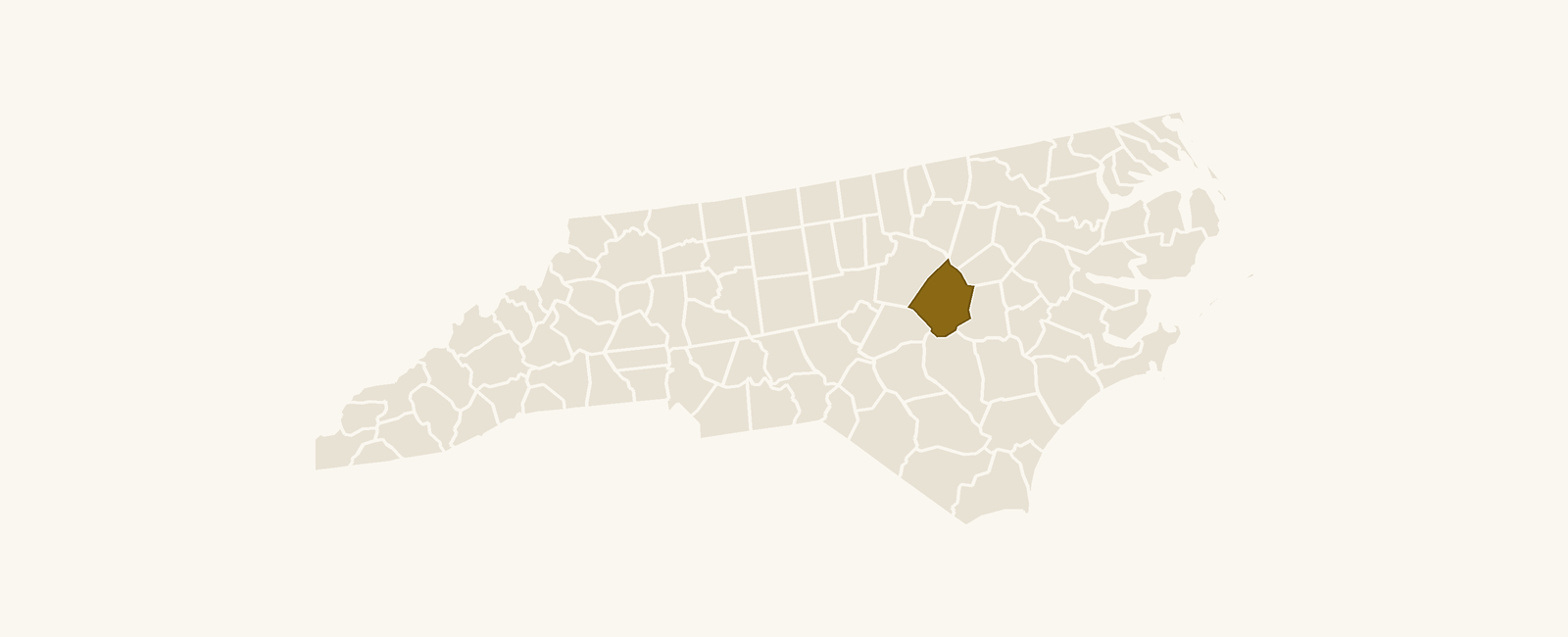
What Johnston County's housing looks like
Johnston County has 88,314 housing units and 226,623 residents, with Smithfield as the county seat. Smithfield (10,966) and Clayton (16,116) are among the largest towns in the 2010 census table the county publishes. If you are researching Johnston County North Carolina real estate investing, start with what the stock is made of.
Mostly houses, mostly lived in. About 77% of homes are owner-occupied, 75% are single-family detached (U.S.: 61%), and only 7% of units are vacant (U.S.: 10%). The median home value is $268K. That points to a market where deals are single-family purchases and where tight vacancy keeps buyer demand steady.
Newer stock. Homes built before 1940 make up 4% of the total, compared with 12% nationally. You will still meet deferred maintenance, but fewer century-old systems. New housing units permitted in 2025 totaled 3,002, up 8% from 2024, so new construction competes with your resale and rental exits.
Rent figures for buy-and-hold. HUD's Fair Market Rent for the Raleigh-Cary area is $1,750 for a 2-bedroom and $2,196 for a 3-bedroom. Use those as a reference point, not a promise, and check them against what a specific house would really rent for. Sources are listed below.
Source: U.S. Census ACS 2023
Which court filings come before a sale here, and why
A filing is a signal that an owner's situation has changed. What it means depends on the type.
- Pre-foreclosure: The owner has fallen behind on a mortgage and a lender has started the process. Some owners want a quiet exit before a sale. Others want to keep the home, so listen first.
- Probate: An owner has died and heirs or an executor are deciding what to do with the house. Out-of-town heirs often prefer a clean sale to managing a property.
- Divorce: A home may need to be sold or one spouse bought out. Timing and privacy matter a great deal.
- Tax sale: Property taxes went unpaid and the county is pursuing the debt through foreclosure.
- Partition: Co-owners, often heirs, disagree about keeping or selling a property, and a court may be asked to resolve it.
Why equity matters here. Because 30% of owner-occupied homes are owned free and clear (U.S.: 39%), a larger share of owners than average carry a mortgage. In an estate or divorce, a payoff can narrow the margin, so a fair offer has to account for what is owed. Residents 65 or older are 14% of the population (U.S.: 17%), so probate is meaningful but not as dominant as in older-skewing counties.
How the process works in North Carolina, in plain terms
Mortgage foreclosure. North Carolina generally uses a power-of-sale process under a deed of trust, which runs through a hearing before a court official rather than a full lawsuit. After a sale, the law allows a period when higher bids can be submitted. The rules are in Chapter 45 of the General Statutes, and the details are exactly the kind of thing to confirm with an attorney.
Probate. In North Carolina, estates are overseen through the clerk of superior court in the county. Once appointed by the clerk, an executor named in a will, or an administrator, typically has the authority to deal with estate property, but the scope of that authority varies. Ask for proof of authority before you sign anything.
Property tax foreclosure. Johnston County taxes are due September 1st, and taxpayers have until the following January 5th to pay without penalty or interest. Interest begins January 6th at 2% for the first month and 3/4% per month after that. For delinquent taxes, the county may assign parcels to a private attorney to begin foreclosure.
Redemption. Owners, mortgage holders or defendants can redeem by paying taxes, interest, fees and costs, even after a sale until the court confirms it. Paying someone else's delinquent taxes does not give you any ownership of the property, so do not treat it as a shortcut.
Revaluation. The most recent general revaluation took effect January 1, 2025, after the prior one in 2019. The county has moved from an eight-year cycle to six years, then to four. New assessed values can change tax bills, and that can add pressure for owners already stretched.

Where Johnston County's local economy fits in
Smithfield is the government, judicial and administrative hub of the county. Its local economy is anchored by retail (Carolina Premium Outlets), UNC Health Johnston, county government and the public school system. Those employers matter because steady jobs support rental demand, and a job disruption is often what pushes an owner behind on payments.
The permit growth also tells you something. With 3,002 units permitted in 2025, builders are active. If you plan to flip or sell, expect buyers to compare your finished house with new construction nearby.
How to approach owners respectfully and legally
Lead with honesty. Say who you are, that you buy houses, and why you are reaching out. Never imply you are from the court, a lender or a government agency. Do not pressure anyone, and never suggest a deadline that does not exist.
Be careful with timing and tone. A family that just lost someone, or a couple going through a divorce, needs room. A short, kind letter that makes it easy to say no often works better than repeated contact. If someone declines, respect it.
Follow the calling rules. If you phone, check the National Do Not Call Registry and honor internal opt-outs, and follow federal and North Carolina telemarketing rules on calling hours and disclosures. When you are unsure, ask an attorney before you dial.
If you want these filings already matched to the owner and property, Keystone Court Data covers Johnston County, and you can try a county free for 7 days with no credit card.
What to look for before making an offer
- Who can legally sell. In an estate, confirm the seller's authority. In a divorce or partition, confirm every owner agrees or the court has ordered the sale.
- What is owed. Mortgages, unpaid taxes and other liens can eat into the price. With fewer homes owned free and clear than the national average, expect payoffs.
- Condition. Newer stock means fewer very old systems, but inspect anyway. Estate houses are often left as they were for years.
- Exit. Compare your resale price against new construction, and test rental numbers against the HUD figures above.
- Title and timing. Use a closing attorney or title professional, and confirm any deadlines in a foreclosure or tax case with an attorney.
A fair offer that solves the owner's actual problem will beat a low one that only serves you. It also tends to survive the closing table.
Questions investors ask
Is North Carolina a judicial foreclosure state?
Mostly no. Most mortgage foreclosures use a power-of-sale process under a deed of trust, with a hearing before a court official rather than a full lawsuit. By statute, notice of the hearing must be served at least 10 days before it, and once the sale is reported to the clerk, others have 10 days to file an upset bid. A North Carolina attorney can explain the timeline in a given case.
Can I buy a house from an executor in Johnston County?
Often yes, if the executor or administrator has the legal authority to sell. Ask to see proof of that authority and use a closing attorney. Authority can differ depending on the will and the court's orders.
If I pay someone's delinquent property taxes, do I get the house?
No. Paying another person's delinquent taxes does not give you any legal ownership. Owners and mortgage holders can also redeem in a tax foreclosure by paying taxes, interest, fees and costs, even after a sale until the court confirms it.
When do Johnston County property taxes become delinquent?
Taxes are due September 1st, and taxpayers have until the following January 5th to pay without penalty or interest. Interest begins January 6th at 2% for the first month and 3/4% per month after that.
Can I call homeowners I find through court filings?
You can, but you must follow the National Do Not Call rules and North Carolina telemarketing requirements. Be honest about who you are and stop when asked. A letter is often a gentler first contact.
See Johnston County leads for 7 days, free
Real court filings with the owner and property matched. No credit card.