Probate in Douglas County, Nebraska: what investors should know
Estates here run through the Probate Division of the Douglas County Court in Omaha. Here is what that means for the homes, the heirs and your offers.
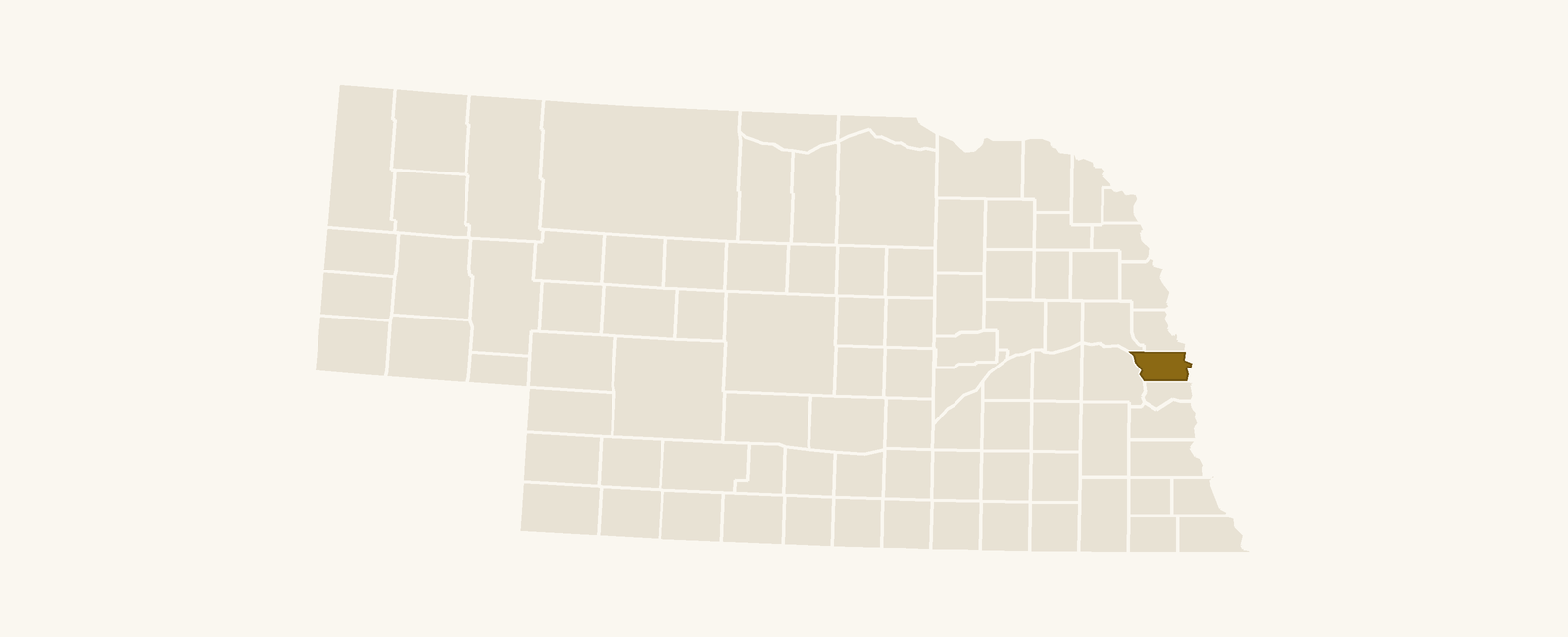
What Douglas County housing looks like for probate work
Douglas County has a population of 585,461 and 248,692 housing units, with the county seat in Omaha. If you are researching probate Douglas County Nebraska, start with the housing stock, because it shapes every estate sale you will see. About 62% of homes are owner-occupied, and 66% are single-family detached (U.S.: 61%). That is a market of ordinary houses, which is the kind of property estates tend to leave behind.
Equity is real, but less uniform than you might expect. Owner-occupied homes owned free and clear are 32% here, compared with 39% nationally. So a deceased owner's home is less likely to be debt-free than in many places. Some estates will have a mortgage that the personal representative must deal with before or during a sale.
Older homes mean repair math. Homes built before 1940 are 16% of the stock (U.S.: 12%). Expect original systems, older layouts and deferred maintenance in a family home that someone lived in for decades. Build that into your numbers early.
The median home value is $246K. Vacancy is 6% (U.S.: 10%), which points to a market where well-priced houses do not sit empty for long. Fewer vacant homes also means a clean, fairly priced rehab or rental has a ready pool of buyers and tenants.
Source: U.S. Census ACS 2023
Why probate matters here, even with a younger population
Residents aged 65 or older are 14% of the county (U.S.: 17%), and the median age is 35.5 (U.S.: 38.9). Douglas County skews younger than the country as a whole. Do not read that as a lack of estates. It means the older-owner segment is proportionally smaller, so each estate is worth understanding well instead of treating probate as a high-volume game.
Heirs are often younger and may live elsewhere. In a younger county, the people inheriting a house may be adult children with jobs, families and their own homes. Many have no interest in managing a property from a distance. That is where a straightforward, no-pressure offer can be genuinely useful to them.
Probate is also one of the clearest signals that a property may change hands, because a death leaves a house that someone must decide what to do with. If you want to see how Keystone covers this lead type, the probate leads page explains it, and the Douglas County page covers what is offered locally.
Which court filings come before a sale in Douglas County
Two lead types are offered for this county: probate and pre-foreclosure. They tell you different things about the owner's situation.
- Probate: an owner has died and the court is overseeing the estate. The house is often a major asset, and the family has to decide whether to keep, rent or sell it.
- Pre-foreclosure: a lender has started the process because payments stopped. The owner is usually alive, under financial stress, and facing a deadline.
The two overlap more than people expect. A home can enter probate with a mortgage that nobody has been paying, which means an estate may also face lender action. That is one reason the 32% free-and-clear figure matters: with fewer debt-free homes than the national average, you should assume a lien may be present until you know otherwise.
The foreclosure process in Nebraska depends on the loan documents. A trust deed can be foreclosed outside court under the Nebraska Trust Deeds Act: a notice of default is recorded, and the notice of sale cannot be given until at least one month later and must be published once a week for five weeks (Neb. Rev. Stat. 76-1006, 76-1007). An attorney can confirm the steps for a specific loan.

How the probate process works in Nebraska, in plain terms
In Douglas County, estates are handled by the Probate Division of the Douglas County Court, which sits in Omaha. The court has jurisdiction over the personal representative and the deceased's assets. It also protects heirs from fraud, protects creditors of the deceased and makes sure all taxes are paid by the estate (Nebraska Judicial Branch).
The personal representative is your key contact. This is the person the court appoints to manage the estate. Unless the will or a court order restricts it, or the estate is under supervised administration, a Nebraska personal representative can sell estate real estate without notice, hearing or a separate court order (Neb. Rev. Stat. 30-2472, 30-2476). Heirs who are not the personal representative generally cannot sign a deed for property the estate controls.
Creditors and taxes come first. Because the court protects creditors and requires taxes to be paid, the family may not receive proceeds right away. A sale that clears debts and keeps the estate moving can be welcome news, but only if you are honest about timing.
Details such as notice periods and claim deadlines are set by Nebraska law; for example, when notice to creditors is published as the statute requires, claims must be presented within two months after the first publication (Neb. Rev. Stat. 30-2485). A probate attorney can confirm them for any deal. This article is not legal advice.
How to approach families respectfully and legally
The person you contact has probably lost someone recently. Lead with condolences and plain language, not a price. Say who you are, why you are reaching out, and that there is no pressure to respond.
If you phone, follow the rules. Check numbers against the National Do Not Call Registry, honor internal opt-out requests, and follow federal telemarketing rules on calling hours and caller identification (47 CFR 64.1200(c); 16 CFR 310.4) and Nebraska's rules for automatic dialing-announcing devices (Neb. Rev. Stat. 86-247, 86-248). Confirm current requirements with an attorney. Letters and in-person notes are often gentler for a first contact anyway.
Be honest about what you do. If you are an investor buying for yourself, say so. If you are an agent, say that. Never imply you represent the court, a lender or a government office.
- Offer to wait if the family needs time.
- Put any offer in writing and suggest they have an attorney or advisor review it.
- Stop contacting anyone who asks you to.
Keystone delivers probate filings with the owner and property already matched, so your time goes into conversations like these instead of paperwork. You can try a county free, with no credit card, from the pricing page.
What to look for before making an offer on an estate home
Before you put a number in front of a family, understand who can actually sell, what the house needs and what the market will support.
Authority and liens. Confirm with the attorney handling the estate, or your own attorney, who has the power to sign. Assume debt may be attached until it is cleared. With fewer free-and-clear homes here than nationally, a mortgage is a realistic possibility.
Condition. With 16% of homes built before 1940, plan for older wiring, plumbing, roofs and foundations. Walk the property and budget conservatively.
Property taxes. Nebraska property taxes are paid in arrears: taxes levied in one year become due December 31 and are paid the next year, in two halves that in a county the size of Douglas become delinquent April 1 and August 1 (Neb. Rev. Stat. 77-203, 77-204). Real property valuation protests must be filed on or before June 30, and in a county as large as Douglas the county board of equalization can extend its protest hearings from July 25 to August 10 (Neb. Rev. Stat. 77-1502). Because of the arrears timing, an estate may owe tax on a prior year's value, so ask the family's attorney how that is being handled.
Exit strategy. HUD Fair Market Rent for the Omaha, NE-IA area is $1,450 for a two-bedroom and $1,924 for a three-bedroom. Those figures give you a reference point if you are weighing a rental against a flip. New housing units permitted in 2025 were 3,963, down 13% from 2024, which suggests less new competition for buyers and renters than the year before.
Questions investors ask
Who handles probate in Douglas County, Nebraska?
The Probate Division of the Douglas County Court, which sits in Omaha. It has jurisdiction over the personal representative and the deceased's assets. It also protects creditors and makes sure all taxes are paid by the estate.
Can an executor sell a house during probate in Nebraska?
Yes, in most cases. Nebraska calls the role a personal representative, and unless the will or a court order restricts it, or the estate is supervised, the personal representative can sell estate real estate without a separate court order (Neb. Rev. Stat. 30-2472, 30-2476). A probate attorney can confirm the authority for a specific estate.
Can I buy a house directly from heirs before probate finishes?
Heirs who are not the personal representative generally cannot convey property the estate controls. The right person to sell, and the timing, depend on the facts of the estate. The estate's attorney can confirm who can sign.
Can I call families who have a probate case open?
You can only if you follow Do Not Call and Nebraska telemarketing rules, including honoring opt-outs. A respectful letter is often a better first step. Confirm current rules with an attorney.
Do estates in Douglas County usually have a mortgage?
Many do not, but a meaningful share do. Only 32% of owner-occupied homes here are owned free and clear, compared with 39% nationally. Assume a lien may exist until the personal representative or their attorney tells you otherwise.
See Douglas County leads for 7 days, free
Real court filings with the owner and property matched. No credit card.