Investing in Lancaster County, Nebraska: where motivated sellers show up in the court record
Lincoln anchors a young, owner-heavy county with very little vacancy. Here is what that means for your offers, and which court filings tend to come before a sale.
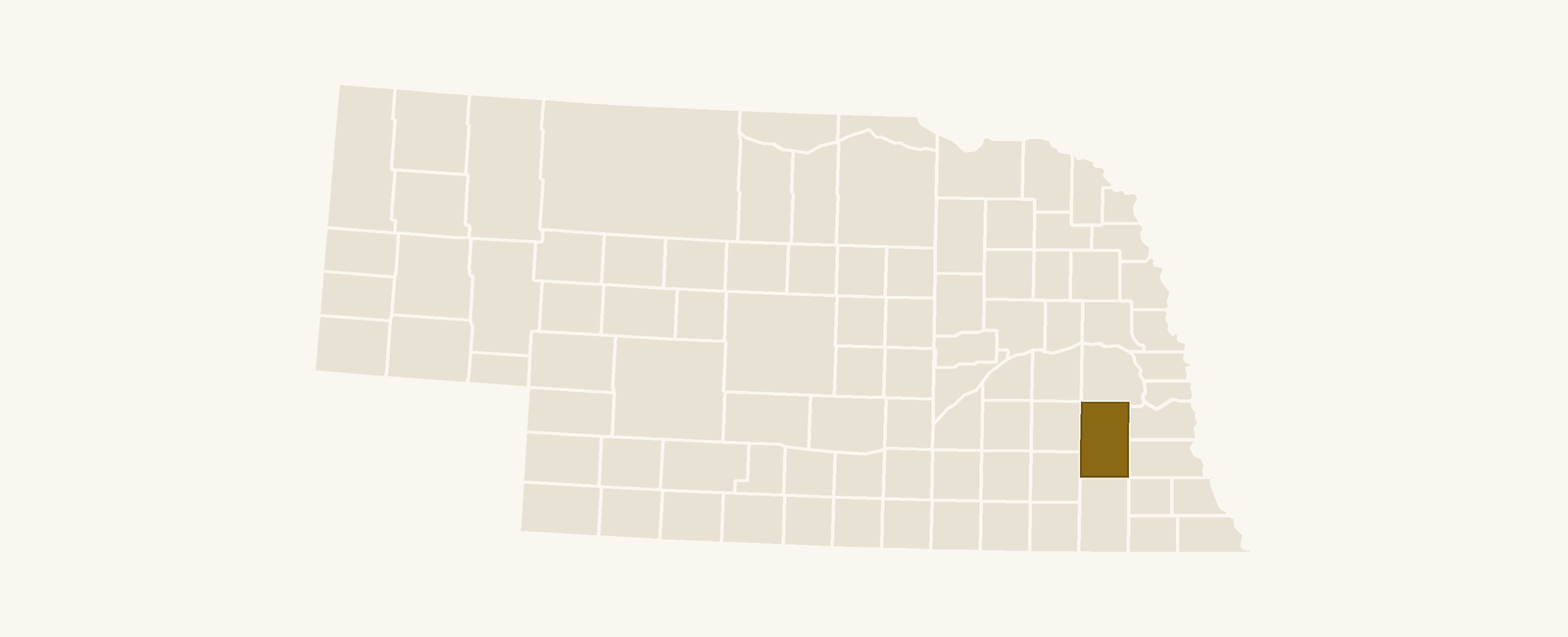
What the Lancaster County housing market looks like
Lancaster County Nebraska real estate investing starts with one number: only 4% of housing units are vacant, compared with 10% nationally. In a county of about 323,673 people and 138,232 housing units, that leaves very little slack. Houses that come up for sale get looked at.
Ownership is solid but not overwhelming. About 59% of homes are owner-occupied, and the median home value is $259K. Single-family detached homes make up 59% of the stock (U.S.: 61%), so you are mostly dealing with ordinary houses rather than a market of unusual property types. Homes built before 1940 are 12% of the stock, the same as the national share, so older houses exist but are not the whole story.
Rents support buy-and-hold math. HUD's Fair Market Rent for the Lincoln area is $1,230 a month for a 2-bedroom and $1,703 for a 3-bedroom. Set those against the $259K median value and you can see why landlords stay interested here. See the Census American Community Survey and HUD Fair Market Rents for the underlying data.
Building is picking up. The county permitted 2,346 new housing units in 2025, up 21% from 2024. New supply can ease pressure over time, but with vacancy this low it also tells you buyers and renters are active.
Source: U.S. Census ACS 2023
A younger county changes how probate plays out
The median age in Lancaster County is 34.3, well under the U.S. figure of 38.9. Residents aged 65 or older are 15% of the population (U.S.: 17%). Lincoln has a large student and young-professional population, and that shapes the kind of estate sales you will see.
Do not expect a county full of retirees. Probate matters here, but it is not driven by an unusually old population. What you will often find is an heir who is younger, busy, and living in another city, who inherits a house they never planned to own.
Equity is the other piece. About 36% of owner-occupied homes have no mortgage (U.S.: 39%). That is close to the national share, so do not assume every estate house is free and clear. Some are, and those can leave room for a fair price and a quick, simple sale. Others still carry a loan, and an heir may be glad to hear a clear plan for handling it.
Which court filings tend to come before a sale here
Two filing types matter most in Lancaster County, and Keystone tracks both: pre-foreclosure and probate. Each tells you something different about the owner's situation.
- Pre-foreclosure: a lender has begun the legal process after missed payments. The owner may be looking for a way to sell before losing the home and any equity in it.
- Probate: someone has died and the estate has been opened in court. A personal representative is appointed to handle the property, and heirs often want a clean sale.
Other filings, such as divorce, can also lead to a house being sold, because a couple may need to split the value of one asset. Treat any filing as a sign that a household is under pressure, not as a guarantee that a home will sell.
The Lancaster District Court sits in Lincoln. Nebraska's Judicial District 3 is made up of Lancaster County alone, so there is one district court for the whole county. These filings are public. If you want them delivered with the owner and property already matched, the Lancaster County page explains how that works.

How foreclosure and probate work in Nebraska, in plain terms
Foreclosure. A lender who is owed money on a home can pursue foreclosure through the courts or, depending on the loan documents, through a process outside the courts: a mortgage is foreclosed in the district court, and a trust deed with a power of sale can be foreclosed by a trustee's sale outside court (Neb. Rev. Stat. 25-2137, 76-1005). The route depends on the loan type. For a trust deed, a notice of default is recorded first; the owner can cure the default within one month of that filing, and notice of sale can be given only after at least one month has passed, with two months in each case for trust property used in farming operations outside a city or village (Neb. Rev. Stat. 76-1006, 76-1012). A Nebraska attorney can confirm the exact steps and deadlines for any specific situation.
For you as an investor, the practical point is that an owner in foreclosure usually has a window in which a sale can still happen. That window closes, so owners often respond best to straightforward information given early and without pressure.
Probate. In Nebraska, estates are handled by the county court. The Lancaster County Court sits in Lincoln and has a Civil/Probate Division. A personal representative is appointed to manage the estate and must be appointed and issued letters before acting (Neb. Rev. Stat. 30-2403). Once appointed, and unless the will or a court order restricts it or the estate is supervised, the personal representative can sell estate real estate without a separate court order (Neb. Rev. Stat. 30-2472, 30-2476). The estate's attorney can confirm whether a particular estate has such a restriction.
The point: in probate, the person you speak with matters. An heir who is grieving may not be the person with legal authority to sell.
How to approach owners respectfully and legally
People in these situations are dealing with a death, a lost income or a family breakup. Your first message should respect that.
Lead with help, not a deadline. Say who you are, why you are writing, and that there is no obligation. Offer to answer questions, and be ready to accept "no" the first time you hear it.
Follow the phone rules. If you call, check numbers against the National Do Not Call Registry and follow Nebraska's telemarketing rules and federal rules such as the Telephone Consumer Protection Act. Respect calling-time limits and keep a record of anyone who asks you to stop. If you are unsure what applies to your outreach, ask an attorney.
Be honest about what you are. If you are an investor buying for yourself, say so. If you are a wholesaler who plans to assign the contract, say that too. Do not give legal or tax advice, and encourage owners to talk to their own attorney or advisor before signing.
A letter is often kinder than a call. A short, plain note gives the person time to think and to respond in their own way.
What to look for before you make an offer
A court filing tells you why an owner might sell. It does not tell you whether the deal works. Before you put a number on paper, think through these points.
- Condition. Older homes mean older roofs, wiring, plumbing and foundations. Plan your repair budget from an actual walk-through, not from the year built.
- Debt against the home. Equity depends on what is owed. A house with no mortgage may still have other claims against it, so have an attorney confirm the title picture before closing.
- Who can sign. In probate, confirm that the person selling has legal authority. In a foreclosure, confirm where the process stands, because that sets your timeline.
- Exit plan. With vacancy at 4%, a well-priced, well-finished house should find a buyer or tenant. Compare your numbers with the HUD rents above if you plan to hold.
- Fair price. Offers that treat the owner fairly tend to close more often and keep your name in good standing in a county the size of this one.
Questions investors ask
Is Lancaster County a good place to invest in real estate?
The public numbers point to a tight market: 4% of housing units are vacant against 10% nationally, and permits rose 21% from 2024 to 2025. Rents of $1,230 for a 2-bedroom and $1,703 for a 3-bedroom support buy-and-hold plans. Whether a particular deal works still depends on its price and condition.
Which court handles probate in Lancaster County?
The Lancaster County Court in Lincoln handles probate through its Civil/Probate Division. The Lancaster District Court, also in Lincoln, is a separate court. If you are unsure which one holds a particular matter, ask an attorney.
Can I contact an owner who is in foreclosure?
Generally yes, but you must follow the law and treat them with care. Be honest about who you are, avoid pressure, and respect Do Not Call and Nebraska telemarketing rules if you phone. Confirm any specific legal question with an attorney.
Can an executor sell a house in Nebraska?
Yes. A personal representative appointed by the county court can sell estate real estate without a separate court order, unless the will or a court order restricts that power or the estate is under supervised administration (Neb. Rev. Stat. 30-2472, 30-2476). The estate's attorney can confirm what applies before a sale.
Do I need cash to buy from distressed sellers here?
Not always, but you need a clear plan to close. Many sellers need certainty more than speed, so be realistic about your financing and tell them what to expect. Talk with an attorney about contracts, especially if you plan to assign them.
See Lancaster County leads for 7 days, free
Real court filings with the owner and property matched. No credit card.