Investing in Douglas County, Nebraska: where motivated sellers show up in the court record
Omaha's county has younger owners, older houses and less free-and-clear equity than the national picture. Here is what that means for pre-foreclosure and probate opportunities.
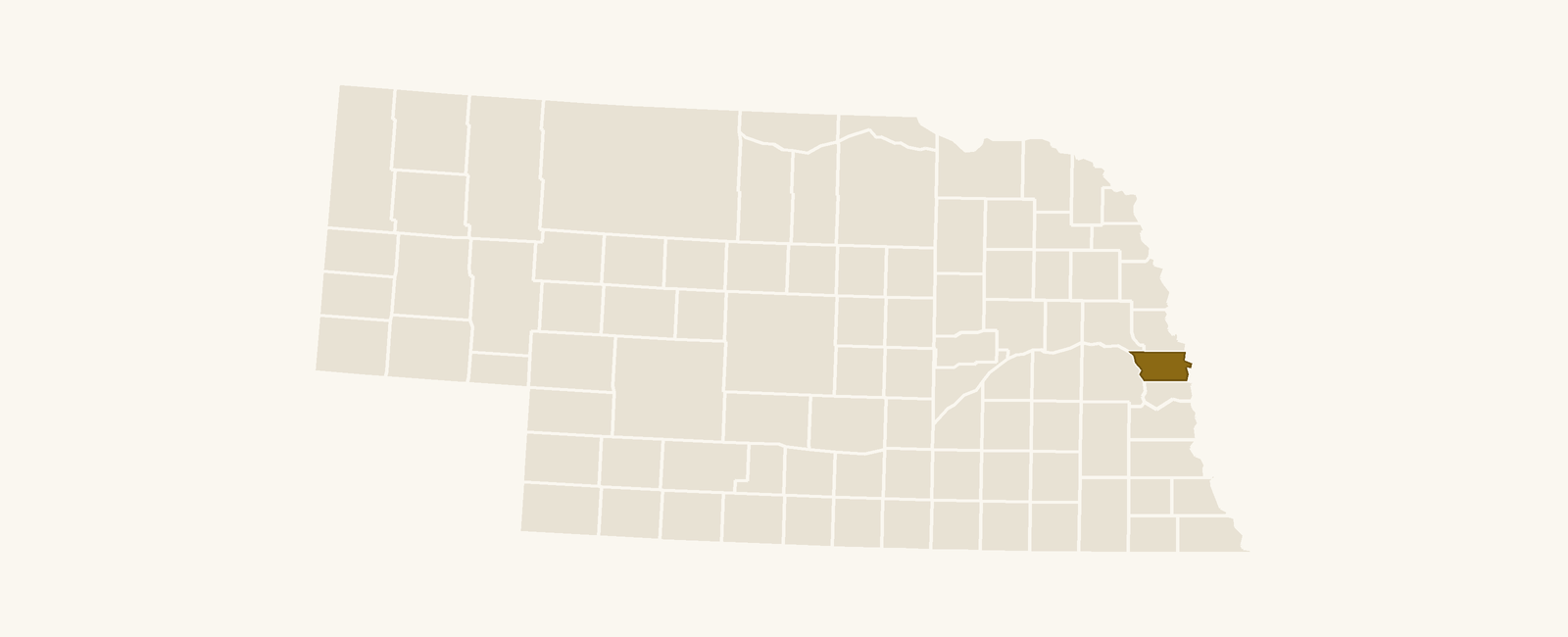
Douglas County Nebraska real estate investing starts with the housing stock
Douglas County has 248,692 housing units and a population of 585,461. The county seat is Omaha. About 62% of homes are owner-occupied, and the median home value is $246K.
Single-family houses dominate. 66% of homes are single-family detached, compared with 61% nationally. That suits wholesalers and flippers, because the typical deal is a house, not a unit in a multifamily building.
Vacancy is low. Just 6% of housing units are vacant, against 10% for the U.S. Few empty houses means buyers and renters are competing for what exists, and a distressed property that is actually occupied by a struggling owner is more common than an abandoned one.
Older homes are a real factor. 16% of homes were built before 1940, versus 12% nationally. Expect more plumbing, electrical, foundation and roof questions on those houses, and price your repairs accordingly.
Housing supply is also loosening a little at the margin. Permits for 3,963 new units were issued in 2025, a 13% drop from 2024. Fewer new units can keep pressure on existing homes, which supports resale and rental demand for the houses you rehab.
Source: U.S. Census ACS 2023
What rents and ownership numbers mean for buy-and-hold
HUD's Fair Market Rent for the Omaha, NE-IA area is $1,450 a month for a 2-bedroom and $1,924 for a 3-bedroom. Those are benchmarks, not guarantees, but they give you a starting point for testing whether a house you can buy at a discount works as a rental.
Equity is thinner than average. Only 32% of owner-occupied homes are owned free and clear, compared with 39% nationally. More owners carry a mortgage, which means more homes where a missed payment can turn into a lender action, and fewer estates where the house arrives with no debt attached.
The owner base is young. The median age is 35.5 versus 38.9 nationally, and 14% of residents are 65 or older versus 17% across the U.S. Younger owners often have newer loans and less built-up equity. That points your attention toward pre-foreclosure, while probate remains a steady but smaller piece of the picture.
Which court filings tend to come before a sale here
Two filing types matter in this county for investors: pre-foreclosure and probate. Each marks a point where an owner or a family may be ready to sell, for very different reasons.
- Pre-foreclosure: a lender has begun the process after missed payments. The owner is often weighing a sale, a loan workout or losing the home. Because fewer Douglas County owners are mortgage-free, this is where much of the pressure sits.
- Probate: an owner has died and the estate is being opened. Heirs often live elsewhere, may not want to maintain an older house, and may need to sell to settle the estate.
Both are public record. If you want those filings arriving with the owner and property already matched, Keystone covers Douglas County for both types.

How foreclosure and probate work in Nebraska, in plain terms
Foreclosure. In Nebraska a lender may foreclose through the courts, and loans secured by a deed of trust can also be handled through a trustee sale outside of court. Which route applies depends on the loan documents. Timelines and notice rules differ by route, so confirm specifics with an attorney before you rely on any date.
For you, the practical point is that an owner in pre-foreclosure usually has time to consider options, but that time is not unlimited. Selling before a sale can protect what equity remains.
Probate. Estates in Douglas County are handled by the Probate Division of the Douglas County Court, which sits in Omaha. It oversees the personal representative and the deceased's assets. It also protects creditors of the deceased and ensures the estate pays all taxes.
That has a direct effect on a purchase. A house in an estate usually cannot be sold until the person acting for the estate has the authority to do so, and debts and taxes may need to be settled from the proceeds. Ask the family's attorney how the sale would be handled, and do not assume the heirs can sign on their own.
How to approach owners respectfully and legally
People in these filings are dealing with debt or a death in the family. Lead with courtesy, say who you are and why you are writing, and make it easy to say no.
Keep first contact low-pressure. A short, honest letter that explains you buy houses as-is and leaves the decision to them works better than urgent language. Never imply the sale is required, and never suggest you are connected to the court or the lender.
Follow the phone rules. If you call, respect the National Do Not Call Registry and Nebraska's telemarketing rules, including calling-hour limits and company-specific opt-outs. When someone says stop, stop and note it. If you are unsure which rules apply to your outreach, ask an attorney.
Give people room to get advice. Encourage owners and heirs to talk to a housing counselor, an attorney or a trusted family member. In probate, wait for the right moment and speak with the person who has authority over the estate. Deals built on patience tend to hold together.
What to look for before you make an offer
Condition first. With 16% of homes built before 1940, assume an older Douglas County house may have hidden costs. Walk it carefully, bring a contractor when you can, and write your offer around repairs, not the median home value of $246K.
Title and debt. In pre-foreclosure, the loan balance and any other claims decide how much the owner can net. In probate, estate debts and taxes can affect what is left. Have a title company or attorney confirm what must be cleared at closing.
The property tax calendar. Douglas County property taxes are paid in arrears, so taxes paid in 2025 were based on the 2024 valuation. Protests for 2025 had to be filed or postmarked between June 1 and June 30, 2025, with no exceptions. The Board of Commissioners acts as the Board of Equalization, and owners who disagree with its decision can appeal to the state Tax Equalization and Review Commission, with a 2025 deadline of September 10, 2025. A new owner inherits the valuation, so factor the tax bill into rental numbers and know that the protest window is short.
Your exit. Test the deal both ways. A resale to an owner-occupant fits a county where most homes are single-family. A rental should clear your costs against the $1,450 and $1,924 HUD benchmarks, not an optimistic guess.
Questions investors ask
Is Douglas County a good market for wholesaling?
The housing mix helps. Two-thirds of homes are single-family detached and vacancy is only 6%, so an assigned contract has a deep pool of end buyers. Your margin still depends on repair costs, especially in older homes.
Who handles probate in Douglas County?
The Probate Division of the Douglas County Court in Omaha. It oversees the personal representative and the deceased's assets, and it protects creditors and makes sure the estate pays all taxes. Ask the estate's attorney who has authority to sell.
Does Nebraska require foreclosures to go through court?
Not always. A lender may foreclose through the courts, and a deed of trust can allow a trustee sale outside court. Which applies depends on the loan documents, so confirm with an attorney.
Can I call owners in pre-foreclosure or probate?
You can, but follow the National Do Not Call Registry and Nebraska telemarketing rules. Be brief and honest, and stop when asked. Many investors start with a respectful letter instead.
How do property taxes affect a deal in Douglas County?
Taxes are paid in arrears, so a bill reflects the prior year's valuation. The protest window is short, with 2025 protests due between June 1 and June 30. Build the likely tax cost into your numbers before you offer.
See Douglas County leads for 7 days, free
Real court filings with the owner and property matched. No credit card.