Investing in Washtenaw County, Michigan: where motivated sellers show up in the court record
A county of about 368,394 people, a young population and a high median home value behaves differently from most Michigan markets. Here is what that means for finding and handling motivated sellers.
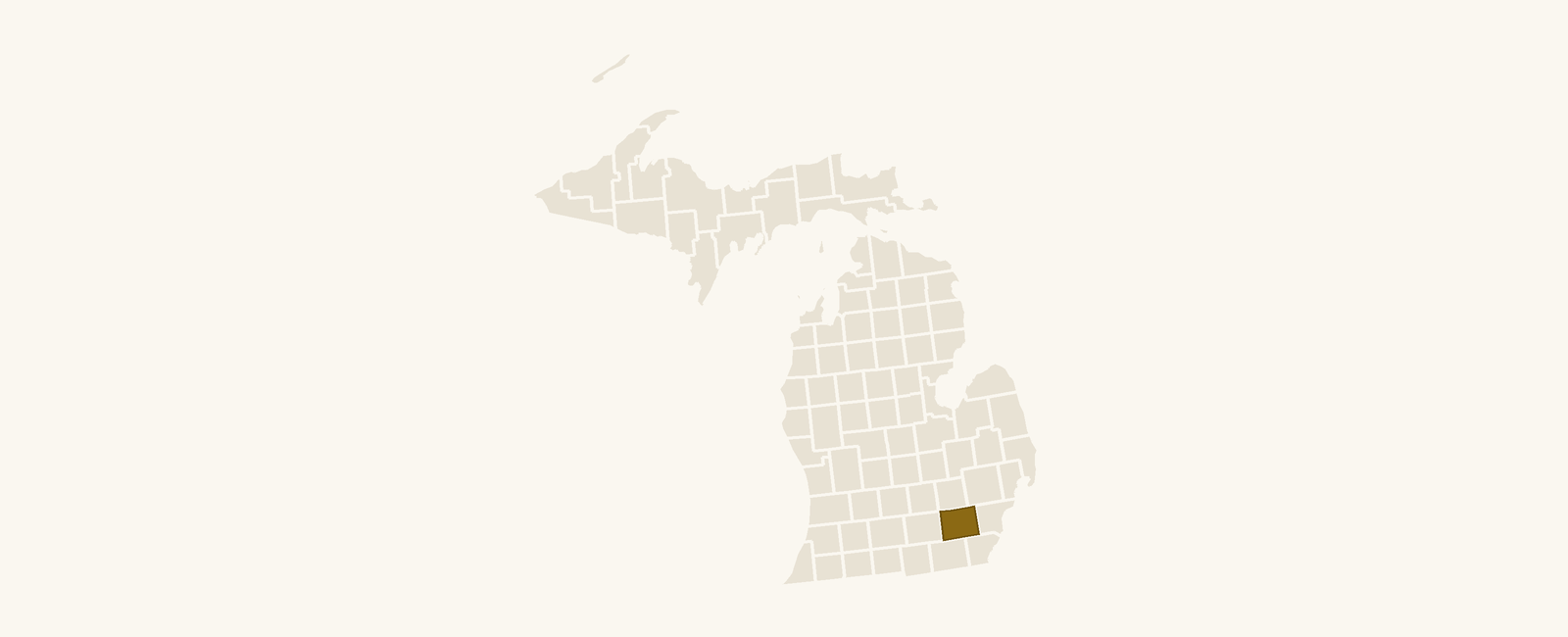
Washtenaw County real estate investing: what the housing looks like
Washtenaw County has 158,115 housing units for 368,394 residents, and the median home value is $353K. That is a pricey market by Michigan standards, and it shapes everything about how you work it. A modest discount on a house here is a large number of dollars, which is why sellers in trouble often have more at stake than you might expect.
Tight supply, low vacancy. Only 6% of housing units are vacant, compared with 10% nationally. Fewer abandoned or long-empty houses means fewer deals that come from neglect. Most opportunities here come from owners who live in the home and hit a life event.
Owners, but not mostly free and clear. About 62% of homes are owner-occupied, and 36% of those have no mortgage (U.S.: 39%). That is close to the national figure, so do not assume every estate house is paid off. Many owners still carry a loan, which affects how much room a sale has once payoffs are counted.
A younger county. The median age is 34.8 against 38.9 nationally, and 15% of residents are 65 or older against 17% nationally. Probate is still a real channel, but this is not a retirement-heavy county. Pre-foreclosure and other debt-driven situations deserve equal attention.
The housing mix is also a little more varied than average. 57% of homes are single-family detached (U.S.: 61%), so you will see more attached homes, condos and multi-unit buildings than in a typical county. Homes built before 1940 make up 12%, the same as the U.S. figure, so older-house repair surprises exist but are not unusually concentrated.
Source: U.S. Census ACS 2023
Which court filings tend to come before a sale here
A court filing does not mean a seller is ready to sell. It means something has changed in a household, and a sale becomes more likely. Here is what each filing tends to mean.
- Pre-foreclosure: The owner has fallen behind on a mortgage and the lender has started the process of taking the home. The owner often still holds substantial equity in a county with a $353K median value, which gives them real options, including a sale on their own terms.
- Probate: Estates go through the county probate court, the court that has jurisdiction over settling a decedent's estate (MCL 700.1302). When an owner dies, heirs often inherit a house they did not plan for, may live elsewhere, and may want a clean sale.
- Divorce: Divorce cases are heard in the family division of the circuit court (MCL 600.1021), and the court divides the marital property as it finds just and reasonable (MCL 552.19), which can mean a shared home is sold. We do not currently offer divorce leads in this county, but it is useful to know the pattern.
- Tax foreclosure: Michigan law requires the foreclosing governmental unit to hold one or more auction sales of tax-foreclosed property, which may be held online, between the third Tuesday in July and the first Tuesday in November after the foreclosure judgment (MCL 211.78m(2)). Owners who fell behind on taxes may be motivated well before that point.
These filings are public. Keystone Court Data delivers pre-foreclosure and probate filings in Washtenaw County with the owner and property already matched, so your time goes to talking with people, not assembling records.
How foreclosure and probate work in Michigan, in plain terms
Foreclosure is usually not a courtroom process here. Michigan lenders commonly foreclose by advertisement, which means the process runs outside a judge's courtroom, with required notices and a public sale. After the sale, the owner has a redemption period during which they can reclaim the property. For a home of up to four units it is generally six months when more than two-thirds of the original loan was still owed, one year when less was owed, and shorter if the home is found abandoned (MCL 600.3240).
That redemption period matters to you. Until it ends, the owner may still hold rights, and a buyer at the sale does not always get clean possession right away. If you are talking to an owner during this stretch, a lawyer should review the timing before you sign anything.
Probate runs through the county. Estates are handled by the county probate court (MCL 700.1302). A personal representative is appointed by the court and receives authority to act for the estate. Whether that person can sell a house freely or needs further approval depends on the will and how the estate is administered, so ask for proof of authority and let the estate's attorney explain what is required.
Probate also takes time. Heirs may be grieving, may disagree, and may be waiting on the court. An investor who is patient and clear about the process tends to be the one still in the conversation when they are ready.

Rents, permits and the buy-and-hold math
If you plan to hold rather than flip, start with the rent figures. HUD's Fair Market Rent for Ann Arbor, MI is $1,804 per month for a 2-bedroom and $2,164 for a 3-bedroom. Set those against a county median home value of $353K, and you can see why purchase price discipline matters. A small overpayment can erase the cash flow.
New supply is also worth a look. Washtenaw County permitted 1,088 new housing units in 2025, a change of -9% from 2024. Fewer new units coming online can support existing home values and rents, though it is only one input and says nothing about any single neighborhood.
With a median age of 34.8, the county skews young. For an investor, that points toward steady renter demand, but verify it against the specific property and its location rather than leaning on a county-wide number.
How to approach owners respectfully and legally
Lead with help, not pressure. People dealing with a death, a divorce or a missed mortgage payment are often tired and embarrassed. Introduce yourself plainly, explain what you do, and make clear there is no obligation. A short, honest letter or a calm conversation works better than a hard pitch.
Follow phone rules. Calls are regulated. Federal rules on telephone solicitations set the National Do Not Call Registry, a calling window of 8 a.m. to 9 p.m. local time and company do-not-call lists (47 C.F.R. 64.1200). Michigan uses the federal list as its state do-not-call list, bars telephone solicitations that use a recorded message, requires the caller to give their name and organization at the start of the call, and bars solicitation calls to anyone who has asked not to get them (MCL 445.111a, 445.111b, 445.111c). Whether a call offering to buy a house is covered depends on the facts, so a Michigan attorney can confirm. When someone says no, record it and stop. An attorney can tell you exactly what applies to your outreach.
Some practical habits help:
- Say who you are and why you are contacting them in the first sentence.
- Never imply you are with the court, the lender or the government.
- Do not pressure anyone to sign quickly, especially someone facing a foreclosure sale.
- Encourage owners and heirs to talk with their own attorney or a housing counselor.
- Be honest about your offer, including that it may be below retail.
In a county of this size, word travels. Agents, attorneys and title companies talk, and a reputation for treating people fairly is worth more than any single deal.
What to look for before making an offer
Confirm who can actually sell. In probate, that means the personal representative with court authority. In a divorce, it means every owner of record, or the spouse the divorce judgment awards the house to. In pre-foreclosure, it means the owner of record, with the lender's position clearly understood.
Check the loan and lien picture with professionals. A title company and attorney should confirm what is owed, what must be paid at closing, and whether anything could survive the sale. Do not guess at payoffs, especially when equity looks large.
Budget for the house itself. Homes built before 1940 are 12% of the housing here, so older properties will come up. Plan for inspections of the roof, foundation, electrical and plumbing, and price repairs conservatively.
Know the exit. If you will rent, run the numbers against the HUD Fair Market Rent figures. If you will resell, remember that a $353K median value means buyers are price-sensitive, so a sloppy rehab is hard to recover from.
Finally, put every promise in writing and have an attorney review the contract. That protects the seller and you.
Questions investors ask
Is Michigan a judicial or non-judicial foreclosure state?
Most Michigan mortgage foreclosures are done by advertisement, which happens outside the courtroom. Notices are given and a public sale follows. Because the details vary by loan and situation, confirm the process with a Michigan attorney.
Who handles probate in Washtenaw County?
Estates go through the county probate court, the court that has jurisdiction over settling a decedent's estate (MCL 700.1302). The court appoints a personal representative who acts for the estate. Ask that person for proof of authority before discussing any sale.
Can an executor sell a house in Washtenaw County?
Yes, once the court has appointed them, unless the will or a court order in a formal proceeding restricts that power; a state or county public administrator needs court approval to sell real property (MCL 700.3701, 700.3715). The estate's attorney can confirm what applies.
Are there many vacant houses to buy in Washtenaw County?
Not compared with the country as a whole. About 6% of housing units are vacant, versus 10% nationally. Most deals here involve owner-occupied homes where something changed in the owner's life.
Can I call homeowners I find in court records?
Calls are regulated. Federal rules on telephone solicitations set the National Do Not Call Registry, a calling window of 8 a.m. to 9 p.m. local time and company do-not-call lists (47 C.F.R. 64.1200). Michigan uses the federal list as its state do-not-call list, bars telephone solicitations that use a recorded message, requires the caller to give their name and organization at the start of the call, and bars solicitation calls to anyone who has asked not to get them (MCL 445.111a, 445.111b, 445.111c). Whether a call offering to buy a house is covered depends on the facts, so a Michigan attorney can confirm. Many investors start with a respectful letter instead.
See Washtenaw County leads for 7 days, free
Real court filings with the owner and property matched. No credit card.