Investing in Oakland County, Michigan: where motivated sellers show up in the court record
A county of single-family homes, an older-than-average population and a market that is building less. Here is what that means for finding and treating sellers fairly.
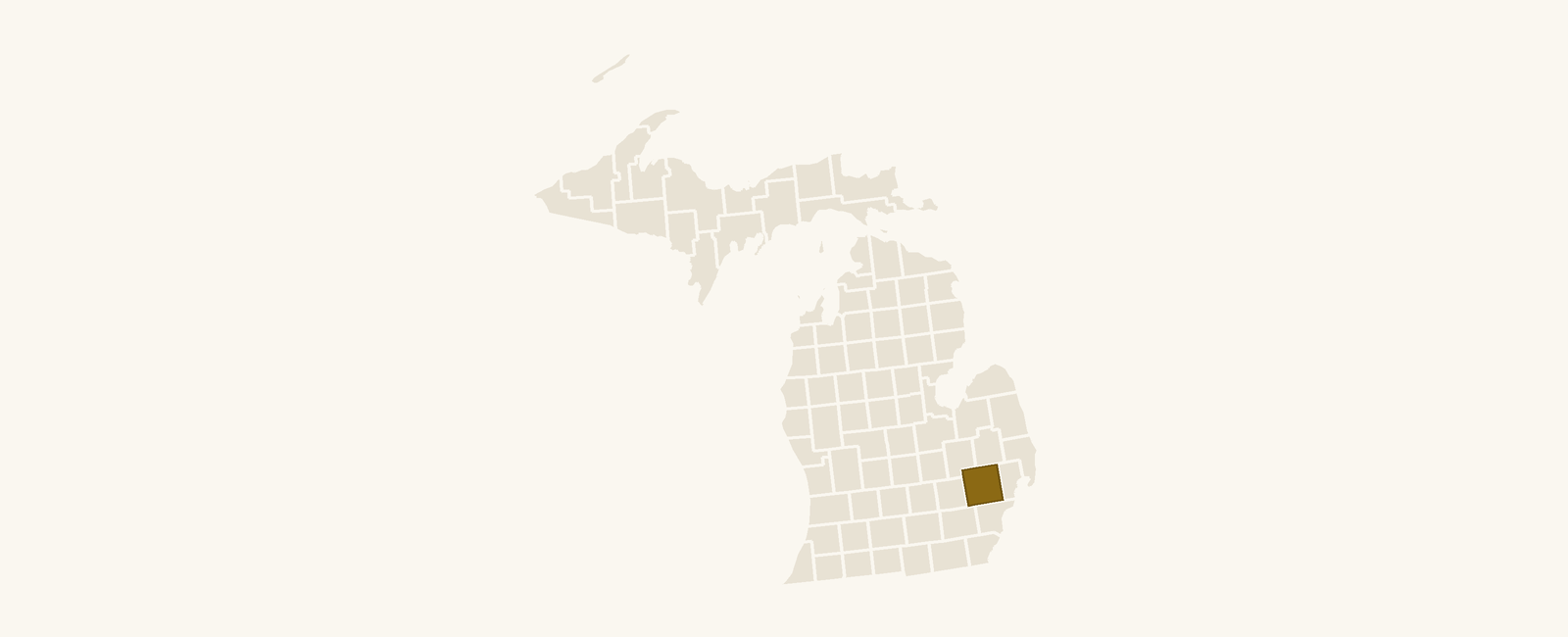
What Oakland County housing looks like for an investor
Oakland County has 557,978 housing units and 1,272,294 residents, and 72% of homes are owner-occupied. If you are researching Oakland County Michigan real estate investing, start there: this is a county of people living in the houses they own, not a rental-heavy market.
Single-family is the main product. About 68% of homes are single-family detached, against 61% nationally. The median home value is $320K, so a typical deal here is a full-size house, and your numbers will rest on repair costs and resale rather than on small-unit math.
Vacancy is low. Only 5% of housing units are vacant, versus 10% for the U.S. That points to steady demand for homes, and it means a really neglected, empty house stands out when you see one.
The stock is not especially old. Just 7% of homes were built before 1940, compared with 12% nationally. You will still meet aging systems and deferred maintenance, but century-old housing is a smaller part of the picture here than in many places.
Supply is tightening. New housing units permitted in 2025 came to 2,023, a change of -30% from 2024. Fewer new homes can mean existing houses carry more of the demand, which can support resale values. It is one signal, not a forecast.
Source: U.S. Census ACS 2023
Why older owners and equity shape the opportunities
About 18% of Oakland County residents are 65 or older, against 17% nationally, and the median age is 41.2 compared with 38.9 for the U.S. The county skews a little older, which makes estates and downsizing sales a steady source of properties changing hands.
Equity is not a given. Of owner-occupied homes, 35% have no mortgage, below the national 39%. That means a larger share of owners still carry a loan, and a house in an estate or divorce may have less room in the price than you would guess from the $320K median value.
So the question to ask on any file is how much is owed, not how long the family has owned it. A long-held home is often paid down, but not always, and refinances and home equity loans are common.
Which court filings tend to come before a sale here
A court filing is a sign that something in an owner's life has changed. It is not a reason to sell on its own, and each type tells you something different.
- Pre-foreclosure: the lender has started the process after missed payments. The owner may want to sell to protect what equity remains, but time is limited and stress is high.
- Probate: an owner has died and the estate is being opened. Heirs often live elsewhere and may prefer a clean sale to managing a house.
- Divorce: a couple may need to sell or buy one another out. The sale often depends on agreement between two people.
- Tax sale and partition: unpaid property taxes or co-owners who disagree can force a change in who holds the property.
Given the county's older population, probate matters more here than in a younger market. Pre-foreclosure matters most where owners still carry a mortgage, which is the majority of owner-occupied homes.
These records are public. If you want them delivered with the owner and property already matched, Keystone does that for Oakland County.

How the process works in Michigan, in plain terms
Foreclosure. Most Michigan residential foreclosures are handled outside court, by what the state calls foreclosure by advertisement, rather than through a lawsuit. That means the owner may not see a judge before the sale, and the sale is public. After a sheriff's sale, Michigan generally gives the owner a redemption period, but its length depends on the type of property and the circumstances. Confirm the details with an attorney or the county court before you rely on any timeline.
Probate. Estates are handled by the county probate court. Someone usually has to be formally appointed as personal representative before they can sign a deed on the estate's behalf. Ask to see proof of that authority, and remember that some estates are handled through simpler processes depending on the circumstances.
Divorce. Divorce cases are heard by the circuit court's family division. A house may be sold, awarded to one spouse, or held until the court approves a settlement, so a sale usually depends on the agreement or the court's orders.
Property taxes. Unpaid taxes can eventually lead to a foreclosure process run through the county treasurer. The steps and deadlines are set by state law, and they change, so confirm them with an attorney.
None of this is legal advice. Rules vary by situation, so talk to a Michigan real estate attorney before you sign anything.
Approaching owners respectfully and legally
The people behind these filings are often grieving, stressed or embarrassed. A short, honest note that says who you are, why you are writing and that there is no pressure will land better than a hard pitch.
Be plain about what you do. Say you buy houses, say you are not a lender or an agent if that is the case, and never imply you are connected to the court or the bank. Do not suggest a deadline that does not exist.
Phone calls come with rules. Check the National Do Not Call Registry before calling, and follow federal and Michigan telemarketing rules, including calling hours and honoring any request to stop. If in doubt, ask an attorney or write by mail instead.
Respect the other people involved. In an estate, heirs may disagree. In a divorce, both spouses may have a say. In foreclosure, the owner may have already heard from many people. Patience and clarity are what make you the one worth calling back.
What to look for before you make an offer
Confirm who can sell. For an estate, that means the person with court authority. For a divorce, it may mean both spouses or a court order. For a foreclosure, it means understanding where the process stands.
Check the debt and title. With 35% of owner-occupied homes free and clear, you cannot assume a house is. Look at liens, back taxes and judgments, and use a title company to confirm what must be paid at closing.
Budget repairs honestly. Homes built before 1940 are only 7% of the stock, so many houses will be mid-century or newer, but long-held and estate homes often have older roofs, furnaces and kitchens. Walk the house before you commit to a number.
Run the rental math if you will hold. HUD Fair Market Rent for the Detroit-Warren-Dearborn area is $1,459 a month for a 2-bedroom and $1,777 for a 3-bedroom. Against a $320K median value, that tells you to be careful about how much you pay if you plan to rent rather than resell. Fair Market Rent is a benchmark, not a quote for any one house.
Questions investors ask
Is Oakland County a good place for real estate investors?
It is a steady, owner-occupied, single-family market with low vacancy at 5%. That favors resale and careful buy-and-hold over bargain hunting. The right answer depends on your price, repair budget and the rent a particular house can support.
Why do probate filings matter in Oakland County?
About 18% of residents are 65 or older, a little above the U.S. figure of 17%. That means estates and inherited homes are a regular part of the market. Heirs who live elsewhere may be open to a straightforward sale.
Does Michigan foreclose through the courts?
Most residential foreclosures in Michigan are handled outside court, by advertisement. Redemption rules apply after the sale and depend on the situation. Confirm the timeline with an attorney or the county court.
Can I call owners whose homes are in foreclosure or probate?
Only if you follow the rules. Check the Do Not Call Registry, follow federal and Michigan telemarketing rules, and stop when asked. Many investors choose a respectful letter instead.
What do court filings tell me about an Oakland County owner's situation?
A filing signals a life event such as a missed mortgage, a death, a divorce or unpaid taxes, but it does not mean the owner wants to sell. Each type involves different decision-makers and timing, so confirm who has authority to sell and how the process works with a Michigan real estate attorney.
See Oakland County leads for 7 days, free
Real court filings with the owner and property matched. No credit card.