Divorce in Arapahoe County, Colorado: what investors should know
Arapahoe County is a high-value, mostly owner-occupied market where fewer homes are owned free and clear than the U.S. average. That shapes what a divorce sale looks like and how you should approach it.
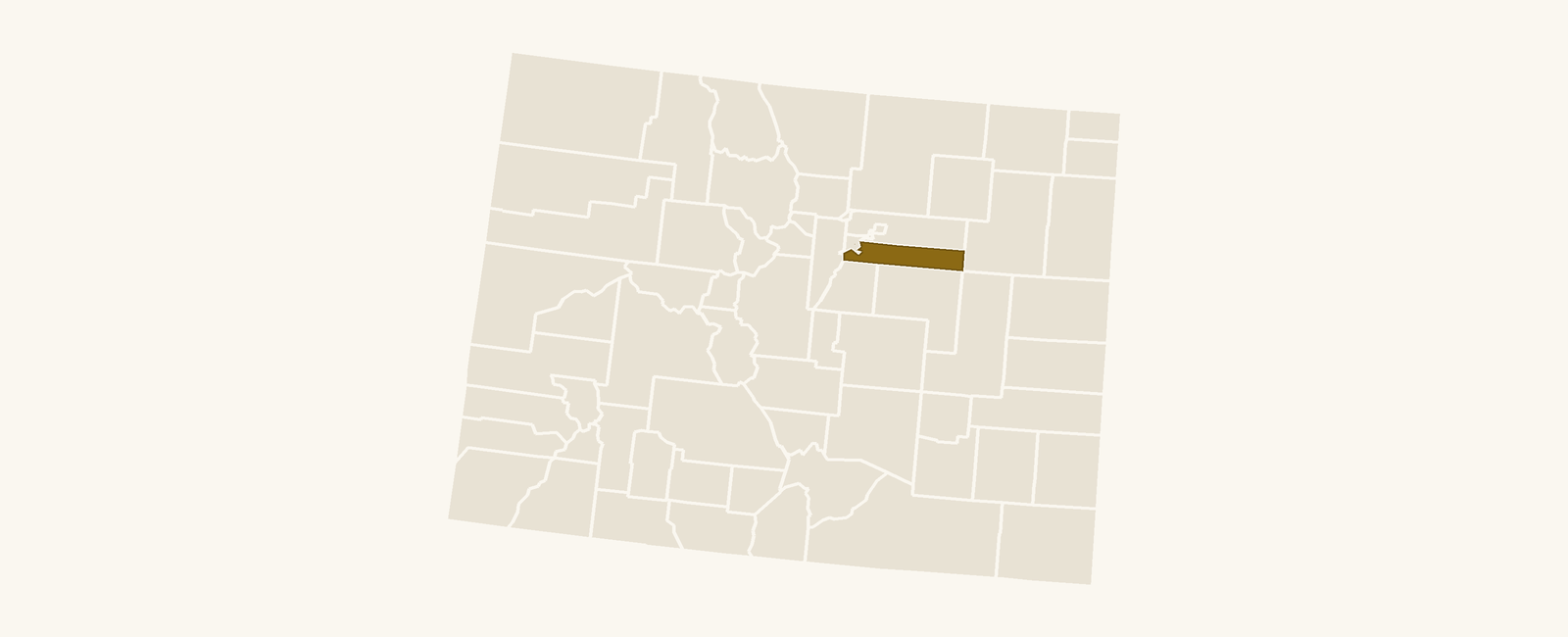
What the Arapahoe County housing market looks like for a divorce sale
Arapahoe County has 265,980 housing units and a population of 655,709, and 65% of homes are owner-occupied. The median home value is $526K. When a couple divorces here, the house is usually the largest asset they have to divide, which is why divorce in Arapahoe County, Colorado deserves a place in your lead mix.
Less free-and-clear ownership than average. Just 26% of owner-occupied homes here have no mortgage, compared with 39% for the U.S. Most divorcing owners therefore still owe a lender, and the payoff shapes what a sale can look like. Equity exists, but you have to work out how much before you talk numbers.
A tight, newer market. Only 4% of housing units are vacant (U.S.: 10%), and just 2% of homes were built before 1940 (U.S.: 12%). Old, neglected houses are the exception, so condition problems tend to be deferred maintenance rather than age-driven surprises. Single-family detached homes make up 56% of the stock (U.S.: 61%), so you will also see attached homes and condos in the mix.
Residents are slightly younger than the national picture, with a median age of 37.3 (U.S.: 38.9) and 14% aged 65 or older (U.S.: 17%). That leans the county toward working-age households, where divorce is a more common reason to sell than in a retirement-heavy county. Census figures come from the American Community Survey.
Source: U.S. Census ACS 2023
Where divorce sits among the filings that come before a sale
Several court filings can signal that a property may change hands. Each one means something different about the owner's situation.
- Pre-foreclosure: a lender has started the legal process over missed payments. The owner is often under time pressure and may be open to a quick, clean sale.
- Probate: an owner has died and the estate is being administered. The decision-makers are heirs or a personal representative, often grieving and often out of town.
- Divorce: two people must divide property. The house may be sold, or one spouse may keep it and buy the other out.
- Tax sale: unpaid property taxes have put the property on a path toward a tax lien sale.
Divorce is the slowest and least predictable of these. There is no single trigger date like a foreclosure sale, and many couples never sell. The ones who do often need to move on a schedule set by a settlement or court order, not by a lender.
How a Colorado divorce works in plain terms
Colorado is a no-fault state. A divorce is called a dissolution of marriage, and the court asks whether the marriage is irretrievably broken, not who caused it. Timing varies by case, but the statute sets the minimum waiting period below, and an attorney or the court can confirm specifics.
A waiting period applies. Colorado law does not allow a dissolution decree until at least 91 days after the court acquires jurisdiction over the respondent, through service of the petition or the respondent's own appearance (C.R.S. 14-10-106(1)(a)(III)). Contested cases take longer, especially when there are children or disputes over the house. Do not assume a sale follows right after that period ends.
Property is restrained once a case starts. Once a petition is filed and served on the other spouse (or service is waived), Colorado law puts an automatic temporary injunction on both spouses. It bars transferring, encumbering or disposing of marital property without the other spouse's consent or a court order, except in the usual course of business or for the necessities of life (C.R.S. 14-10-107(4)(b)(I)(A)). That means one spouse cannot simply sign a deed to you. A sale of marital property needs the other spouse's consent or a court order, such as approved final orders.
The decree decides the house. The final orders may require a sale, award the home to one spouse with a buyout, or set terms for how and when to sell. A purchase contract that ignores those orders can fall apart. An attorney can review anything involving a home in an open divorce.

What the local court resources tell you about owners
The Arapahoe County court system points divorcing parties toward several support services. Knowing they exist helps you picture who you are talking to.
- The 18th Judicial District lists an Office of Dispute Resolution (Mediation) among its resources, so many couples try to settle the house without a trial.
- The Arapahoe County court page lists parenting class providers, which tells you many cases involve children and a household that may want to stay put until the school year or custody terms are settled.
- The Arapahoe District Court Self Help Center, in Centennial, gives procedural information to people handling family cases such as divorce without an attorney.
Taken together, these mean you will often meet owners who are handling much of this on their own, without a lawyer guiding every step. Treat that as a reason for extra care. Be clear about what you are offering, never give legal advice, and encourage them to get their own counsel.
How to approach divorcing owners respectfully and legally
A divorce is one of the hardest things a person goes through, and the house often carries history. Lead with courtesy, not urgency.
Be honest about who you are. Say that you are an investor, what you do, and that you are not a lawyer or a mediator. Never imply you are affiliated with the court.
Expect two decision-makers. While the case is open, a transfer of marital property needs both spouses' agreement or a court order. Do not play one against the other, and do not share what one told you with the other. If they ask you to keep working with only one party, suggest they speak with their attorneys.
Mind the phone rules. If you call, scrub numbers against the National Do Not Call Registry and follow the Colorado No-Call List Act (C.R.S. 6-1-901 et seq.) and the federal Telemarketing Sales Rule. A short, personal letter is often better received than a cold call. Stop contact right away when someone asks.
No pressure. Do not suggest the owner will lose everything if they wait, and do not misstate the court process. If they are not ready, leave a way to reach you and let them decide.
What to look for before you make an offer
Run through the same checks on every divorce deal, because the paperwork matters more than the house.
- Mortgage payoff versus value. With only 26% of owners free and clear, expect a loan. Your offer has to cover the payoff, closing costs and the spouses' expectations.
- Who has authority to sign. Confirm with the owners and their attorneys what the court orders or settlement allow, and whether both spouses must sign.
- Timeline. Ask whether a sale is already required by an order, or whether the owners are still deciding. Do not tie up a property in a way that conflicts with a pending case.
- Condition. With few pre-1940 homes (2%), expect more modern systems, but still budget for deferred repairs, and inspect before you commit.
- Exit strategy. HUD Fair Market Rent for the Denver-Aurora-Centennial area is $2,169 for a 2-bedroom and $2,846 for a 3-bedroom. Those figures help you test a rental hold against your purchase and repair costs. New permits are also worth a look: 3,599 units were permitted in 2025, down 7% from 2024, a modest pullback in new supply.
Divorce filings are public records. If you want them delivered with the owner and property already matched, Keystone does that for Arapahoe County, and you can read more about divorce leads in general.
Questions investors ask
Can I buy a house from someone in the middle of a divorce in Colorado?
Sometimes, but it is not simple. Once the petition is filed and served, Colorado's automatic injunction bars either spouse from transferring marital property without the other's consent or a court order (C.R.S. 14-10-107(4)(b)), so a sale needs both spouses' agreement or court approval. An attorney can review the contract before it is signed.
How long does a divorce take in Arapahoe County?
Colorado law does not allow a dissolution decree until at least 91 days after the court acquires jurisdiction over the responding spouse (C.R.S. 14-10-106). Many cases take longer, particularly when children, support or the house are disputed. An attorney can confirm timing for a specific case.
Do divorcing couples in Arapahoe County usually sell the house?
Not always. Some sell and split the proceeds, while others have one spouse keep the home and buy out the other. The court system offers mediation, so many couples work out the house themselves.
Is it legal to call people going through a divorce?
It can be, but telephone solicitations are subject to the National Do Not Call Registry and Colorado's no-call law. A respectful letter is often a better first step, and any contact should stop the moment someone asks.
Why does the free-and-clear figure matter for divorce deals?
Only 26% of owner-occupied homes in Arapahoe County have no mortgage, compared with 39% nationally. Most divorcing owners still owe a lender, so the payoff and the equity left over decide whether a sale works for them and for you.
See Arapahoe County leads for 7 days, free
Real court filings with the owner and property matched. No credit card.