Investing in Boulder County, Colorado: where motivated sellers show up in the court record
A $714K median home value changes the math on every distressed deal. Here is how pre-foreclosure, probate, divorce and tax sale filings work in the 20th Judicial District, and how to treat the people behind them.
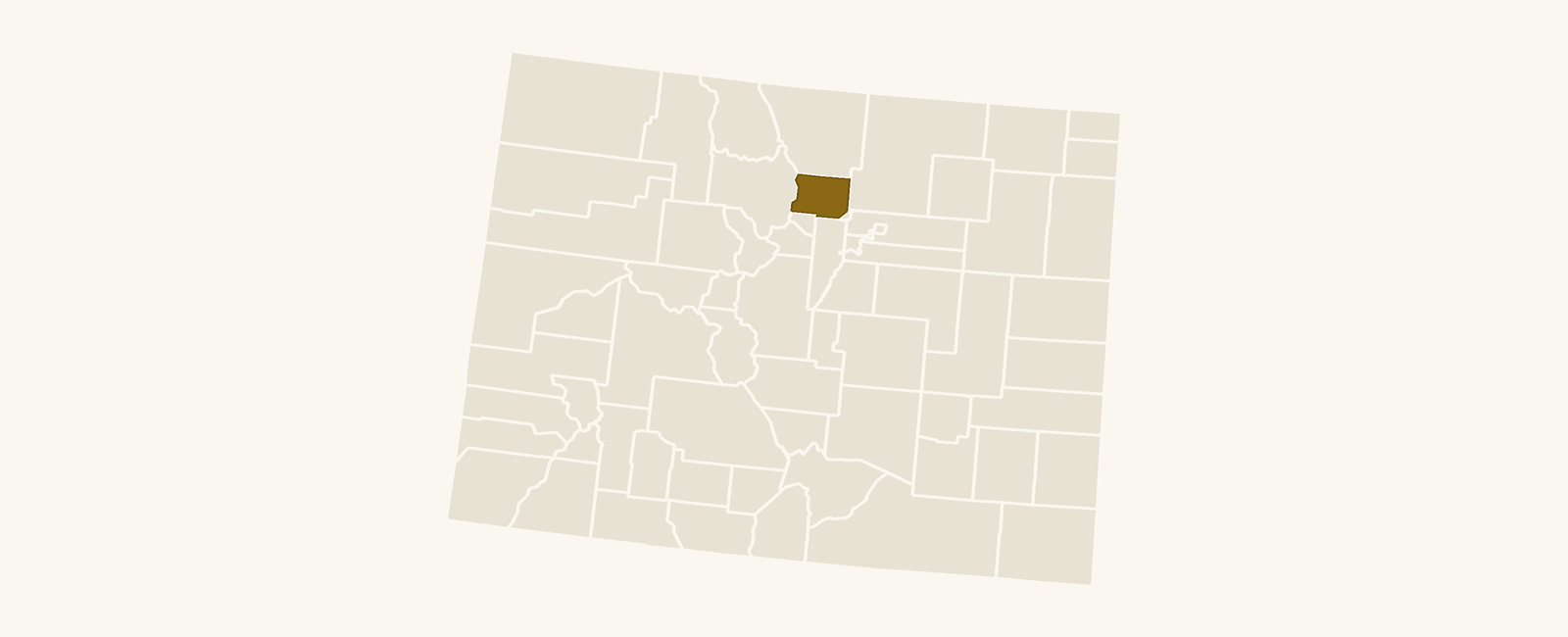
What the housing looks like for Boulder County Colorado real estate investing
Boulder County has 142,809 housing units and 328,317 residents, and the median home value is $714K. That single number shapes everything else in this guide. A distressed owner here is rarely selling a small, cheap house, so the stakes for them (and for you) are high.
Ownership and vacancy. About 62% of homes are owner-occupied, and just 5% of housing units are vacant, against 10% for the U.S. Low vacancy points to a tight market where homes do not sit empty for long. Abandoned or derelict properties are not the typical story here.
Housing stock. Single-family detached homes make up 58% of units (U.S.: 61%), and only 6% of homes were built before 1940 (U.S.: 12%). Boulder County has fewer very old houses than the national average, though that does not mean every home is in good shape. Condition still has to be judged one property at a time.
Rents and new supply. HUD Fair Market Rent is $2,033 a month for a 2-bedroom and $2,703 for a 3-bedroom in Boulder. The county permitted 2,001 new housing units in 2025, up 19% from 2024. If you plan to hold, that new supply is worth weighing against your rent assumptions. Figures come from the Census Bureau's American Community Survey, HUD and the Census building permits survey.
Source: U.S. Census ACS 2023
What 34% free and clear means for sellers here
Nationally, 39% of owner-occupied homes have no mortgage. In Boulder County the figure is 34%. So a larger share of owners than average still have a loan against the house, and a missed payment can turn into a legal problem.
Why this matters to you. Where a mortgage exists, a pre-foreclosure owner may have a hard decision to make, and the details depend on what is owed against a $714K-median home. Where there is no mortgage, as in many estates, the owner or heirs may have a lot of flexibility on timing and terms. The two situations call for different conversations.
Seniors are 16% of residents (U.S.: 17%) and the median age is 37.5 (U.S.: 38.9). That is close to national norms, so do not assume probate dominates here. It is one of several paths, not the main one.
Which court filings tend to come before a sale here, and why
A court filing is a sign that something in a household has changed. It is not a verdict on the person. Here is what each type means in Boulder County.
- Pre-foreclosure. A lender has started the legal process after missed payments. The owner is under a clock and may welcome an honest option, or may be hoping to work things out with the lender.
- Probate. An owner has died and the estate is being opened. Heirs or a court-appointed personal representative often live elsewhere and may not want to manage a house. They may also be grieving, so timing and tone matter.
- Divorce. A couple is dividing property. The 20th Judicial District runs a free in-person Divorce/Custody Orientation on the 1st and 3rd Thursday of the month at noon and a Divorce/Custody Workshop on Thursdays at 1:00pm, both at the Boulder County Justice Center. They are a reminder that many people go through this without a lawyer and under real stress. Parents who take one of the district's designated co-parenting classes get a completion certificate that is filed with the court.
- Tax sale. Property taxes went unpaid and the county sells the lien. The 2026 sale is scheduled for Nov. 13, 2026, and the rate for liens sold is 13% per year. Delinquent mobile home taxes are struck off to the county instead of being sold at auction.
These records are public. If you want them already matched to the owner and property, the Boulder County page shows what Keystone delivers, and you can try a county free for 7 days with no credit card.

How the process works in Colorado, in plain terms
Foreclosure. Colorado foreclosures generally run through the county Public Trustee rather than as a full lawsuit, and a court order authorizing the sale (a Rule 120 order) is required before a Public Trustee sale (C.R.S. 38-38-105). In Boulder County, the Public Trustee holds sales on Wednesdays at 10:30 a.m. in its Boulder office, and all bidders must register.
The foreclosing lender must submit its bid by noon two business days before the sale, or the sale is continued to the following week (C.R.S. 38-38-106(1)). That means a scheduled sale can move. Winning bids must be paid by 1 p.m. on sale day in certified funds. Personal checks are not accepted, and nonpayment may bring a two-year ban from auctions.
After the sale. Eligible junior lienholders have 8 business days after the sale to file a notice of intent to redeem (C.R.S. 38-38-302). For cases started after 1/1/08, the property owner no longer has a right to redeem after the sale. That is why talking to an owner before the sale is the only window in which they can still choose a different outcome.
Probate and divorce. Probate in Boulder County is handled in the district court, and a personal representative must be appointed through that process before selling. Once appointed, a personal representative can generally sell estate real estate without a separate court order unless the will limits the power or, in a supervised administration, the court restricts it (C.R.S. 15-12-504, 15-12-704, 15-12-711). Divorce cases are in the same 20th Judicial District, which uses the Boulder County Justice Center. Rules and timelines vary by case, and the court or an attorney can confirm specifics.
Property tax calendar. Boulder County revalues every property in odd-numbered years, with Notices of Valuation sent around May 1. The Assessor accepted real property valuation appeals May 1 through June 8, 2026. Owners who disagree may appeal in writing to the Board of Equalization by September 15, and that board concludes hearings not later than Nov. 1.
How to approach owners respectfully and legally
Most people you contact are dealing with a death, a breakup or money trouble. Write like a neighbor, not a collector. A short, honest letter that says who you are and what you can offer, with no pressure and no deadline games, works better than a hard sell.
If you phone, follow the rules. Check numbers against the federal Do Not Call Registry and the Colorado no-call list, and follow the federal calling-hour limits and any internal do-not-call requests. Texts and automated calls carry their own restrictions. An attorney can answer questions before outreach starts.
- Say who you are, who you buy for, and why you are reaching out.
- Never imply you are connected to the court, the lender or the county.
- Do not promise to stop a foreclosure. Explain that they may also want to talk to a housing counselor or attorney.
- Stop contact the moment someone asks you to.
- For probate, speak with the personal representative or the family's attorney, not with every relative.
Owners in default or in a legal dispute are often wary. Patience and clear answers build the trust that closes deals.
What to look for before you make an offer in Boulder County
Know the numbers behind a $714K market. With values this high, small percentage errors in your repair or resale estimate become big dollar errors. Build in margin and get contractor input on any house you plan to renovate.
Check title and liens. In a foreclosure, junior lienholders have their own rights and deadlines. In probate, confirm who has authority to sign. In an open divorce, a sale of marital property needs both spouses' consent or a court order (C.R.S. 14-10-107). A title company and an attorney can confirm all of this before you commit.
Judge the condition honestly. Only 6% of homes here predate 1940, so many properties are newer, but age is not the only risk. Plan inspections for roof, foundation, systems and anything tied to a long deferred repair list.
Run the hold math. If you will rent, compare your purchase price with the HUD Fair Market Rent figures of $2,033 (2-bedroom) and $2,703 (3-bedroom), and remember that 2,001 new units were permitted in 2025. Also factor in the odd-year revaluation cycle, since a reassessment can change an owner's tax bill.
Auction rules. Bidders at a Public Trustee sale must register, and winning bids must be paid in certified funds by 1 p.m. the same day. Know your financing before you raise your hand.
Questions investors ask
Is foreclosure in Boulder County handled by a court or by the Public Trustee?
Mostly by the Public Trustee, which holds the sale, and a court order authorizing the sale (a Rule 120 order) is required first (C.R.S. 38-38-105). The Boulder County Public Trustee runs sales on Wednesdays at 10:30 a.m. An attorney can confirm the current steps for a specific case.
Can a homeowner get the house back after a Boulder County foreclosure sale?
For cases started after 1/1/08, the property owner no longer has a right to redeem after the sale. Eligible junior lienholders have 8 business days after the sale to file a notice of intent to redeem (C.R.S. 38-38-302). An attorney can explain how this applies to a particular case.
How does the Boulder County tax lien sale work for investors?
The county sells liens on unpaid real property taxes at its annual sale. The 2026 sale is scheduled for Nov. 13, 2026, with registration at 7:30 a.m. and the sale starting at 8:30 a.m., and the rate for liens sold is 13% per year. Buying a lien is not the same as buying a house: at least three years after the sale, the lien holder may apply for a public auction of a certificate of option for a treasurer's deed, and the owner can redeem until that auction (C.R.S. 39-11.5-102(1), 39-11.5-106(4)). An attorney can explain the rights and risks.
Can I call homeowners I find in court filings?
You can, but only within the law. Check numbers against the federal Do Not Call Registry and the Colorado no-call list, and stop contacting anyone who asks you to. A letter is often a gentler first step for people facing a death or divorce.
Is Boulder County a good place to buy and hold rentals?
It can be, but the numbers need care. Median home value is $714K, while HUD Fair Market Rent is $2,033 for a 2-bedroom and $2,703 for a 3-bedroom. Unit permits rose 19% from 2024 to 2025, so account for new supply in your rent assumptions.
See Boulder County leads for 7 days, free
Real court filings with the owner and property matched. No credit card.