Tax sale in Wake County, North Carolina: what investors should know
A Wake County tax foreclosure ends at a public auction with a deposit, an upset bid window and no promises about condition. Here is how that works, what it means in a market with a median home value of $423K, and how to treat the owners involved.
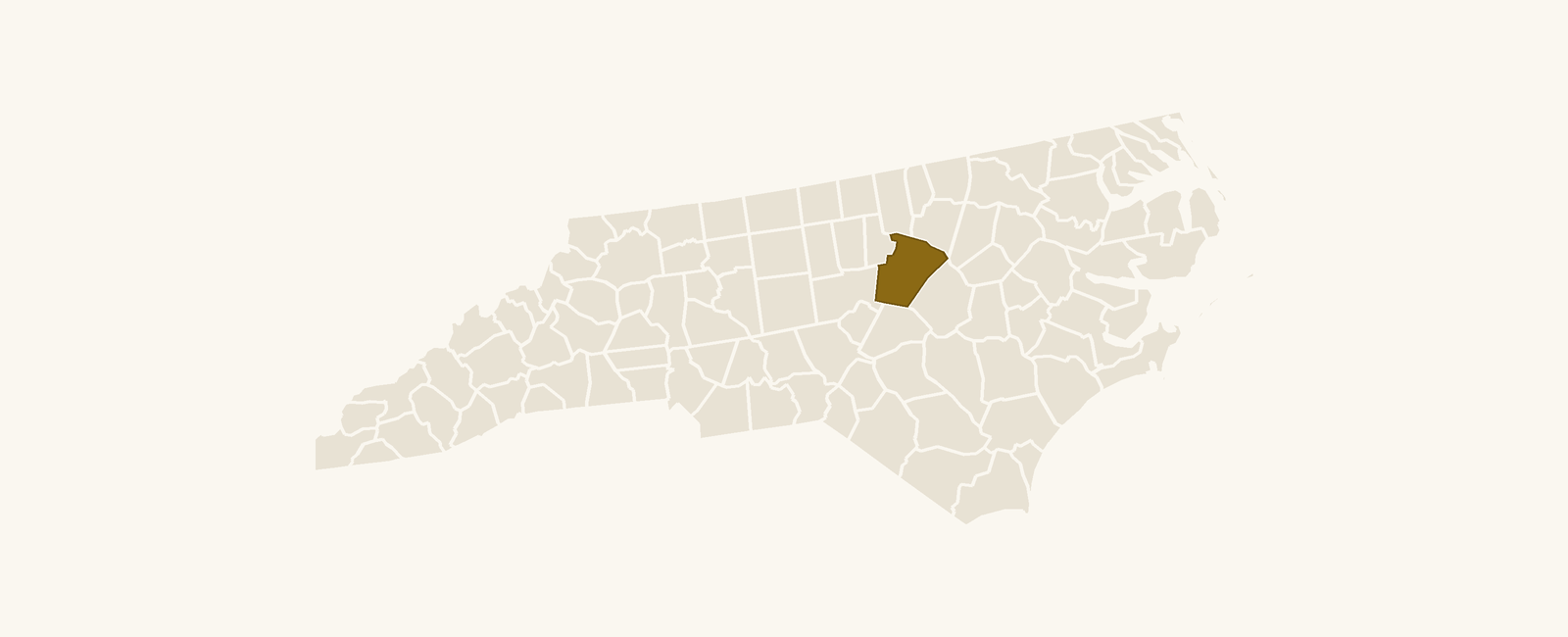
Tax sale in Wake County, North Carolina: what the housing market looks like
Wake County is the most populous county in North Carolina, with 1,129,410 residents in the 2020 Census. The Census Bureau's ACS puts the current population at 1,151,009 across 481,999 housing units, and the county seat is Raleigh. Raleigh (466,106) and Cary (171,012) are the largest municipalities by 2020 count, followed by Apex (58,780).
The median home value is $423K. That matters for a tax sale investor, because a property that goes to auction here usually has real value behind the unpaid taxes. It also means the stakes are higher for the owner, who may have meaningful equity at risk.
Equity is thinner than you might expect. Just 26% of owner-occupied homes have no mortgage, against 39% nationally. Many Wake County owners carry a loan, so a tax problem can sit on top of a mortgage problem. Expect other liens and lenders to matter when you study a property.
The stock is young and the market is steady. Only 2% of homes were built before 1940 (U.S.: 12%), so you will see fewer century-old repair nightmares than in older Northeastern or Midwestern markets. Vacancy is 8% (U.S.: 10%), and 58% of homes are single-family detached (U.S.: 61%). Owner-occupancy is 64%.
For buy-and-hold math, HUD's Fair Market Rent for Raleigh-Cary is $1,750 for a 2-bedroom and $2,196 for a 3-bedroom. New construction is still active, with 13,806 units permitted in 2025, though that was down 10% from 2024. Those numbers are from the Census ACS, HUD and the Census building permits survey.
Source: U.S. Census ACS 2023
Which court filings come before a Wake County tax sale
A tax sale is the end of a chain, and the earlier links are often visible in court filings. Knowing what each filing means helps you understand the owner's situation before you ever reach out.
- Tax foreclosure: The Wake County Department of Tax Administration dockets foreclosure judgments for unpaid property taxes. That judgment is a preliminary step to selling the property at public auction.
- Pre-foreclosure: A lender's foreclosure on a mortgage or deed of trust often signals that an owner is behind on more than one obligation. In North Carolina this is generally handled through a hearing before the clerk of superior court. Confirm the details with an attorney.
- Probate: When an owner dies, the estate goes through the clerk of superior court. Heirs may fall behind on taxes while they sort out who owns what and whether to sell.
- Divorce: A home that must be sold or bought out can stall, and bills can slip during the dispute.
- Partition: Co-owners who cannot agree, often heirs, may ask a court to order a sale.
Residents aged 65 or older are 12% of the county, below the U.S. figure of 17%. Wake County is a younger market, so probate may be a smaller share of the mix than in retirement-heavy counties. Even so, any inherited house with unpaid taxes can end up in front of a court.

How the Wake County tax foreclosure process works
The tax calendar starts with the annual bill. Bills are mailed in July and cover July 1 to June 30. Taxes unpaid after January 5 incur 2% interest for January and 3/4 of 1% each month after that. The FY2027 budget raises the county rate by 2 cents to 53.71 cents. Wake County also bills and collects for municipalities and special districts, so the total depends on where the property sits.
Judgment first, auction later. After a foreclosure judgment is docketed, the Sheriff's Office executes the public auction approximately 4 months later. Tax foreclosure sales are held inside the Salisbury Street entrance of the Wake County Courthouse. Notice is advertised in The News & Observer and posted 20 days before the auction.
No lien certificates. North Carolina does not sell tax lien certificates, so paying the tax lien before a public auction does not transfer ownership of the property. If you are used to states where you buy a certificate and wait for redemption, that model does not apply here.
Deposit and upset bids. The successful bidder must make a cash deposit of 10% of the bid. Successful bids then stay open for 10 days for upset bids. An upset must be at least 5% of the current bid or a set minimum amount, whichever is greater. If you win, you may not own the property until that window closes without a higher bid.
Walking away costs you. If a successful bidder refuses to accept the deed and honor the bid, the deposit is forfeited and applied toward costs and expenses. Rules and deadlines can change, so confirm current procedure with the county and an attorney before you bid.
How to approach owners respectfully and legally
Behind a tax foreclosure there is usually a person under strain: an heir who inherited a house and a pile of bills, a couple in the middle of a divorce, or an owner who lost income. Lead with courtesy and give them room to say no.
Be honest about who you are. Say that you are an investor, that you may be interested in the property, and that there is no pressure. Do not imply that you are with the county, a court or a lender. Do not suggest that a sale is the only way out.
Mind the phone rules. If you call, scrub against the National Do Not Call Registry and follow North Carolina's telemarketing rules and any rules on calling hours and caller identification. A short, personal letter is often better received than a cold call. Stop contacting anyone who asks you to.
Know where your role ends. You are not a lawyer, and owners in a tax foreclosure often have options, including paying what is owed. Encourage them to talk to an attorney or a housing counselor, and do not give legal advice yourself. If you want the filings delivered with owner and property already matched, Keystone's tax sale leads do that, and the court records themselves are public.
What to look for before you bid or make an offer
Properties at a Wake County tax foreclosure sale are sold as-is, and bidders are responsible for researching the property themselves before bidding. The county will not do that work for you.
- Liens and title. Taxes are only one claim. Work with a title professional or attorney to understand what else could attach to the property and what the sale does and does not clear.
- Condition and occupancy. Because you may not get inside, price in uncertainty. Newer housing stock is a point in your favor here, but systems still fail. An occupied property adds time and legal steps.
- Exit math. With a median home value of $423K, compare resale numbers against rental income. HUD's Raleigh-Cary Fair Market Rent of $1,750 for a 2-bedroom and $2,196 for a 3-bedroom is a reasonable benchmark for a hold strategy.
- Cash timing. You need the 10% deposit on the day, the balance after, and a cushion in case your bid is upset during the 10-day window.
- Ongoing taxes. Check what rate and which municipality or special district will apply, since total bills depend on those too.
Think of the auction as one possible exit, not the only one. Some of the best deals come from talking with owners and heirs before a sale, in an honest conversation about what they want. For the full picture of what is available locally, see our Wake County leads page and our North Carolina overview.
Questions investors ask
How long does a Wake County tax foreclosure take to reach auction?
The Sheriff's Office executes the public auction approximately 4 months after a foreclosure judgment is docketed. Notice is advertised in The News & Observer and posted 20 days before the sale. Timelines can shift, so confirm with an attorney.
Can I buy a tax lien in Wake County?
No. North Carolina does not sell tax lien certificates. Paying the tax lien before a public auction does not transfer ownership of the property, so the auction is the route to buying.
How much cash do I need to bid?
The successful bidder must make a cash deposit of 10% of the bid. You should also be ready to cover the rest of the price and to handle an upset bid, since bids stay open for 10 days. If you refuse to accept the deed and honor the bid, the deposit is forfeited.
Are Wake County tax sale properties sold with any guarantees?
No. Properties are sold as-is, and bidders are responsible for researching the property before bidding. Have title and condition reviewed by a professional you trust.
When do Wake County property taxes become delinquent?
Annual bills are mailed in July and cover July 1 to June 30. Taxes unpaid after January 5 incur 2% interest for January and 3/4 of 1% each month after that. Unpaid taxes can eventually lead to a foreclosure judgment.
See Wake County leads for 7 days, free
Real court filings with the owner and property matched. No credit card.