Pre-foreclosure in Wake County, North Carolina: what investors should know
Wake County is high in value, light on free-and-clear owners, and run under North Carolina's clerk-driven foreclosure process. Here is what that means for your offers.
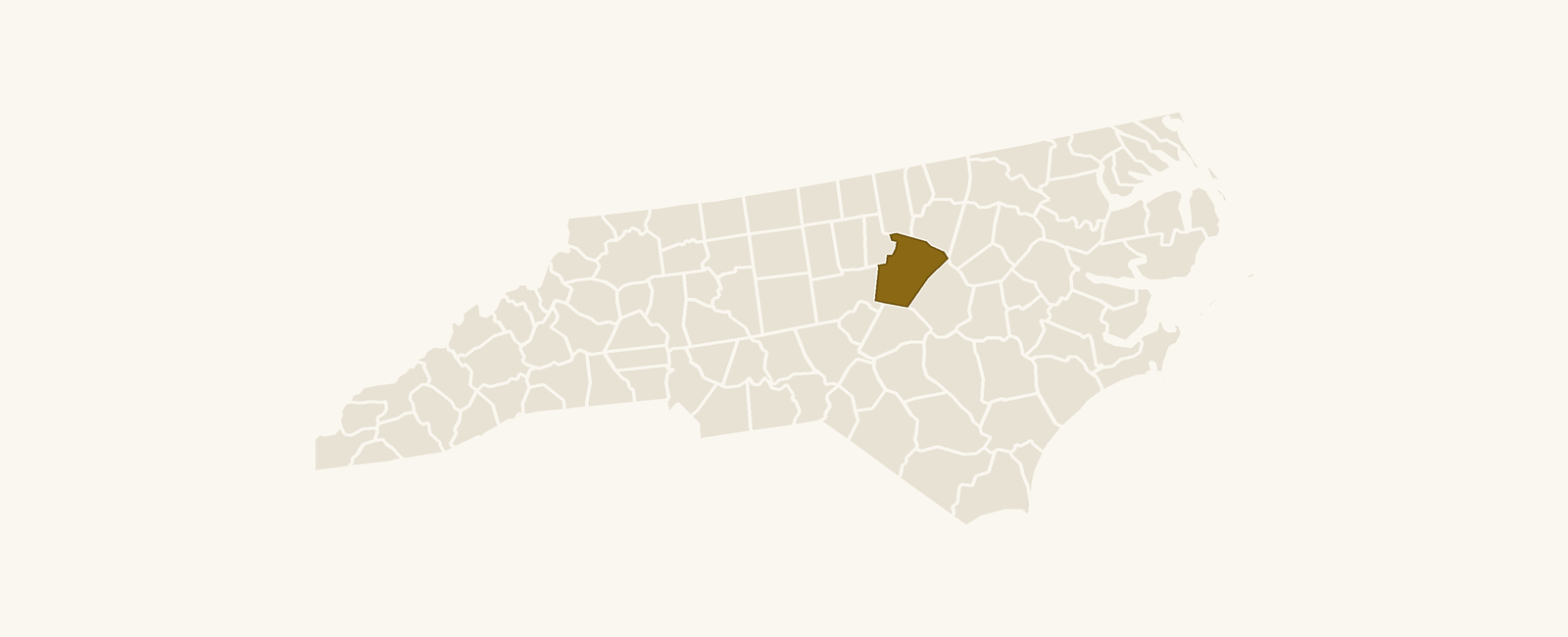
Pre-foreclosure in Wake County: what the housing market looks like
Wake County has 1,151,009 residents and 481,999 housing units, with Raleigh as the county seat. It is the most populous county in North Carolina, and Raleigh (466,106) and Cary (171,012) are the largest municipalities by 2020 Census count, followed by Apex (58,780).
This is a higher-value market. The median home value is $423K, and 64% of homes are owner-occupied. Vacancy is 8%, below the U.S. figure of 10%, which tells you homes here do not tend to sit empty for long.
The housing stock is also young. Only 2% of homes were built before 1940 (U.S.: 12%), and 58% are single-family detached (U.S.: 61%). For you, that usually means fewer century-old systems to price in, though you should still inspect every property individually.
The median resident is 37.2 years old (U.S.: 38.9), and 12% of residents are 65 or older (U.S.: 17%). Those figures shape which kinds of distressed sellers you meet most often, which the next sections cover. Source: U.S. Census Bureau, American Community Survey.
Source: U.S. Census ACS 2023
What a thinner equity cushion means for investors here
In Wake County, 26% of owner-occupied homes have no mortgage, compared with 39% nationally. More owners carry a loan, which means a missed payment can turn into a foreclosure filing more directly than in markets where most owners hold their homes outright.
Higher values help, but do not assume equity. A $423K median value suggests many owners have built up equity over time. Still, owners who bought or refinanced recently may owe most of what the home is worth. Never assume a pre-foreclosure owner has room for a discount until you have seen the actual payoff picture.
This is also why creative solutions matter here. Where equity is solid, an owner may be glad to sell for a fair price and keep the difference rather than lose it at auction. Where equity is thin, a short sale or a quick, clean exit may be the real value you offer.
Which court filings come before a sale in Wake County
Pre-foreclosure is the most direct signal, but it is not the only one. Several kinds of public court filings can come before a property changes hands, and each tells you something different about the seller.
- Pre-foreclosure: A lender has started the legal process after missed payments. The owner still holds title and often still has time to act.
- Probate: An owner has died and the estate is being administered. Heirs may live elsewhere and may not want to keep or maintain the house. With 12% of residents aged 65 or older (U.S.: 17%), probate is a smaller share of the picture here than in older counties, but it still matters.
- Divorce: Spouses may need to split a major asset quickly, and a sale can be the simplest answer.
- Tax sale: The Wake County Department of Tax Administration dockets foreclosure judgments for unpaid property taxes, a preliminary step before a public auction.
- Partition: Co-owners disagree about what to do with shared property, and a court may order it sold.
Each of these situations involves real people under stress. Treat the filing as context for a respectful conversation, not as a reason to pressure anyone.

How foreclosure works in North Carolina, in plain terms
Mortgage foreclosures are handled through the clerk of superior court. North Carolina generally uses a power-of-sale process under a deed of trust, where a hearing before the clerk comes before a sale. This differs from states where foreclosure is a full lawsuit in front of a judge. The details, including notice requirements and timing, are set by statute (see Chapter 45 of the North Carolina General Statutes), and an attorney should confirm how they apply to a specific property.
Tax foreclosure is a separate track. When property taxes go unpaid, the county can docket a judgment. Wake County bills and collects property tax for municipalities and special districts too, so a total bill depends on those rates. Annual bills are mailed in July and cover July 1 to June 30. Unpaid taxes after January 5 incur 2% interest for January and 3/4 of 1% each month after that. The county's FY2027 budget raises the property tax rate by 2 cents to 53.71 cents.
Here is how a tax foreclosure auction runs. The Sheriff's Office conducts the sale about 4 months after a judgment is docketed. Sales are held inside the Salisbury Street entrance of the Wake County Courthouse, and notice is advertised in The News & Observer and posted 20 days before the auction.
- The successful bidder must make a cash deposit of 10% of the bid.
- Successful bids stay open 10 days for upset bids, with a minimum upset of 5% of the current bid or a flat minimum, whichever is greater.
- If a successful bidder refuses to accept the deed and honor the bid, the deposit is forfeited and applied toward costs and expenses.
- Properties are sold as-is, and bidders must research the property themselves before bidding.
North Carolina does not sell tax lien certificates, so paying a tax lien before an auction does not transfer ownership. That also means there is no lien-certificate route to a property here; the path to ownership runs through the sale itself.
How to approach Wake County owners respectfully and legally
Lead with honesty. Tell the owner who you are, that you are an investor, and what you can and cannot offer. Someone facing foreclosure, a death in the family or a divorce is already under pressure. A calm, clear, no-obligation conversation does more than any script.
Follow the phone rules. If you call, screen against the National Do Not Call Registry and honor any internal do-not-contact requests. North Carolina also has its own telemarketing rules, so confirm what applies to your outreach with an attorney. A letter or a short, polite visit is often better received than a cold call.
- Never imply you are with the lender, the court or the county.
- Do not pressure anyone to sign quickly or to skip legal advice.
- Encourage owners to talk with an attorney or a HUD-approved housing counselor before they decide.
- Be careful with any agreement that touches title; North Carolina has rules aimed at protecting homeowners in foreclosure, and an attorney can tell you how they apply.
If the court records are what you need, they are public. Keystone Court Data delivers them ready to work, and you can try a county free for 7 days with no credit card.
What to look for before making an offer in Wake County
Run the numbers on the exit. HUD Fair Market Rent for the Raleigh-Cary area is $1,750 a month for a 2-bedroom and $2,196 for a 3-bedroom. If you plan to hold, compare those rents with the purchase price, taxes and repairs. Source: HUD Fair Market Rents.
Read the supply picture. New housing units permitted in 2025 came to 13,806, a change of -10% from 2024. Heavy building activity can compete with your resale or rental, so factor in what new construction nearby could do to your numbers. Source: Census Building Permits Survey.
Plan for property taxes. The rate increase and any assessed-value changes affect a hold. Owners can appeal assessed value informally to Tax Administration or formally to the Board of Equalization and Review, and the 2024 revaluation formal appeal window ran March 2 to May 15, 2024.
Get a title and lien review. A property in foreclosure can carry more than one loan, unpaid taxes or other claims. Have a real estate attorney review title before you commit, and confirm any deadline that affects your timeline. With a young housing stock, repairs may be lighter than in older counties, but inspect anyway.
Questions investors ask
Is foreclosure in North Carolina judicial or non-judicial?
Most mortgage foreclosures in North Carolina follow a power-of-sale process through the clerk of superior court, not a full lawsuit. A hearing before the clerk comes before a sale. Rules and notices are set by statute, so confirm the specifics for a given property with an attorney.
How soon after a tax foreclosure judgment does Wake County sell a property?
The Sheriff's Office executes tax foreclosure sales approximately 4 months after a judgment is docketed. Notice is advertised in The News & Observer and posted 20 days before the auction. Timing can shift, so treat it as a general guide.
Is a Wake County tax foreclosure auction final when the gavel falls?
Not right away. Successful bids stay open 10 days for upset bids, with a minimum upset of 5% of the current bid or a flat minimum, whichever is greater. The winning bidder must also make a cash deposit of 10% of the bid.
Can I buy a property by paying off its tax lien in Wake County?
No. North Carolina does not sell tax lien certificates, so paying the tax lien before a public auction does not transfer ownership of the property. Ownership changes through the sale or through a negotiated purchase from the owner.
Can I call a homeowner in pre-foreclosure?
You can, but screen against the Do Not Call Registry and follow North Carolina telemarketing rules. Be upfront about who you are and why you are calling. Many owners respond better to a short letter or a polite, no-pressure message.
See Wake County leads for 7 days, free
Real court filings with the owner and property matched. No credit card.