Pre-foreclosure in Beckham County, Oklahoma: what investors should know
Oklahoma handles most foreclosures through the district court, so a filing in Beckham County is a legal event with a process behind it. Here is what it means, what else leads to a sale, and how to treat the owner.
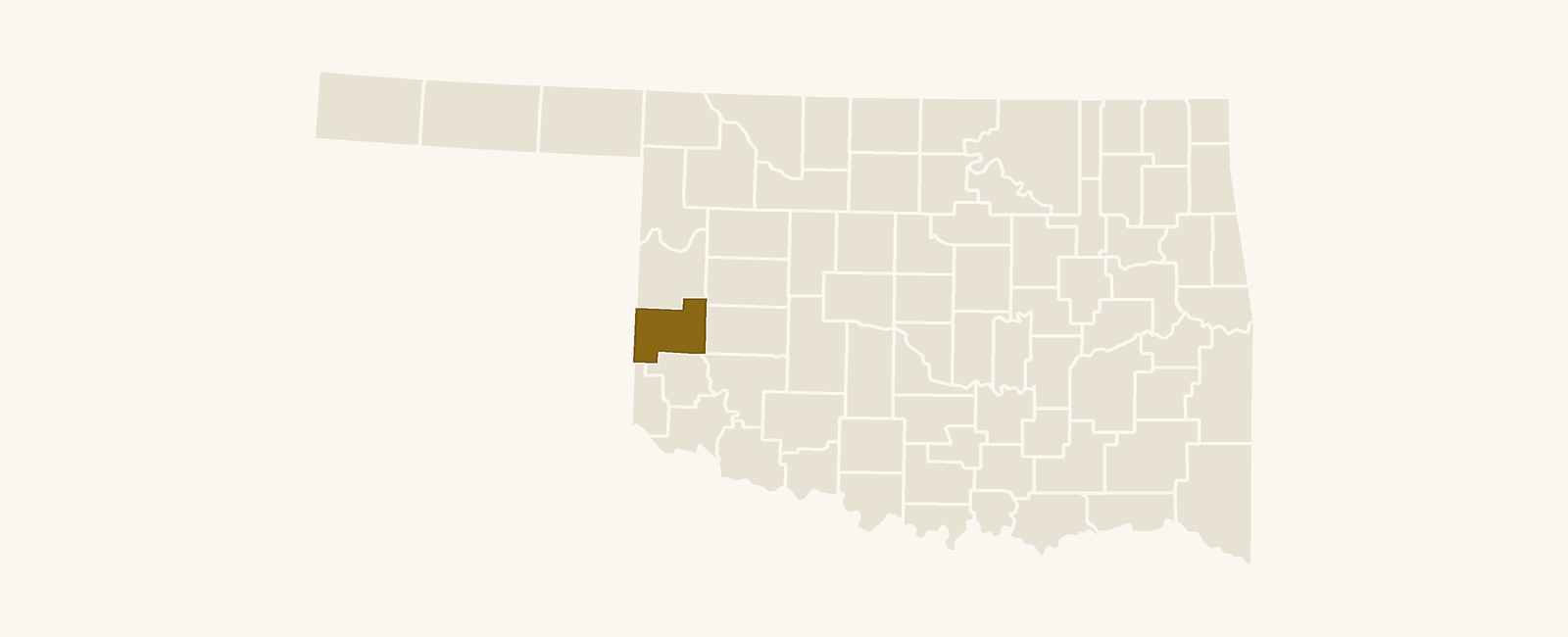
What Beckham County's housing looks like
Beckham County has 10,120 housing units, and 66% of them are owner-occupied, according to the U.S. Census Bureau's 2023 American Community Survey. That means most homes here are lived in by the people who own them, not held by landlords. For an investor looking at pre-foreclosure in Beckham County, Oklahoma, that is the main thing to keep in mind: you will mostly be talking with homeowners, not with business owners.
The median home value is $153K. That puts many properties in a range where a missed stretch of payments, a death in the family or a divorce can force a decision about the house quickly. It also means the numbers on a deal can be thin once a mortgage, back taxes and repairs are counted, so careful math matters.
What this means for you. A homeowner-heavy county rewards patience and a respectful tone. People here are more likely to know their neighbors and to talk about who contacted them, so how you behave becomes your reputation.
Source: U.S. Census ACS 2023
How pre-foreclosure works in Beckham County, Oklahoma
Pre-foreclosure is the period after a lender has taken a formal step toward foreclosure and before the property is sold. In Oklahoma the most common route is judicial: the lender files a foreclosure case in the district court of the county where the property sits. For Beckham County, that is the county's district court.
A filing is a public sign of trouble, not a done deal. The case has to move through the court. The borrower can respond, work out a repayment or loan modification, sell the home, refinance, or in some cases file bankruptcy. Any of those can end the case without a sale.
Oklahoma law also allows a non-judicial route called power of sale foreclosure, but it has specific requirements and is not what every lender uses. Which path a lender takes, and what notices and timing apply, depends on the loan documents and the statute. An attorney can confirm the details for a specific property.
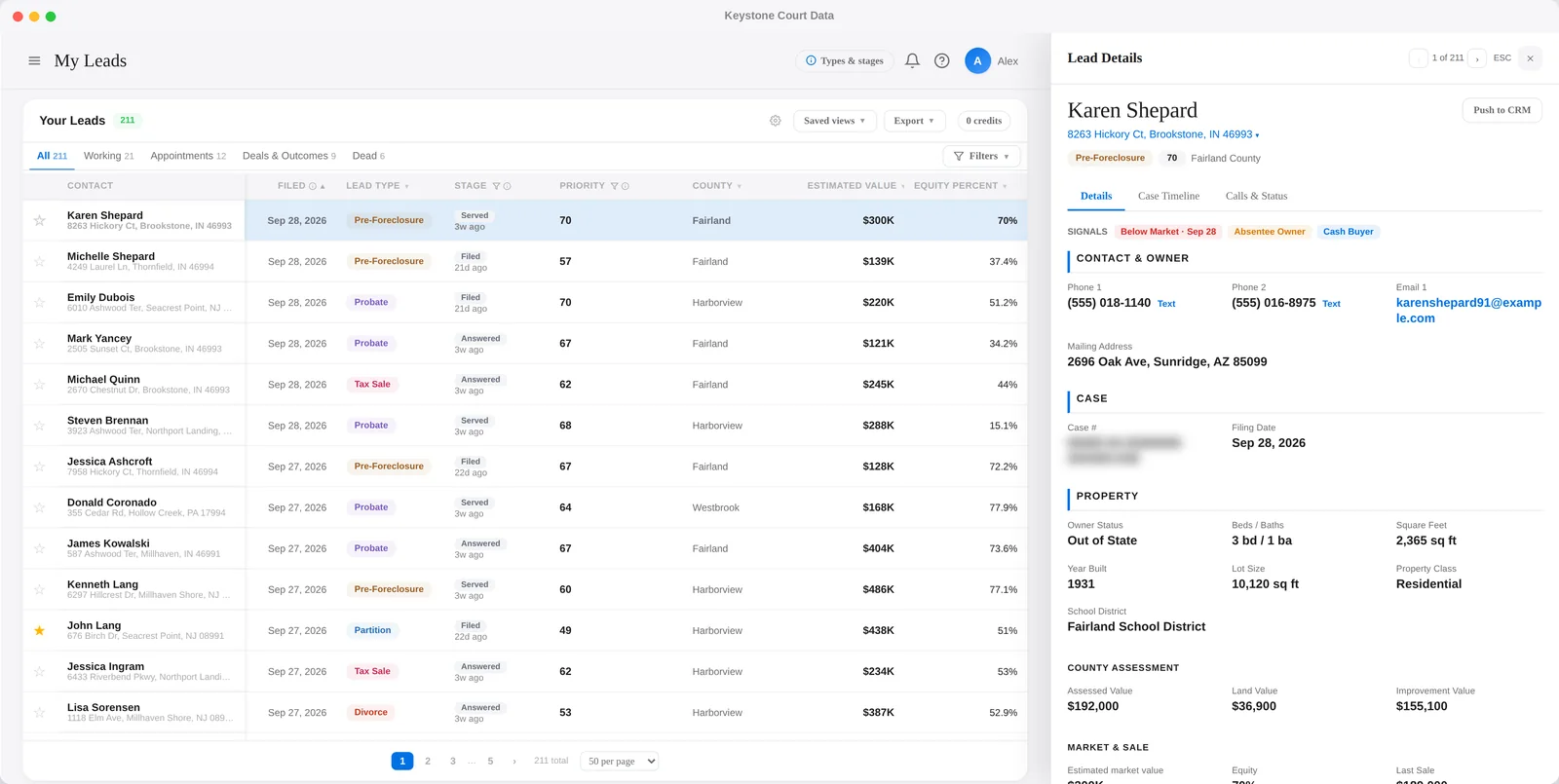
Court records for these cases are public. If you want them delivered with the owner and property already matched, Keystone does that for Beckham County.
Other filings that come before a sale
Foreclosure is not the only court event that pushes a house toward the market. Beckham County leads can come from several kinds of filings, and each one calls for a different conversation.
- Probate. When an owner dies, the district court oversees the estate. The heirs or a personal representative may need to sell to split the value, pay debts or stop carrying costs. Timing and authority depend on the will and the court, so the person you talk to may not be the person who can sign.
- Divorce. A dissolution case can require the couple to sell a home or one spouse to buy the other out. Both spouses usually have a say, and the court may have orders in place about the property.
- Tax sale. Unpaid property taxes can lead to the county treasurer selling the property. Oklahoma has rules about owner redemption rights and notices, so confirm where a given property stands before you act.
These are different life events with different emotional weight. A family grieving a parent and a couple splitting up need a very different tone than someone weighing a refinance.
Oklahoma's process in plain terms
In short, this is how the pieces fit together in Oklahoma.
- Foreclosure: Usually judicial. The lender sues in district court, the court issues a judgment, and a sheriff's sale follows if the debt is not resolved. A power of sale option exists but has its own statutory steps, and for a homestead the owner can elect judicial foreclosure instead (46 O.S. 43).
- Probate: Handled by the district court in the county where the person lived. A named executor or a court-appointed personal representative manages the estate. A sale of estate real estate generally has to be reported to and confirmed by the court before title passes, with limited exceptions (58 O.S. 382, 462).
- Divorce: Filed in district court. Property division is decided by agreement or by the judge.
- Tax sale: Run through the county treasurer under Oklahoma statute.
Deadlines, notice periods and redemption rights are set by statute and can change. A blog post, including this one, is not a source for a specific date or right. Confirm with an attorney licensed in Oklahoma. For statute text, the Oklahoma Legislature publishes the law online.
How to approach owners respectfully and legally
Lead with honesty about who you are. Say your name, that you buy houses, and why you are reaching out. Owners respond to a buyer with no suggested tie to the lender, the court or a government agency. Calling a foreclosure case "an opportunity" to someone scared about losing their home backfires.
Give people room. A short, plain letter or a brief visit that says "if you ever want to talk about selling, here is how to reach me" works better than repeated contact. When someone says no or asks for no more contact, contact ends, and a record of that request helps.
Phone rules apply. Calls and texts are covered by the federal Telephone Consumer Protection Act, the FTC's Telemarketing Sales Rule, the National Do Not Call Registry and Oklahoma's telemarketing law, and the federal rules include keeping an internal do-not-call list. An attorney can say whether a rule applies.
Be careful with foreclosure "rescue" language. Promising to save someone's home, or asking for fees up front to stop a foreclosure, can cross legal lines. Federal and state consumer-protection laws can apply to foreclosure "rescue" offers. Stick to what you actually do: make an offer to buy, and explain it clearly.
If a homeowner is working with an attorney or a housing counselor, respect that. Encourage them to get independent advice before signing anything.
What to check before you make an offer
A filing tells you something is happening. It does not tell you whether the deal works. Before you put a number in front of an owner, get clear on these points.
- The debt. What does the owner actually owe, including any second mortgage, back payments, fees and court costs? The lender can provide a payoff figure with the owner's permission.
- Liens and title. Taxes, judgments, contractor liens and unpaid HOA dues can sit on top of the mortgage. A title company or attorney should confirm what is recorded before you commit.
- Who can sign. In probate, the questions are who has legal authority and whether court approval is needed. In a divorce, both spouses may need to agree. In foreclosure, the owner of record signs.
- Timeline pressure. Know where the case stands, because a sale date or a court order changes what is realistic. A closing promise has to be one that can be kept.
- Condition and occupancy. Look at the property with permission, and find out if anyone besides the owner lives there. Tenants and family members have rights too.
If the numbers only work when the owner gives up everything, it is usually better to walk away. A clean, fair deal is easier to close and easier to defend.
You can see how this works for the county on the pre-foreclosure leads page, or read about Oklahoma more broadly.
Questions investors ask
Is foreclosure judicial in Oklahoma?
Most Oklahoma foreclosures go through the district court, which makes them judicial. Oklahoma also allows a non-judicial power of sale process with its own statutory requirements, but for a homestead the owner can elect judicial foreclosure by sending the lender written notice by certified mail and recording a copy at least 10 days before the sale (46 O.S. 43). Which one applies depends on the loan documents and on Oklahoma law, and an attorney licensed in Oklahoma can say which applies.
Can a homeowner stop a foreclosure after it is filed?
Often yes, depending on the facts. Owners may catch up on payments, negotiate a modification, refinance, sell the home or, in some cases, seek bankruptcy protection. An Oklahoma attorney or a HUD-approved housing counselor can explain the options for a specific case.
Can an executor sell a house in Oklahoma?
Sometimes. It depends on whether the person has been formally appointed by the district court and on what the will says about selling real estate. In Oklahoma, sales of estate property generally must be reported to the district court and confirmed before title passes, even when the will authorizes the sale, with limited exceptions (58 O.S. 382, 462). An attorney can confirm what applies before an executor's word is relied on.
Is it legal to contact homeowners in pre-foreclosure?
Telemarketing calls are covered by the National Do Not Call Registry, the FTC's Telemarketing Sales Rule and Oklahoma's telemarketing law; texting and auto-dialed calls carry more rules. An attorney licensed in Oklahoma can say which rules apply to a given campaign.
Where are pre-foreclosure records kept?
Foreclosure cases are public court records. Keystone delivers Beckham County filings with the owner and property already matched, and you can try a county free for 7 days with no credit card.
General information about Oklahoma law, checked October 2026. This is not legal advice and does not create an attorney-client relationship. Talk to an attorney licensed in Oklahoma before relying on it.
See Beckham County leads for 7 days, free
Real court filings with the owner and property matched. No credit card.