Pre-foreclosure in Wayne County, Michigan: what investors should know
Wayne County owners hold more free-and-clear homes than the U.S. average and live in older houses. Here is what that means when a mortgage goes bad and a sheriff's auction approaches.
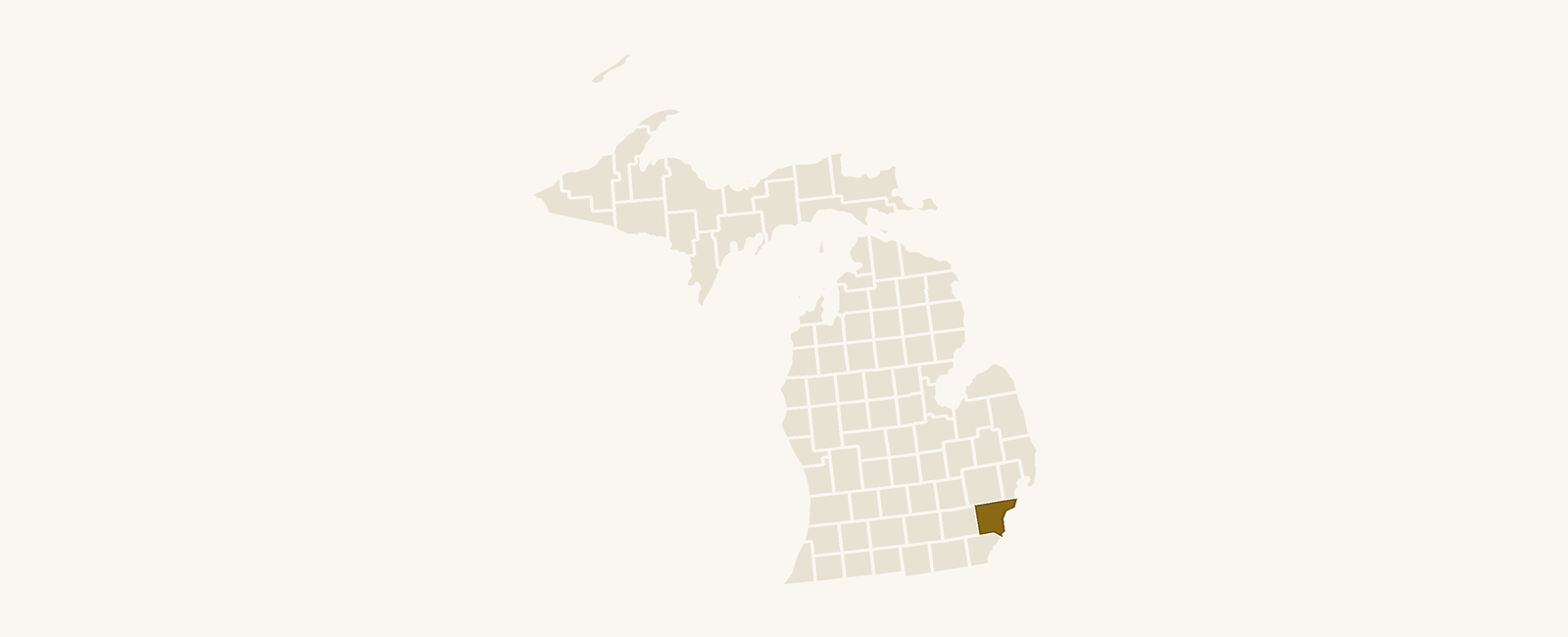
What Wayne County housing looks like for an investor
Wayne County has 796,119 housing units and a population of 1,773,767, according to the American Community Survey. If you are researching pre-foreclosure in Wayne County, Michigan, those numbers tell you the market is large and varied. It runs from Detroit, the county seat and the most populous city in Michigan, to suburbs such as Livonia and Dearborn.
Mostly single-family, mostly owner-occupied. About 70% of homes are single-family detached (U.S.: 61%), and 64% of homes are owner-occupied. The median home value is $170K. That mix suits investors who buy, rehab and resell, or buy and hold.
Free and clear is common. About 48% of owner-occupied homes carry no mortgage (U.S.: 39%). That matters for this article in two ways. Many owners have real equity if they fall behind on something else, and a pre-foreclosure owner with a mortgage is often in a smaller group than you would find in a county where most owners borrow.
Old houses, more vacancy. Homes built before 1940 make up 21% of the stock (U.S.: 12%), and 13% of housing units are vacant (U.S.: 10%). Expect plumbing, wiring, roofs and foundations to drive your numbers, and expect some blocks to carry more empty houses than others.
Rents for buy-and-hold. HUD Fair Market Rent for the Detroit-Warren-Dearborn area is $1,459 a month for a two-bedroom and $1,777 for a three-bedroom (HUD). New housing permits reached 3,922 units in 2025, up 49% from 2024 (Census Building Permits Survey), so new supply is also arriving.
Source: U.S. Census ACS 2023
Which court and legal filings come before a sale here
Pre-foreclosure is the most direct signal, but it is not the only one. Each situation below tends to put a house in play for a different reason.
- Mortgage default. The owner has missed payments and the lender has started the process that ends in a Sheriff's auction.
- Probate. An owner has died, and the estate may need to sell. Wayne County has its own Probate Court with its own Chief Judge, which jointly adopts the family court plan with the Third Circuit Court (Michigan courts family court plan).
- Divorce. The Domestic Relations Section of the Family Division of the Wayne County Circuit Court hears divorce cases, and a shared house is often sold or bought out.
- Property tax delinquency. Covered below, because it follows its own calendar.
Keystone Court Data covers pre-foreclosure and probate in Wayne County. Since the two often involve the same family and the same house at different moments, reading both gives you context rather than a single snapshot.
Residents aged 65 or older are 16% of the county (U.S.: 17%), so probate is not unusually age-driven here. It is simply steady, and the high free-and-clear share means estates often hold equity.
How pre-foreclosure works in Michigan, in plain terms
Michigan commonly allows a lender to foreclose by advertisement, which means the process does not require a lawsuit in the usual case. In Wayne County, the sale itself is an auction conducted by the Wayne County Sheriff (county information on Sheriff's Deed redemptions). That is different from states where a judge supervises every foreclosure.
Redemption is the key concept. After the auction, the mortgagor may redeem by paying the purchaser of the Sheriff's Deed. The length of the redemption period and the amount owed depend on the loan and the circumstances, so confirm both with a Michigan real estate attorney before you commit to a purchase.
What it means for you. A buyer at auction does not always have a clean, immediately usable house. An owner may still have rights, and occupants may still be in the home. Before the sale, you are dealing with the owner directly. After it, you may be dealing with whoever holds the Sheriff's Deed, and the owner's redemption rights.
Lenders may also be required to offer certain options before a sale, and rules differ by loan type. Ask an attorney which apply to the situation you are looking at rather than assuming.

Property taxes are a second path to loss of the home
Current taxes are billed by local city or township treasurers in July and December. Unpaid taxes are forwarded as delinquent to the County Treasurer (Wayne County Treasurer FAQ).
The clock is long, but the cost grows. Delinquent taxes accrue interest at 1.5% per month after more than one year. Properties with taxes two years delinquent are foreclosed on April 1 after a March judgment, then sold at public auction in September and October. Minimum bids equal all delinquent taxes, penalties and interest, and unsold September properties go to October (Wayne County Treasurer timeline).
This matters in a county where nearly half of owners have no mortgage. A free-and-clear owner will never see a mortgage foreclosure, but can still lose a house to taxes. In Detroit, the 2024 homestead total property tax rate with the Detroit City School District was 67.2737 mills, so the annual bill is a real part of owning there.
How to approach Wayne County owners respectfully and legally
People facing foreclosure are often embarrassed and worried, and many have been contacted by aggressive buyers. A calm, honest approach stands out.
- Say who you are and why you are reaching out. Do not imply you are from the lender, the court or the government.
- Do not pressure. Give the owner time, and encourage them to speak with a housing counselor or attorney.
- Be clear about what you are offering. Put terms in writing and explain that the owner can walk away.
- Respect grief. With probate, you may be speaking to a grieving family member or an appointed personal representative. Keep the first contact short and kind.
If you phone. Check numbers against the National Do Not Call Registry and follow federal and Michigan telemarketing rules, including calling-hour limits. A handwritten letter is often better received than a cold call. If someone asks you to stop, stop and note it.
Be careful with equity-purchase offers on homes in foreclosure. Michigan has specific rules for foreclosure-related purchases, so talk to an attorney about your contract before you use it.
What to check before you make an offer
Budget for age. With 21% of homes built before 1940, assume older systems until a walkthrough proves otherwise. Get an inspector or contractor involved early, especially for a house that has sat vacant.
Understand the timeline. Know whether the sale has happened and whether any redemption period is still running. An attorney can confirm deadlines, because a wrong assumption here costs real money.
Check the numbers against rents. If you plan to hold, compare your all-in cost to the HUD figures of $1,459 for a two-bedroom and $1,777 for a three-bedroom, and factor in the annual tax bill.
Look at the neighborhood, not just the house. Vacancy is 13% county-wide, but it varies widely from block to block. Drive the street at different times of day before you decide.
Get the records you need. Court filings are public. If you want pre-foreclosure and probate filings with the owner and property already matched, Keystone delivers them for Wayne County.
Questions investors ask
Is foreclosure in Wayne County handled by a judge?
Often not. Michigan commonly allows foreclosure by advertisement, and in Wayne County the sale is an auction conducted by the Wayne County Sheriff. Some foreclosures can still go through a court, so an attorney can tell you which route applies to a given loan.
Can an owner get the house back after the Sheriff's auction?
Possibly. The mortgagor may redeem by paying the purchaser of the Sheriff's Deed. The length of the redemption period and the amount due depend on the circumstances, so confirm them with a Michigan attorney.
How is a tax foreclosure different from a mortgage foreclosure here?
A tax foreclosure is run by the County Treasurer, not a lender. Properties with taxes two years delinquent are foreclosed on April 1 after a March judgment, then sold at auction in September and October, with minimum bids equal to the delinquent taxes, penalties and interest.
Where does probate happen in Wayne County?
Wayne County has a separate Wayne County Probate Court with its own Chief Judge. Estates that must sell a house go through that court, while divorces go to the Domestic Relations Section of the Circuit Court's Family Division.
Can I call owners in pre-foreclosure?
You can, but you must follow federal Do Not Call rules and Michigan telemarketing rules, and you must stop when asked. Many investors prefer a respectful letter first. Keep any contact honest and low pressure.
See Wayne County leads for 7 days, free
Real court filings with the owner and property matched. No credit card.