Investing in Washington County, Utah: where motivated sellers show up in the court record
A county with a vacancy rate well above the national figure, an older population and mostly single-family homes. Here is what that means for finding and approaching sellers.
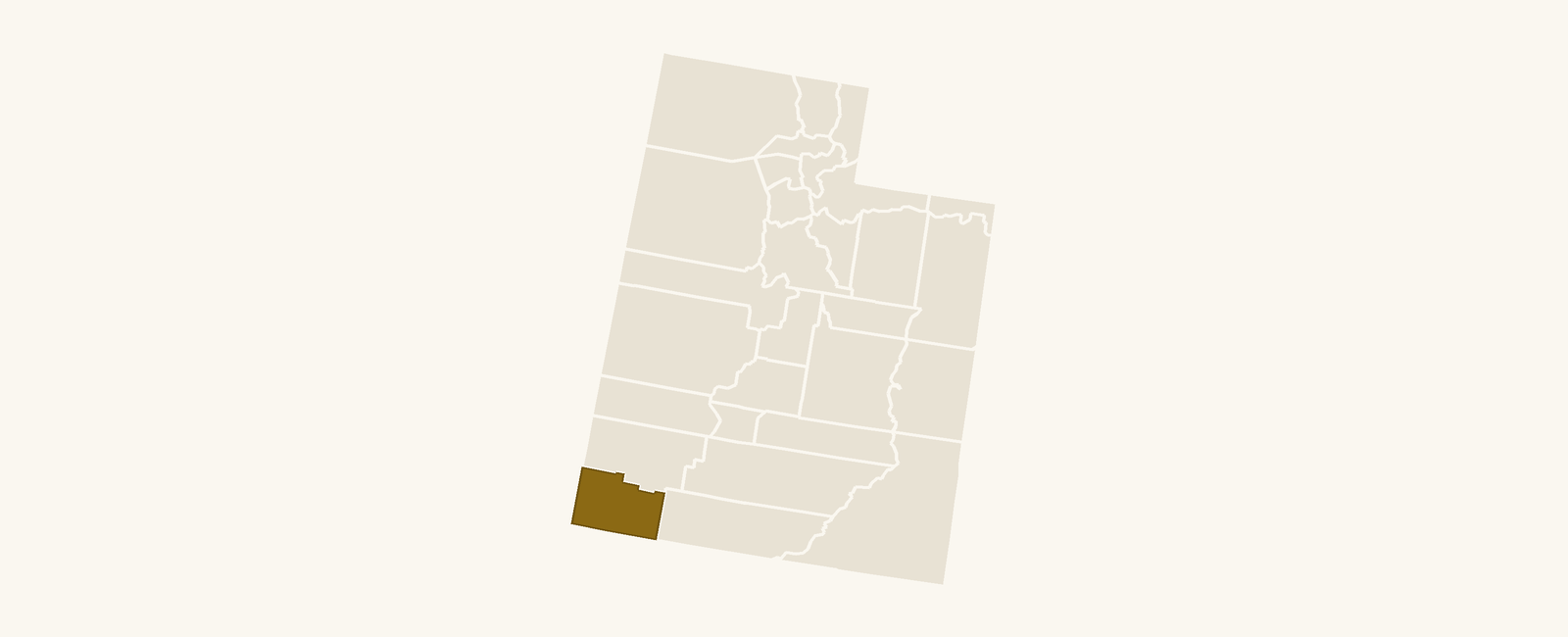
What Washington County Utah real estate investing looks like on paper
About 15% of housing units here are vacant, compared with 10% nationally. The county has 78,993 housing units and about 189,827 residents, and 73% of homes are owner-occupied. Vacant units can include homes used only part of the year, so do not read that number as a pile of abandoned houses. It does tell you the market has plenty of homes that are not someone's daily residence.
The housing stock is overwhelmingly the kind most buyers want. Some 74% of homes are single-family detached (U.S.: 61%), and just 1% were built before 1940 (U.S.: 12%). The median home value is $466K, so most deals involve real money even at a discount.
For buy-and-hold math, HUD's Fair Market Rent for St. George is $1,657 a month for a 2-bedroom and $2,172 for a 3-bedroom. Those are benchmarks, not guarantees, so check them against what your actual unit would rent for.
On supply, the county permitted 2,857 new housing units in 2025, down 9% from 2024. New construction is still a real source of competition for the resale and rental homes you might buy.
Source: U.S. Census ACS 2023
Why age and equity shape the seller pool here
Older owners mean more estates. About 22% of residents are 65 or older, against 17% across the U.S. Over time, that tends to mean more homes passing through probate, and more heirs who live elsewhere and do not want to manage a house in St. George or Hurricane.
Equity is solid, not extreme. About 40% of owner-occupied homes have no mortgage (U.S.: 39%), which is close to the national figure. Do not assume every seller is sitting on a free and clear house. Many are not, and that changes what a fair offer looks like in a divorce or estate sale.
With a median home value of $466K, even a modest mortgage balance can leave meaningful equity. That works in your favor if you can offer a clean, quick close. It also means sellers have real alternatives, such as listing with an agent, so a lowball offer will rarely land well.
Which court filings tend to come before a sale in Washington County
Each filing type below points to a different kind of seller with a different timeline and different needs. Understanding what the filing means matters more than the label.
- Pre-foreclosure: The owner has fallen behind on the mortgage and the lender has started the process. These owners often still have equity and some time, and may want to sell rather than lose the home.
- Probate: An owner has died and the estate is being administered. The person handling it may need to sell to split proceeds, pay debts or end the cost of carrying an empty house.
- Divorce: A couple often has to sell or buy out one spouse. The motivation is usually a clean split and a deadline, not distress about the house itself.
- Tax sale: The property is seriously behind on property taxes. In Washington County, that means at least 5 years delinquent before it reaches the county sale.
- Partition: Co-owners, often heirs, cannot agree on what to do with a shared property, and one asks the court to force a resolution.
These are public records. Keystone Court Data delivers them with the owner and property already matched, and you can see how that works on the Washington County page.

How the process works in Utah, in plain terms
Foreclosure. A Utah trust deed can be foreclosed outside of court by a trustee's sale or, at the lender's option, in court like a mortgage (Utah Code 57-1-23). A trustee's sale starts with a recorded notice of default; notice of sale cannot be given until at least three months later (Utah Code 57-1-24), the owner can cure the default within three months of the notice of default (Utah Code 57-1-31), and there is no right of redemption after the sale (Utah Code 57-1-28). The loan documents and bankruptcy can change the timing, so a Utah attorney can confirm it before a deal is built around a date.
Probate. Estates are handled in state district court, with a personal representative appointed to manage the estate. Once appointed, that person can sell estate land without a court order unless the will or a court order restricts that power (Utah Code 75-3-710, 75-3-714). An attorney can confirm the authority in a specific estate, and an estate sale often takes longer than a typical purchase.
Divorce and partition. Both run through district court as well. A judge's order can drive a sale (Utah Code 78B-6-1201 for partition), but the timing often turns on negotiations between the parties.
Tax sale. The Washington County Clerk-Auditor conducts the tax sale each May for properties at least 5 years delinquent, and properties are advertised in a newspaper roughly four weeks beforehand. Utah law does not permit the sale of tax liens or tax lien certificates, per the county, so this is a sale of the full parcel, not a lien investment. The 2021 sale was held in person at the Washington County Administration Building in St. George, while the 2023 sale was held exclusively online with open bidding where the full parcel went to the highest bidder. Format can change, so confirm how a given year's sale is run.
Property taxes and what they mean for your numbers
All real property taxes in Washington County are due November 30 each year, even if the owner does not receive a notice. That date matters when you are buying a house from someone who is behind, because a missed bill is easy to overlook in a stressful year.
Qualified primary residences are taxed at 55% of assessed market value, while second homes, commercial property and vacant land are taxed at 100%. Per the county, a rental home can still qualify as a primary residence when it is the renter's primary residence, while a second home is taxed at 100%. Build the right rate into your hold numbers.
The 2026 tax rate is 0.006596 in St. George City and 0.005843 in unincorporated Washington County. The Assessor appraises real property to estimate 100% market value as of January 1 each year. If you disagree with a value, decisions of the county Board of Equalization can be appealed to the Utah State Tax Commission within 30 days of the Notice of Determination, using form TC-194.
How to approach owners respectfully and legally
Lead with honesty. People dealing with a death, a divorce or a missed mortgage do not need pressure. Say who you are, why you are reaching out, and that they are free to say no. A short, plain letter often works better than a hard pitch.
Be careful with phone calls. Utah law bars unsolicited telephone solicitations to Utah numbers on the National Do Not Call Registry and, without prior express consent, calls between 9 p.m. and 8 a.m., on Sundays and on legal holidays. A caller must identify the business and end the call when the person responds negatively (Utah Code 13-25a-103, 13-25a-108). Utah also limits automated dialing to people who gave prior express consent or have an established business relationship (Utah Code 13-25a-103), and federal rules restrict autodialed and prerecorded calls and texts to cell phones (47 CFR 64.1200). Keeping your own do-not-contact list helps, and an attorney can confirm how the rules apply.
Match your tone to the situation. In probate, you may be speaking with grieving heirs who live out of state. In pre-foreclosure, the owner may be embarrassed or afraid of scams. Do not promise outcomes you cannot deliver, and encourage people to get their own legal or financial advice.
Many owners in Washington County have real equity, so they have choices. A respectful offer that explains your terms clearly tends to be remembered, even when the answer is no.
What to look for before making an offer
- Who can actually sign. In an estate, confirm the person has legal authority to sell. In a divorce or partition, confirm all required parties and any court approval.
- Liens and balances. Mortgage payoffs, unpaid taxes and other claims affect what the seller can actually walk away with. A title company can confirm them.
- Condition. With only 1% of homes built before 1940, the stock is newer, but newer does not mean maintained. Inspect for roof, HVAC and water damage, especially in homes that sat vacant.
- Exit math. Compare your resale or rental plan to the $466K median value, the HUD rents above and the slower permit pace. Do not assume demand.
- Timing. Foreclosure and tax sale dates can move or end. An attorney can confirm deadlines for a specific deal.
Questions investors ask
What kinds of motivated sellers are common in Washington County, Utah?
The county's filings include pre-foreclosure, probate, divorce, tax sale and partition. With 22% of residents aged 65 or older, estate-related sales are a natural area to focus on. Each type calls for a different approach and timeline.
Does Washington County sell tax liens?
No. Utah law does not permit the sale of tax liens or tax lien certificates, per the county. The county instead holds a tax sale each May for properties at least 5 years delinquent, and the full parcel goes to the highest bidder.
Is Utah foreclosure judicial?
Not necessarily. A Utah trust deed can be foreclosed outside of court by a trustee's sale or, at the lender's option, in court like a mortgage (Utah Code 57-1-23). For a trustee's sale, notice of sale cannot be given until at least three months after the notice of default is recorded (Utah Code 57-1-24), and the owner can cure the default within three months of the notice of default (Utah Code 57-1-31). A Utah attorney can confirm the dates for a specific loan.
Can I call homeowners I find through court filings?
Utah law bars unsolicited telephone solicitations to Utah numbers on the National Do Not Call Registry and, without prior express consent, calls between 9 p.m. and 8 a.m., on Sundays and on legal holidays. A caller must identify the business and end the call when the person responds negatively (Utah Code 13-25a-103, 13-25a-108). Federal Do Not Call rules apply as well. Many investors prefer a short, respectful letter, especially for families dealing with a death or divorce, and an attorney can confirm how a rule applies.
Does the 15% vacancy rate mean lots of abandoned houses?
Not necessarily. The figure covers all vacant housing units, which can include homes used only part of the year. Treat it as a sign of a market with many non-primary homes, not as a count of distressed properties.
See Washington County leads for 7 days, free
Real court filings with the owner and property matched. No credit card.