Investing in Davis County, Utah: where motivated sellers show up in the court record
Davis County is young, mostly owner-occupied and tightly held. Here is what that means for the filings that come before a sale, and how to deal with the people behind them.
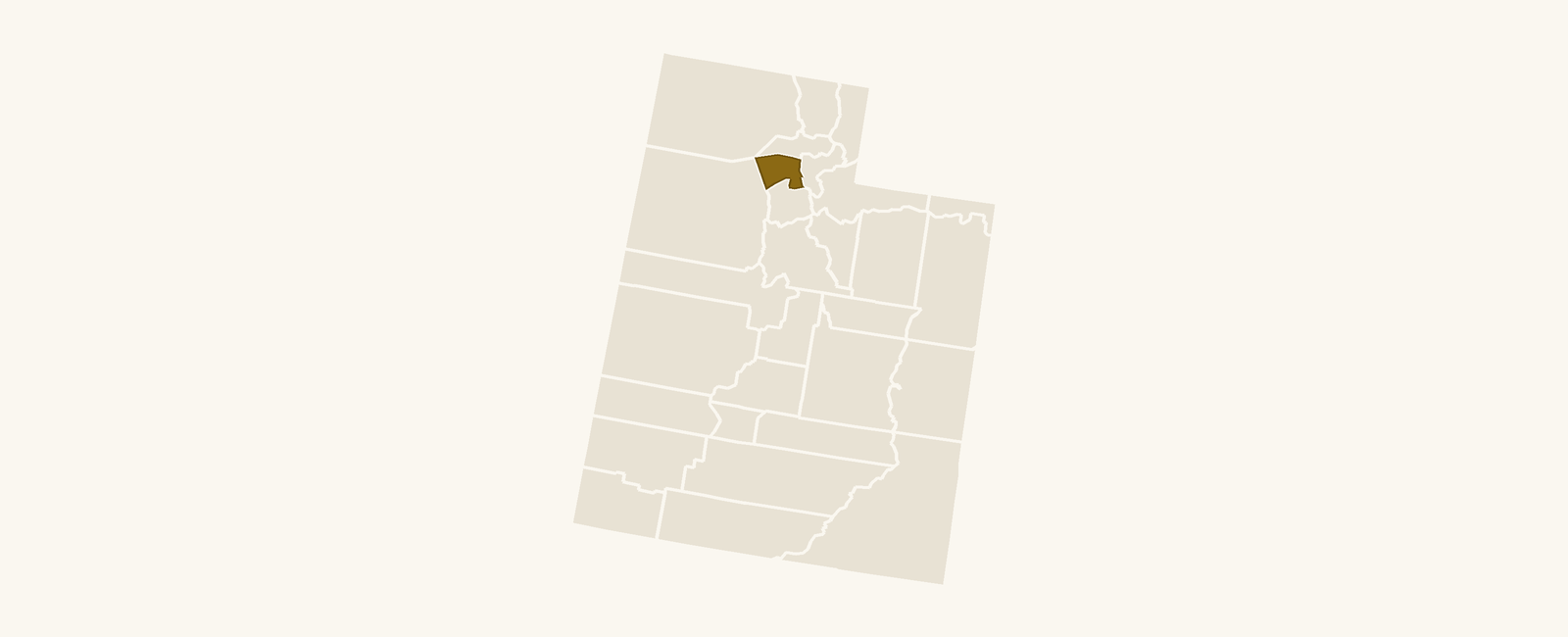
What Davis County real estate investing looks like on paper
Davis County is a county of houses that people live in. About 366,742 people share 118,581 housing units, 77% of homes are owner-occupied, and 76% are single-family detached against 61% nationally. Only 3% of units are vacant, compared with 10% across the U.S. That is a tight market with few empty properties sitting around waiting for a buyer.
The median home value is $470K, and the county is young: the median age is 32.3 against 38.9 nationally. Only 2% of homes were built before 1940, compared with 12% nationally. For you, that usually means fewer century-old systems and more newer-build questions, though any individual house still needs its own inspection.
Equity is thinner than in many places. Just 28% of owner-occupied homes are owned free and clear, against 39% nationally. More owners carry a mortgage, so a missed payment or a split household can create real pressure to sell, and there may be less cushion than in a county full of paid-off homes.
Rental math matters for buy-and-hold. HUD's Fair Market Rent for the Ogden, UT area is $1,591 a month for a two-bedroom and $2,132 for a three-bedroom. New construction is also active: 1,917 housing units were permitted in 2025, up 31% from 2024. New supply can compete with the resale and rental properties you are considering, so weigh it when you set your exit.
Source: U.S. Census ACS 2023
Which court filings come before a sale here, and why
Each filing tells you something different about the owner's situation. Davis County is part of Utah's Second Judicial District, which also covers Morgan and Weber Counties, and these filings are public.
- Pre-foreclosure: A lender has started the process after missed payments. With fewer homes owned outright here, this is a natural source of owners who may prefer a sale to a lost home.
- Probate: An owner has died and the estate must be settled. Heirs often live elsewhere and may not want to maintain or keep the house. Probate matters here, but with a younger population than the national average it is one source among several.
- Divorce: Two people must divide one home. Selling often becomes the simplest way to split the equity.
- Partition: Co-owners disagree about what to do with a property, and one asks the court to resolve it, sometimes through a sale.
- Tax sale: Taxes have gone unpaid for years and the county is moving toward an auction.
Why timing and tone matter. A filing is a sign of stress, not a verdict about the person. The investors who do well treat every one of these owners as someone with a real problem to solve.
How the process works in Utah, in plain terms
Foreclosure. Under Utah Code 57-1-23, a trust deed can be foreclosed by a trustee's sale without a lawsuit or, at the lender's option, in court like a mortgage. For a trustee's sale, notice of sale cannot be given until at least three months after the notice of default is recorded (Utah Code 57-1-24), and Utah gives no right of redemption after the sale (Utah Code 57-1-28). The loan documents and the type of foreclosure still matter, so an attorney can confirm timelines for a specific case. In Davis County, the Sheriff's Office handles civil process for real estate sales, including posting notices of sale (with a minimum of 5 postings) and paperwork for sales and certificates of redemption.
Probate. Estates are handled in the district court. A personal representative, often named in a will or appointed by the court, generally has to be in place before the estate can sell real property. Once appointed, a personal representative can sell estate land without a court order unless the will or a court order restricts that power (Utah Code 75-3-710, 75-3-714), and the representative's attorney can say what is needed to close.
Divorce and partition. Both are district court matters. In a divorce, the court or the spouses' agreement decides who keeps or sells the home. In a partition, the court can order the property divided or sold (Utah Code 78B-6-1201). Either way, an offer typically goes through the owners and their attorneys.
For all of these, the records are public. If you want them delivered with the owner and property already matched, Keystone's Davis County page shows what is available.

The Davis County delinquent tax sale in Farmington
The tax sale is a separate path with its own rules. The county's delinquent tax sale covers properties in their 5th year of delinquency. It is held in mid-May, and the 2027 sale is May 12 at 10:00 am, with pre-registration at 9:00 am. It is an open auction at the Davis County Administration Building in Farmington, and the opening bid covers taxes, penalties, interest and cost of sale.
Plan your money before you attend. Successful bidders must pay in full to the County Treasurer by the end of the sale, and the county offers no financing. Buyers receive a tax deed similar to a quit claim deed, and the sale is buyer-beware, so you carry the risk of what the property turns out to be.
Owners can still save the house. Anyone may redeem delinquent property on behalf of the owner at any time before the sale. That means an owner facing a tax sale may be very motivated to talk about options before the auction, and a family member or other party may step in. Be honest with them about that possibility.
How to approach owners respectfully and legally
Lead with help, not a deadline. A person facing foreclosure, a death in the family or a divorce is often overwhelmed. A short, plain letter or a polite visit that says who you are and that you buy houses as-is will land better than pressure or a countdown clock.
Phone calls come with rules. Utah law bars unsolicited telephone solicitations to Utah numbers on the National Do Not Call Registry and, without prior express consent, calls between 9 p.m. and 8 a.m., on Sundays and on legal holidays. A caller must identify the business and end the call when the person responds negatively (Utah Code 13-25a-103, 13-25a-108). Federal rules apply as well. If someone says no, note it and leave them alone. The FTC explains the federal rules on its website.
Do not give legal advice. You can explain what you would offer, but suggest owners talk with their own attorney, especially in probate, divorce and partition, where several people may have a say. Never imply you are connected to the court, the lender or the county.
Be careful in foreclosure. Utah's real estate licensing law covers foreclosure rescue (Utah Code 61-2f-102), and an attorney can review a purchase agreement and process before it is used.
What to look for before you make an offer
Start with the equity story. With a lower share of homes owned free and clear than the national figure, assume a mortgage until you learn otherwise. Ask the owner or their representative about the payoff, and a title professional or attorney can confirm liens and who can legally sign.
Match the offer to the exit. At a median value of $470K, margins depend on what you can resell or rent the property for. Compare your plan with HUD's rents of $1,591 for a two-bedroom and $2,132 for a three-bedroom, and keep new construction in mind as competition.
Budget repairs by the house, not the county. Few homes here predate 1940, but deferred maintenance in an estate or a distressed sale is common. Inspect each property before you finalize a number.
Know who decides. In probate, the representative must have authority. In divorce, both spouses or a court order. In partition, all co-owners. At the tax sale, you are buying as-is with a tax deed and full payment due that day.
Questions investors ask
Is Davis County a good place to invest in real estate?
It is a tight, owner-occupied market, with 3% vacancy and 76% single-family detached homes. That favors steady demand but gives you fewer idle properties to buy. Whether it works depends on your price, repairs and exit.
Where does Davis County hold its tax sale?
The delinquent tax sale is an open auction at the Davis County Administration Building in Farmington, held in mid-May. The 2027 sale is May 12 at 10:00 am, with pre-registration at 9:00 am. Payment in full is due to the County Treasurer by the end of the sale.
Can I buy a Davis County tax sale property with financing?
No, the county offers no financing and requires full payment by the end of the sale. You receive a tax deed similar to a quit claim deed, and the sale is buyer-beware. An attorney can explain what that deed means for title.
Which court handles probate and divorce in Davis County?
Davis County is part of Utah's Second Judicial District, which also covers Morgan and Weber Counties. Probate, divorce and partition matters are handled in the district court. The owner's attorney can say which procedures apply to their case.
Can I call homeowners I find through court filings?
Utah law bars unsolicited telephone solicitations to Utah numbers on the National Do Not Call Registry and, without prior express consent, calls between 9 p.m. and 8 a.m., on Sundays and on legal holidays. A caller must identify the business and end the call when the person responds negatively (Utah Code 13-25a-103, 13-25a-108). Federal rules apply as well. Many investors prefer a short, respectful letter or visit for sensitive situations such as a death or divorce.
See Davis County leads for 7 days, free
Real court filings with the owner and property matched. No credit card.