How to Work a Divorce Lead Respectfully
A divorce filing is a legal event with real people behind it. Here is how to reach out honestly, keep pressure off, and earn a conversation without costing anyone their dignity.

- 1Understand what the filing means
- 2Decide who you are and what you offer
- 3Choose the gentlest channel first
- 4Write a message that respects privacy
- 5Listen before you talk numbers
- 6Point them to proper advice
- 7Follow up on their terms
Why divorce real estate leads call for a lighter touch
A couple files for divorce in the spring, and the house they bought together becomes the largest open question in the case. One spouse may want to stay. The other may want out. Often neither has decided, and both are tired. That is the moment most people searching for divorce real estate leads are trying to reach, and it is exactly why the way you reach it matters.
The filing is a starting point, not a decision. It shows that a legal process has begun. It does not show who will keep the home, whether it will be sold, or whether the owners agree on anything. Many divorces end with one spouse buying out the other, and some homes are never listed at all.
People in this situation are often protecting children, finances, and their own privacy. If your first message feels like an ambush, you lose the lead and you add stress to someone's life. If it feels calm and useful, you may be remembered months later when the timing finally changes.
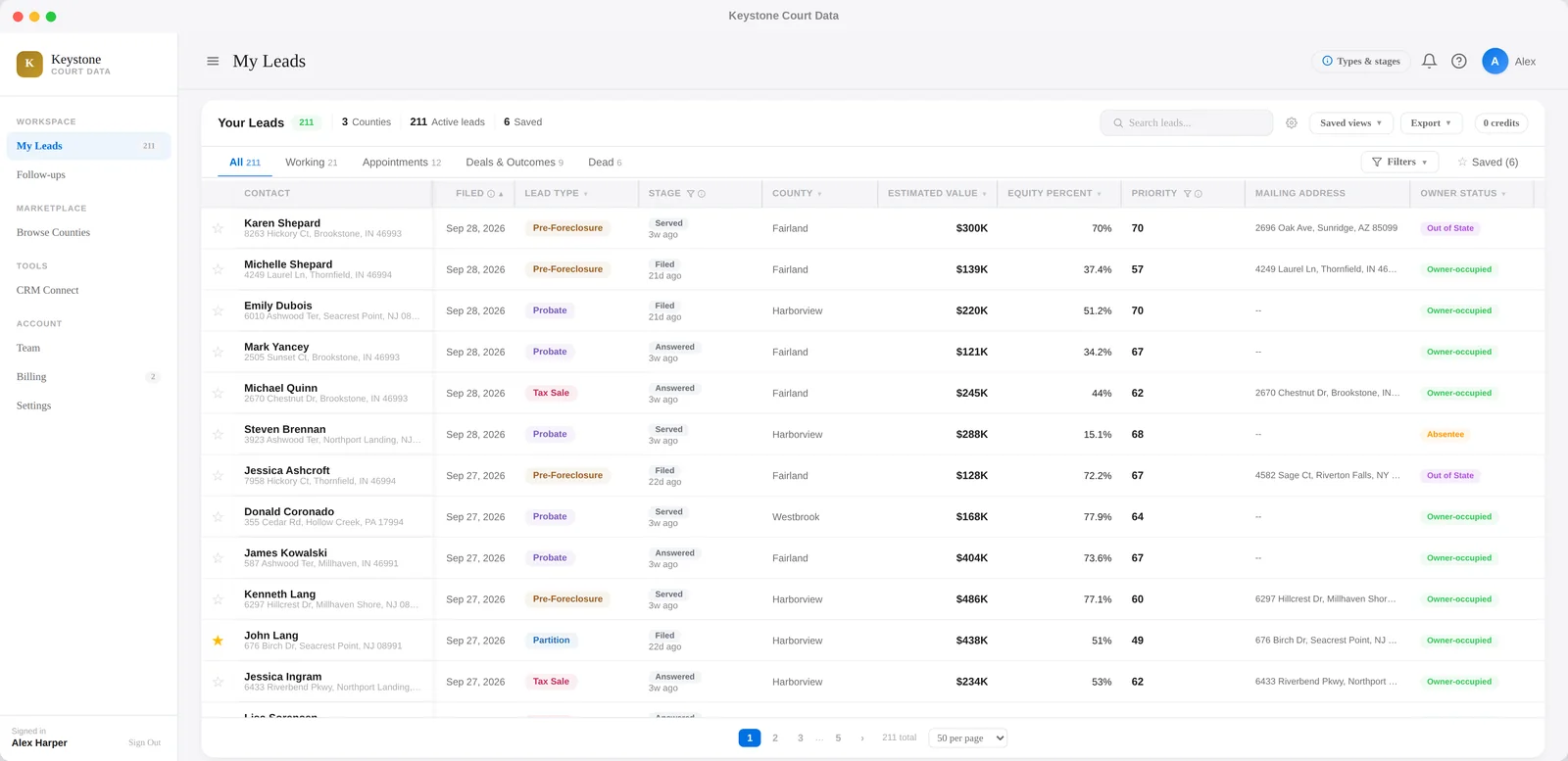
Court records like these are public. If you want them delivered with the owner and property already matched, the divorce leads page explains how Keystone Court Data handles that, so your time goes to the conversation rather than the paperwork.
The steps
- 01
Understand what the filing means
A divorce filing shows that a legal case has started and that a shared home may be affected. It does not mean the home will be sold. Read about how divorce works in the state you are in so you can speak accurately and without assumptions.
- 02
Decide who you are and what you offer
Be clear about whether you buy homes, list them, or help with both. Write one plain sentence that explains this. If you cannot say it without hype, rewrite it.
- 03
Choose the gentlest channel first
A short, personal letter or note is usually easier to receive than a surprise call. If you plan to phone, check the number against the National Do Not Call Registry and follow federal and state telemarketing rules, including calling-hour limits and company-specific opt-out requests. When in doubt, do not call.
- 04
Write a message that respects privacy
Say who you are, why you are reaching out, and that there is no obligation. Do not mention the divorce, the other spouse, or anything about their finances. Give them an easy way to say no or ask you to stop.
- 05
Listen before you talk numbers
If someone replies, let them describe their situation in their own words. Ask what they would like to happen with the home and when. Hold off on any offer until you understand their timeline and have seen the property.
- 06
Point them to proper advice
You are not their lawyer, mediator, or tax adviser. Encourage each person to talk with their own attorney about whether and how the home can be sold. This protects them and protects you from deals that later unravel.
- 07
Follow up on their terms
Record what they asked of you, including any request not to be contacted again, and honor it right away. If they asked you to check back later, do so once, briefly. Stop when they tell you to.
Common mistakes that burn divorce leads
Opening with the divorce. Do not write "I saw you are getting divorced." It feels invasive even though the filing is public. Lead with your purpose, such as buying homes or helping owners with a sale, and let them bring up their situation if they want to.
Creating false urgency. Lines like "this offer expires soon" or "you need to act before the court decides" push people toward bad choices and can cross legal lines. A divorce often moves slowly and in stages. Patience is part of the service you offer.
Treating the spouses as one person. Each spouse may have different goals, different lawyers, and different feelings about the house. Be careful not to share one spouse's information or comments with the other. Never take sides.
Other mistakes that come up again and again:
- Calling numbers on the Do Not Call Registry or ignoring a request to stop.
- Sending repeated texts or voicemails after someone has not answered.
- Pretending to be a neighbor, a court employee, or a lawyer.
- Giving legal or tax advice instead of pointing people to their attorney.
- Quoting a price before you have seen the property or understood the situation.
What a divorce filing does and does not tell you
Knowing the process keeps your expectations honest. In many states, a divorce case can trigger rules, sometimes called automatic or standing orders, that limit what spouses can do with shared property while the case is open. Whether that applies, and how, depends on the state, the county, and the judge's orders in the case.
That means a seller may be unable to sign a contract on their own, even if they want to. A sale may need both spouses to agree, a written settlement, or court approval. Do not assume any of this for a given case. Ask the owner what they are comfortable sharing, and suggest they confirm the rules with their attorney or the county court.
The filing also does not tell you about equity, liens, or the condition of the home. Those facts come later, through conversation and your own due diligence, not from the case itself.
What to do after the first contact
Give them room. If someone says they are not ready, thank them and mark the lead for a gentle follow-up later. A short note after a reasonable gap is fine. A weekly check-in is not.
If they do want to talk, keep the conversation practical. Explain how you work, what you can and cannot do, and what the next step would be. Encourage them to involve their attorney and, where it applies, a tax adviser, before agreeing to anything.
Keep notes on what each person told you and what they asked of you, and honor those requests. Reliable, kind follow-through is what turns a polite response into a referral from an attorney, mediator, or agent who has watched you treat clients well.
Questions investors ask
Is it legal to contact someone who has filed for divorce?
Divorce case records are generally public, and contacting a homeowner is not illegal by itself. What matters is how you do it. You must follow Do Not Call and telemarketing rules, avoid harassment and deception, and stop when asked. Rules differ by state, so confirm yours with an attorney.
Should I mention the divorce in my first message?
No. Even though the filing is public, bringing it up in a first message can feel intrusive. Introduce yourself and what you do, and let the owner raise their circumstances if they choose.
Can one spouse sell the house during a divorce?
It depends on how the title is held, the state's laws, and any orders in the case. Often both spouses must agree, and sometimes the court must approve. Do not guess. Ask the owner to confirm with their attorney or the county court.
Can I call or text divorce leads?
Only if you follow the law. Check numbers against the National Do Not Call Registry, observe federal and state telemarketing rules and calling hours, and honor any request to stop. Texting is also regulated, so many investors choose a letter instead.
How often should I follow up?
Less often than you think. If someone has not responded, one or two considerate follow-ups spread over a reasonable period is plenty. If they say no or ask you to stop, end contact and record it.
See leads in your county for 7 days, free
Real court filings with the owner and property matched. No credit card.