Tax sale in Jackson County, Missouri: what investors should know
A plain-language guide to delinquent-tax foreclosure sales, the court filings that come before a sale, and how to treat owners fairly in Jackson County.
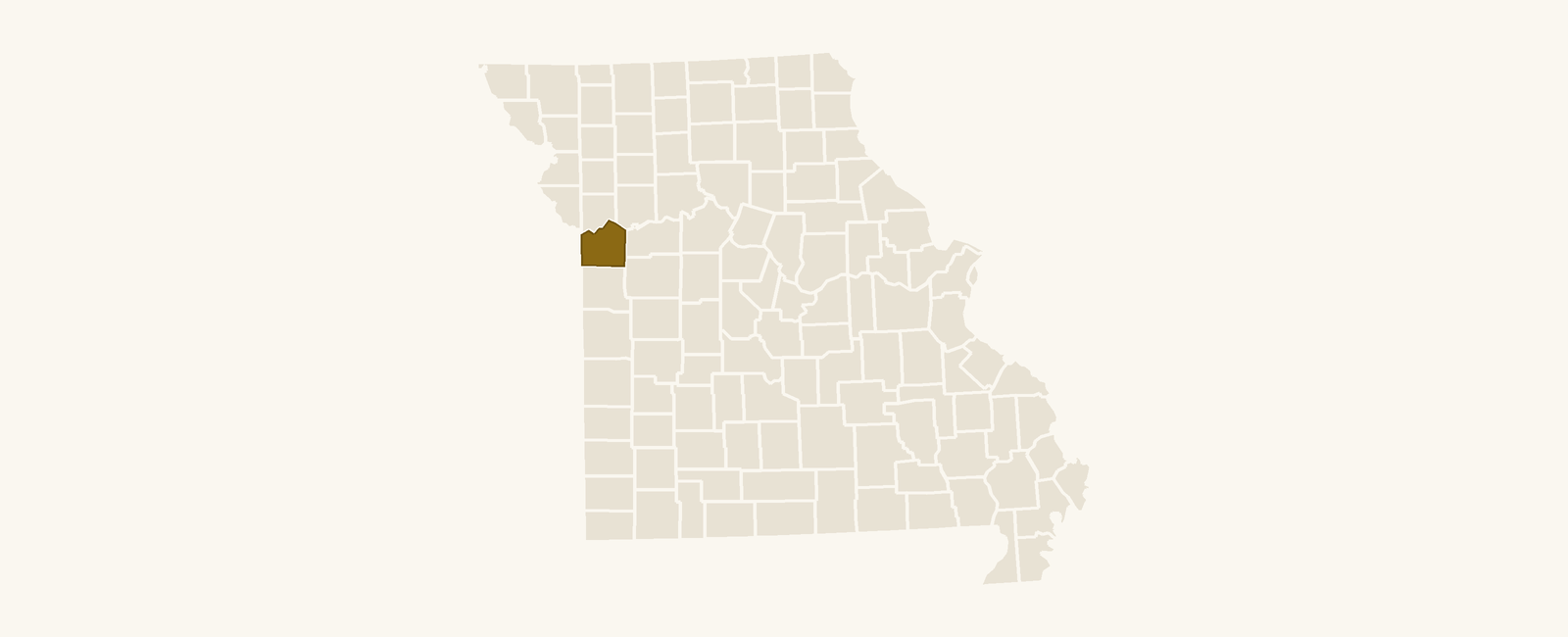
Tax sale Jackson County Missouri: the housing market behind it
Jackson County has 333,385 housing units and a population of 717,021. About 59% of homes are owner-occupied, and 66% are single-family detached, against 61% for the U.S. That is a county of houses, not mostly apartments, which is what most tax-sale buyers want to find.
The housing is older than average. Homes built before 1940 make up 19% of units here, compared with 12% nationally. Plan for old wiring, plumbing, foundations and possibly lead paint before you assume a cheap house is a good deal. The median home value is $213K, which gives you a reference point for what a repaired, finished house might be worth.
Equity is common, but not extreme. About 37% of owner-occupied homes have no mortgage, close to the U.S. figure of 39%. Vacancy is 9% against 10% nationally, so the county is not unusually empty. Permits tell a similar story: 4,036 new units were permitted in 2025, up 1% from 2024, which points to steady rather than surging new supply.
For buy-and-hold math, HUD Fair Market Rent for the Kansas City, MO-KS area is $1,546 for a 2-bedroom and $2,020 for a 3-bedroom. Run your numbers against those figures after repairs, not before.
Source: U.S. Census ACS 2023
How a delinquent-tax foreclosure sale works here
Jackson County's Delinquent Land Tax sale is for properties with three consecutive years of unpaid property taxes. The county charter requires the 16th Judicial Circuit to administer it, and the circuit's Department of Civil Process conducts the annual August sale on the steps of the downtown Jackson County Courthouse and the Eastern Jackson County Courthouse, according to the 16th Judicial Circuit. Missouri's land tax collection law runs the process through a court foreclosure suit. After the foreclosure judgment, the law sets a six-month waiting period before the sale can be advertised, and the owner or another interested party can redeem at any time before the sheriff's sale, except for residential property the judgment finds has been vacant for at least six months (RSMo 141.520, 141.530).
The sale is run through the court. The 16th Judicial Circuit is the circuit court for Jackson County, with courthouses in Kansas City and Independence, and the sale is an auction held under its supervision.
Registration comes first. The Department of Civil Process handles bidder registration, and Missouri's land tax collection law requires a bidder to show, no later than ten days before the sale, that they own no parcel in the county with a tax bill more than six months delinquent. Missouri law adds a rule for counties in Jackson County's population band: a bidder on property in a municipality in the county must also show, by the same deadline, that they own no parcel with two or more violations of that municipality's building or housing codes; taxing authorities and land bank agencies are exempt from that showing (RSMo 141.550).
The court confirms each sale. Sales are not final on the day: the court holds a hearing to confirm or set aside each sale, and it can require a higher bid if the price was inadequate (RSMo 141.580). The hearing looks at the price and the notice given, so plan your homework on the house before you bid.
Jackson County's sale follows Missouri's Land Tax Collection Law in Chapter 141 of the Revised Statutes of Missouri. Rules on notice, redemption and what a buyer receives can be technical, and the court or an attorney can explain them for a specific parcel.
The August 2026 cancellation and what it means for planning
The August 2026 Delinquent Land Tax Sale was canceled by Executive Order, and no properties will be sold in it. The 16th Judicial Circuit notes that the cancellation does not forgive the unpaid taxes. That is a good reminder that the usual annual schedule is a pattern, not a guarantee.
Do not build a business plan around one date. If you hold funds ready for an auction, have a second plan for when the sale does not happen. Owners whose parcels were headed for that sale are still carrying the tax debt, and their situation has not gone away.
An attorney can explain how a cancellation affects the status of a particular parcel and what happens next. Do not assume anything about future sale dates.

Which court filings come before a sale in Jackson County
Tax sales are the end of a long process. Several kinds of court filings often show up earlier in the life of a property, and each tells you something different about the owner.
- Tax sale and delinquent-tax foreclosure: the county is seeking a judgment because taxes went unpaid. The owner may have missed notices, lost income, or simply stopped engaging.
- Pre-foreclosure: a lender has started the process because of missed mortgage payments. Because 37% of owner-occupied homes here are free and clear, tax trouble often shows up without a mortgage in the picture.
- Probate: an owner has died and the estate must be settled. Residents aged 65 or older are 16% of the county, just under the U.S. 17%, so probate is a steady source of inherited houses rather than an unusual one.
- Divorce: a couple must divide the home, often by selling it.
- Partition: co-owners, often heirs, cannot agree and one asks the court to force a sale.
Why the mix matters. A house in probate with unpaid taxes is a different conversation from a vacant house with years of back taxes. Knowing the type of filing tells you what the owner is dealing with before you say a word. Keystone Court Data delivers these filings with the owner and property already matched, and you can try a county free for 7 days at our Jackson County page. Our tax sale leads page explains that lead type.
Approaching owners respectfully and legally
The people behind these filings are often grieving, divorcing or behind on bills. Be honest about who you are, what you do, and that you are an investor and not a rescue service. Do not pressure anyone, and never imply the court or the county sent you.
Make the first contact easy to decline. A short letter or a brief, polite call that offers to talk and says plainly that no response is fine goes a long way. If someone says no, stop.
Follow the phone rules. Calls are regulated. Federal rules on telephone solicitations set the National Do Not Call Registry, a calling window of 8 a.m. to 9 p.m. local time and company do-not-call lists (47 C.F.R. 64.1200). Missouri law bars telephone solicitations, including text messages, to residential subscribers on the state no-call list, which includes the Missouri part of the national registry, requires the caller to state clearly who is calling at the start of the solicitation, and bars blocking caller ID (RSMo 407.1095, 407.1098, 407.1101, 407.1104). A Missouri attorney can say whether a call offering to buy a house is covered. Mail is another option.
Be careful about fees and timing. Some owners can still resolve the debt themselves. Do not tell them they have no options unless an attorney has told you so. A fair offer that the owner understands protects you as well as them.
What to look for before you make an offer or bid
Because the confirmation hearing looks at whether the price was adequate and whether notice was given (RSMo 141.580), your homework on the house has to happen before the auction. For a private purchase from an owner, the same discipline applies.
- Condition and age. With 19% of homes built before 1940, budget for systems and structure, not just cosmetics.
- Title. A title company or attorney can explain what a tax sale deed actually gives you and whether anything survives the sale.
- Occupancy. A house may still have someone living in it. Gaining possession can take time.
- Exit math. Compare your repaired value with the $213K county median, and your rental numbers with the $1,546 and $2,020 HUD rents, using your own local comparables.
- Neighborhood demand. Jackson County covers about half of Kansas City plus 18 other municipalities, including Lee's Summit, with more than 86,000 residents. Demand and values can differ sharply between them.
The county's economy includes the headquarters of H&R Block and Hallmark Cards and a strong biotechnology and medical research sector. Those employers support rental demand in the metro, but they do not make any single house a good buy.
Taxes after you buy. Missouri sets assessed values as of January 1 of each odd-numbered year (RSMo 137.115), and appeals to the Board of Equalization are lodged on or before the second Monday in July (RSMo 137.275), which was July 14 in 2025.
Questions investors ask
How often does Jackson County hold delinquent-tax foreclosure sales?
The sale is normally held once a year, in August, as an auction on the steps of the downtown and Eastern Jackson County courthouses, conducted by the 16th Judicial Circuit's Department of Civil Process. The August 2026 sale was canceled by Executive Order, so the schedule can change.
Do I have to register before I can bid?
Yes. The Department of Civil Process handles bidder registration, and Missouri's land tax collection law requires a bidder to show, no later than ten days before the sale, that they own no parcel in the county with a tax bill more than six months delinquent. Missouri law adds a rule for counties in Jackson County's population band: a bidder on property in a municipality in the county must also show, by the same deadline, that they own no parcel with two or more violations of that municipality's building or housing codes; taxing authorities and land bank agencies are exempt from that showing (RSMo 141.550).
Can I inspect a property or back out after a tax sale?
Not as a buyer's option. Sales are not final on the day: the court holds a hearing to confirm or set aside each sale, and it can require a higher bid if the price was inadequate (RSMo 141.580). Do your due diligence on condition, title and occupancy before you bid.
How long do taxes have to go unpaid before a foreclosure sale is possible?
The Jackson County sale is for properties with three consecutive years of unpaid property taxes, according to the 16th Judicial Circuit. After the foreclosure judgment, the law sets a six-month waiting period before the sale can be advertised, and the owner or another interested party can redeem at any time before the sheriff's sale, except for residential property the judgment finds has been vacant for at least six months (RSMo 141.520, 141.530). The exact steps and notices are set by Missouri law, and an attorney can confirm the timeline for a specific parcel.
Is it legal to call homeowners facing a tax sale?
Only within the law. Calls are regulated. Federal rules on telephone solicitations set the National Do Not Call Registry, a calling window of 8 a.m. to 9 p.m. local time and company do-not-call lists (47 C.F.R. 64.1200). Missouri law bars telephone solicitations, including text messages, to residential subscribers on the state no-call list, which includes the Missouri part of the national registry, requires the caller to state clearly who is calling at the start of the solicitation, and bars blocking caller ID (RSMo 407.1095, 407.1098, 407.1101, 407.1104). A Missouri attorney can say whether a call offering to buy a house is covered. Federal rules also require a caller to record and honor a request not to be called (47 C.F.R. 64.1200(d)(3)). Be honest, keep it short, and stop if the person asks you to. Mail is often a gentler first step.
See Jackson County leads for 7 days, free
Real court filings with the owner and property matched. No credit card.