Pre-foreclosure in Barry County, Michigan: what investors should know
Barry County is mostly owner-occupied homes, and Michigan handles foreclosure differently from many states. Here is what the filings mean, how the process works, and how to deal with owners fairly.

What housing in Barry County looks like
Barry County, Michigan has 27,617 housing units, and 86% of them are owner-occupied. The median home value is $244K (U.S. Census Bureau, ACS 2023). If you are researching pre-foreclosure Barry County Michigan, those three facts shape who you will be talking to.
Mostly owners, mostly residents. With so few renter-occupied homes, a distressed seller here is usually a person or family who lives in the house. That changes the conversation. You are rarely dealing with an investor who is running numbers. You are dealing with someone whose home is also their household.
Value matters for how you approach it. At a median of $244K, many owners may have equity they want to protect, and a lender's sale is not always the end of the story for them. Every house is different, so treat the median as background and not as a promise about any particular property.
Census figures describe the county as a whole. They do not tell you about a specific street or a specific owner, so do your own review of each property.
Source: U.S. Census ACS 2023
Which court filings tend to come before a sale here
Different life events leave different paper trails. Each one tells you something about the owner's situation and how much time and flexibility they have.
- Pre-foreclosure: The owner has fallen behind on a mortgage and the lender has started the process to take the property. The owner usually still holds title and can often still resolve the problem.
- Probate: An owner has died and the estate is being opened in the probate court. Heirs often live elsewhere and may not want to keep or maintain the house.
- Divorce: Spouses may need to sell or buy out one another. Divorce is not one of the lead types Keystone offers in Barry County, but it is a common reason for a sale in any county.
- Tax delinquency: Unpaid property taxes in Michigan move through the county treasurer and, eventually, the circuit court. Rules and deadlines here are strict, and an attorney can confirm any timeline.
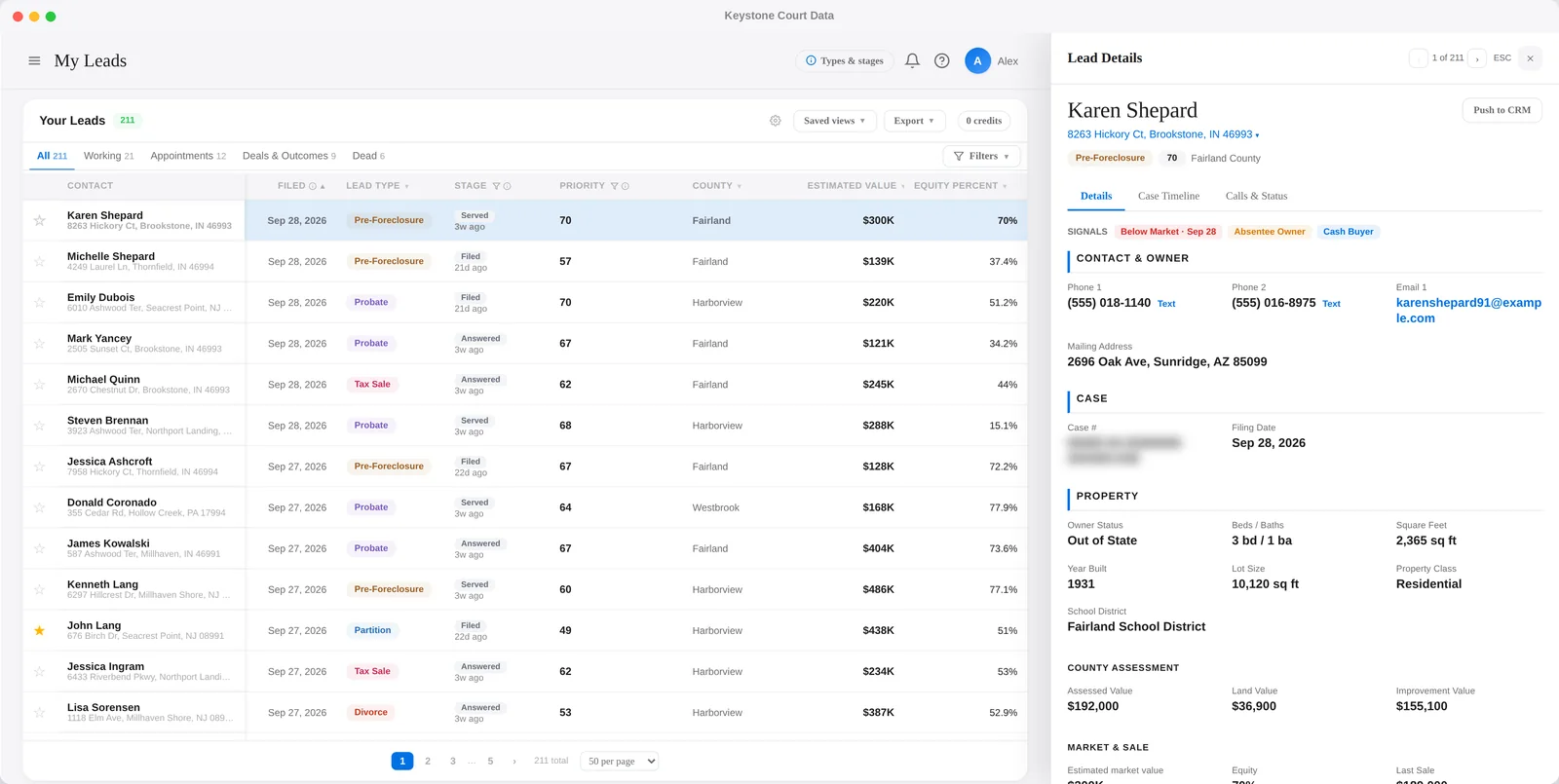
In Barry County, Keystone Court Data covers pre-foreclosure and probate. Because most Michigan foreclosures are handled outside the courtroom, the pre-foreclosure paper trail looks different from what you may be used to in a judicial state. The county's court and recording records are public, and Keystone delivers the matched leads so you can spend your time on conversations.
Pre-foreclosure in Barry County, Michigan: how the process works
Michigan is primarily a non-judicial foreclosure state. Most residential mortgages are foreclosed "by advertisement," which means the lender does not have to file a lawsuit first. The process is governed by Michigan statute, and the details are in the Michigan Compiled Laws.
Notice comes first. Before a sale, notice of the sale must be published once a week for four successive weeks, and a copy must be posted on the property within 15 days after the first publication (MCL 600.3208). Michigan's former pre-foreclosure housing-counselor steps were repealed in 2013 (MCL 600.3205a-600.3205d), but federal servicing rules bar the sale if a complete loss-mitigation application arrives more than 37 days before it, unless the borrower has been found ineligible, has rejected the offer, or has not performed under an agreement (12 CFR 1024.41(g)). The exact steps and deadlines depend on the loan, and an attorney can confirm them.
The sale is not the end. Michigan law gives a redemption period after a foreclosure-by-advertisement sale. For a home of up to four units it is generally six months when more than two-thirds of the original loan was still owed, one year when less was owed, and as short as 30 days if the home is found abandoned (MCL 600.3240). During that period the owner can reclaim the home by paying what the statute requires. The period for a specific property is worth confirming first.
What that means for you. During the redemption period the owner often still lives in the home. A buyer at sale does not get clear possession until it ends. If you approach an owner after the sale, be clear about what they still have the right to do, and do not suggest that they have fewer options than they do.
Some foreclosures, including certain land contract situations, do go through circuit court. An attorney can say how a particular matter is proceeding.
How probate works for a Barry County property
When a Barry County homeowner dies, the estate is handled by the county's probate court. Michigan's Estates and Protected Individuals Code sets out the process.
Who can sell. Generally, only a court-appointed personal representative holding letters of authority can sell estate real estate. That person may be a spouse, adult child or other relative. Without that authority, even a close family member cannot deliver clear title, so ask who the personal representative is before you discuss terms.
Some estates move slowly. Claims from creditors, family disagreements and out-of-town heirs can all delay a sale. Some personal representatives want a quick, simple sale, and others need time to sort things out.
Court approval is usually not needed. A Michigan personal representative with letters of authority can sell estate real estate without a separate court order unless the estate is supervised, the will or a court order restricts that power, or the representative is the state or county public administrator (MCL 700.3704, 700.3715). The probate court file or an attorney can confirm this for a specific estate.
If you need the filing itself, it is a public record at the county probate court. Keystone delivers these matched and ready.
How to approach owners respectfully and legally
People facing foreclosure, a death in the family or a divorce are under stress. The most effective approach is also the most decent one: be honest, be brief, and let them set the pace.
- Say who you are and why you are calling or writing. Do not imply you are from the lender, the court or a government agency.
- Respect Do Not Call. Check the National Do Not Call Registry and your own internal do-not-contact list before phoning, and follow federal rules on calling hours and opt-outs (16 CFR 310.4; 47 CFR 64.1200) and Michigan's caller-identification rules (MCL 445.111b). Written letters and in-person visits can have their own rules.
- Do not pressure. Never use fake deadlines. If an owner says no or asks you to stop, stop.
- Outside advice helps. Owners who talk with a housing counselor or attorney tend to trust the deal more, and it protects you if a deal happens.
- Have the paperwork reviewed. An attorney can review purchase documents and any licensing questions before a deal with an owner facing foreclosure.
For probate, offer condolences first and business second. A short, plain letter that says you are willing to talk if and when the family is ready often does more than a hard pitch.
What to look for before making an offer
A filing is a reason to look closer. It is not a verdict on whether the deal is good.
Confirm who can sign. For a pre-foreclosure, that is the title holder. For probate, it is the personal representative with letters of authority. Do not negotiate with someone who cannot deliver title.
Run title before you commit. Look for mortgages, second liens, unpaid taxes, judgments and any other claims. In a foreclosure situation, other liens may be affected differently depending on their priority, so have a title company or attorney explain what survives.
Check the redemption status. If a sale has already happened, whether the redemption period is still running shapes possession and the timeline.
Inspect the property. Distressed owners and estates often defer maintenance. Account for repairs in your own numbers rather than leaning on the county median of $244K.
Write it all down. Use clear, plain-language contracts, and make sure the owner has time and a chance to get advice. A deal that holds up to that kind of review is one you can stand behind.
Questions investors ask
Is Michigan a judicial or non-judicial foreclosure state?
Michigan is primarily non-judicial. Most residential mortgages are foreclosed by advertisement, meaning through notices and a sheriff's sale rather than a lawsuit. Some matters, including certain land contract cases, can still go through circuit court.
Can a Barry County owner get the house back after a foreclosure sale?
Yes, during the redemption period. Michigan law gives a redemption period after the sale: often six months for a home, one year when less than two-thirds of the original loan was owed, and shorter if the home is abandoned (MCL 600.3240). An attorney or the county can confirm the period for a specific property.
Can an heir sell a house before probate is finished?
Generally only a personal representative with letters of authority from the probate court can sell estate real estate and deliver clear title. An heir without that authority usually cannot. The probate court file or an attorney can confirm this for a specific estate.
Can I call owners in pre-foreclosure?
Telemarketing calls are covered by the National Do Not Call Registry, the FTC's Telemarketing Sales Rule and Michigan's telemarketing law; texting and auto-dialed calls carry more rules. An attorney licensed in Michigan can say which rules apply to a given campaign.
Where can I see the filings for Barry County?
They are public records at the county's courts and offices. Keystone Court Data delivers pre-foreclosure and probate leads for Barry County matched and ready, and you can try the county free for 7 days with no credit card.
General information about Michigan law. Laws change, so check the current statute. This is not legal advice and does not create an attorney-client relationship. Talk to an attorney licensed in Michigan before relying on it.
See Barry County leads for 7 days, free
Real court filings with the owner and property matched. No credit card.