Pre-foreclosure in Oakland County, Michigan: what investors should know
Oakland County has mostly owner-occupied, single-family housing and a sheriff's sale process that rewards preparation. Here is how pre-foreclosure plays out, and what to check before you make an offer.
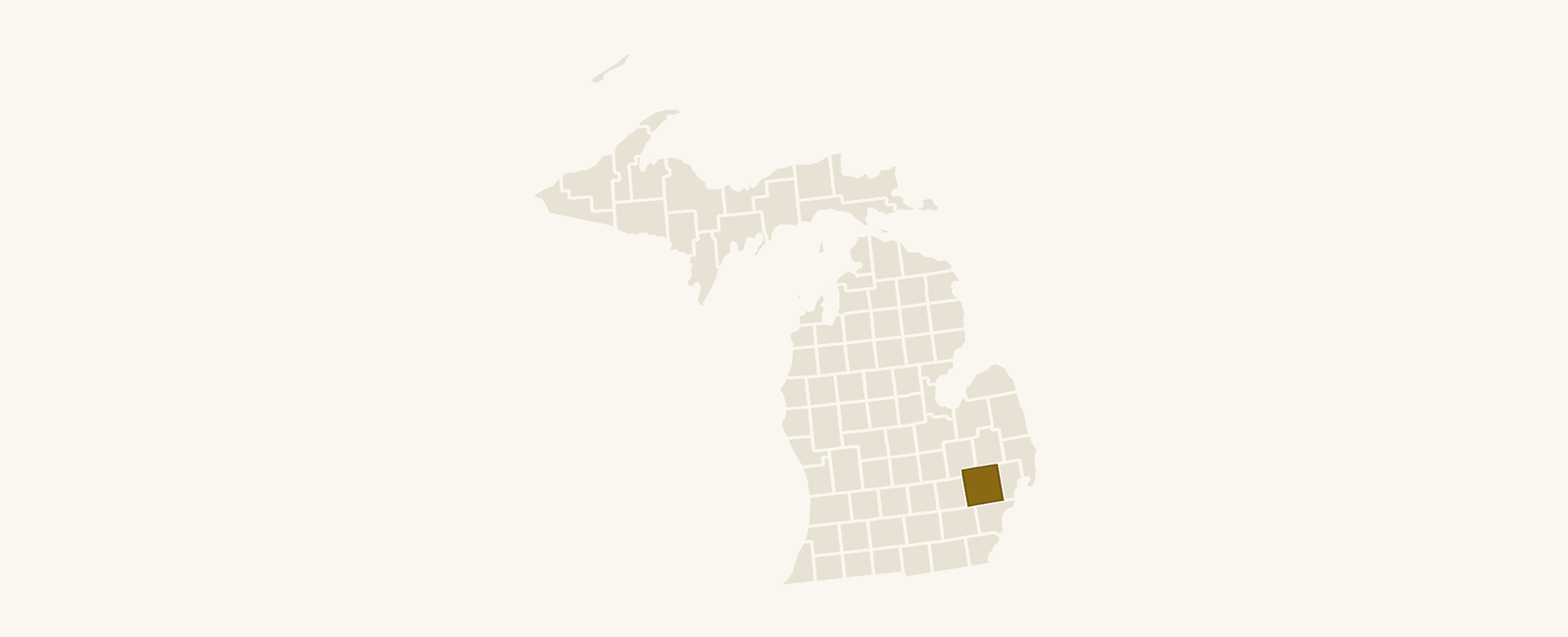
What Oakland County housing looks like
Oakland County has a population of 1,272,294 and 557,978 housing units. The median home value is $320K, and 72% of homes are owner-occupied. That is a county of homeowners, and the people you meet in pre-foreclosure are mostly living in the house you are asking about.
Single-family is the core product. About 68% of homes are single-family detached, against 61% for the U.S. Only 7% of homes were built before 1940 (U.S.: 12%), so you will see fewer century-old houses than in many older industrial counties. Even so, a house that is decades old still brings roof, furnace, plumbing and basement questions. Budget repairs from an inspection of each property, not from the county average.
Equity is not a given. Just 35% of owner-occupied homes have no mortgage, below the U.S. figure of 39%. More owners here carry a loan, and some of those loans are large. A pre-foreclosure owner may have real equity, or very little after a late-stage balance with fees. Treat each house as its own math problem.
Vacancy is 5% against 10% nationally, and new permits fell 30% from 2024 to 2025, to 2,023 units. Tight vacancy and thin new construction point to steady demand for existing homes. For buy-and-hold, HUD Fair Market Rent in the Detroit-Warren-Dearborn area is $1,459 for a 2-bedroom and $1,777 for a 3-bedroom. Those are benchmarks, not guarantees, so test your own numbers against your purchase and repair costs.
Source: U.S. Census ACS 2023
Which filings come before a sale in Oakland County
A sale rarely appears out of nowhere. Something happens in a household first, and a court record often marks it. In Oakland County, the main signals are pre-foreclosure, probate, and divorce.
- Pre-foreclosure: a lender has begun the foreclosure process because loan payments stopped. The owner may be looking for a way out, a loan fix, or a sale.
- Probate: an owner has died and the estate is being opened. Oakland County Probate Court handles decedent estates from the courthouse in Pontiac, and with 18% of residents aged 65 or older, estate sales are a real part of this market.
- Divorce: the Circuit Court Family Division in Pontiac handles divorces with or without children. A shared home often has to be sold or bought out, and the Friend of the Court runs Early Intervention Conferences and mediation for custody and parenting time disputes.
These records are public. If you want pre-foreclosure and probate filings for this county delivered with the owner and property already matched, Keystone's Oakland County page shows how, and you can try a county free for 7 days with no credit card.
A filing is a situation, not a sale. Many pre-foreclosure owners catch up, refinance, or sell on the open market. Many estates go to heirs who keep the house. Plan on conversations that end in no.
How pre-foreclosure works in Michigan, in plain terms
Michigan lenders commonly foreclose by advertisement, which is a non-judicial route. That generally means the lender does not have to file a lawsuit and win a judgment first. Instead, notice requirements are followed, the sale is advertised, and the property is sold at a public sale run by the county sheriff.
Because the process is mostly out of court, the owner's timeline can feel short. The sale date is set by the lender's notice, and the owner may have options before it, such as a loan modification or a sale. Rules differ by loan type and facts, so a servicer or attorney should confirm the actual dates.
Redemption after the sale. Michigan law gives owners a redemption right after a foreclosure sale, and for most residential properties the period is six months, though some situations shorten it (see MCL 600.3240). During that time the buyer at the sale does not yet have clean, final title. If you plan to buy before or after the sale, have an attorney confirm how redemption applies to that specific property.
Tax foreclosure is a separate track. Oakland County tax-foreclosed properties are sold only through an online auction, and the 2026 final auction is on Oct. 30, 2026, from 10 a.m. to 7 p.m. Former owners may claim surplus proceeds, with the notarized Form 5743 due by July 1. That is a different buyer experience from a mortgage sale, so do not mix the two.

What sale day looks like in Oakland County
If a property reaches a mortgage foreclosure sale, the Oakland County Sheriff acts only as auctioneer. The Sheriff has no advance information on which properties or prices are at auction, so you should not expect the Sheriff to tell you what is coming.
Come prepared to bid. Bidders must have a cashier's or certified check in the opening bid amount, made payable to the person bidding. Actual bidding starts one hour after the first reading of properties, so there is time to listen before you act.
Know your ceiling before you arrive, and know what you are buying. A sale purchase carries risks, including condition, occupancy, liens and the redemption right described above. Many investors prefer to reach the owner earlier, when a negotiated sale can be cleaner for both sides.
How to approach owners respectfully and legally
Someone behind on a mortgage is often scared and embarrassed. Someone dealing with an estate or a divorce is often grieving or exhausted. Honest, low-pressure contact is both the right way and the effective way.
- Say who you are and why you are reaching out. Do not pretend to be a lender, a government agency or a neighbor.
- Offer a clear, no-obligation conversation, and accept "no" the first time.
- Do not promise to stop a foreclosure you cannot stop. Do not hurry anyone into signing.
- Suggest the owner speak with an attorney, a housing counselor, or their loan servicer. Good-faith advice builds trust.
Phone rules apply. If you call, follow the National Do Not Call Registry (see donotcall.gov) and Michigan's state telemarketing rules. Mail and in-person visits have their own limits, such as no trespassing where signs are posted. Michigan has additional rules for buyers who deal with owners in foreclosure, so have an attorney review your approach and your contract before you use them.
For estates, remember that the person you speak with may not be able to sell yet. The personal representative needs authority from the Probate Court first, and Oakland County no longer offers same-day Letters of Authority for informal probate applications. For testate estates filed electronically, the original Will must reach the Probate Court within 14 days or the filing is rejected. Expect delays, and be patient with grieving families.
What to look for before you make an offer
Whether the owner is in pre-foreclosure, probate or divorce, run the same checks before you put a number on paper.
- Who can sign. In a divorce, both spouses often must agree. In an estate, only the personal representative with court authority can sell. In foreclosure, confirm who holds title.
- What is owed. Free and clear homes are only 35% of owner-occupied homes here, so assume there is a loan until a title professional shows otherwise. Ask a title company to confirm liens and the payoff.
- Where the process stands. Ask an attorney how close the sale date is and how redemption applies, because both change what you can offer.
- Condition and age. Walk the house and price repairs honestly. Homes built decades ago can hide expensive systems.
- Your exit. For a resale, compare against the $320K median home value only as a rough backdrop, and use real comparables. For a rental, check your numbers against the HUD rents of $1,459 and $1,777.
Walk away from any deal where the seller is being squeezed into a price they do not understand. Deals that treat people fairly last longer, and they keep your name clean in a county where neighbors and agents talk.
Questions investors ask
Is foreclosure in Oakland County judicial?
Most residential mortgage foreclosures in Michigan are done by advertisement, which does not require a lawsuit first. The lender gives notice and the property is sold at a public sheriff's sale. Some situations go through court, so confirm the route for a specific property with an attorney.
Can I buy a pre-foreclosure house before the sheriff's sale?
Yes, if the owner agrees and can legally sell. The lender must usually be paid off from the proceeds, or agree to a short sale. Have a title company and an attorney review the deal, since the sale date and loan balance drive what works.
What do I need to bid at the Oakland County sheriff's sale?
You need a cashier's or certified check in the opening bid amount, made payable to the person bidding. Bidding starts one hour after the first reading of properties. The Sheriff acts only as auctioneer and has no advance information about which properties or prices will be offered.
Does the owner get a chance to take the house back after the sale?
Michigan law gives a redemption right after a foreclosure sale, and for most residential property it is six months, though some cases are shorter. Because that affects title, ask an attorney how it applies before you buy at a sale.
Are probate leads as useful as pre-foreclosure leads here?
They are different. Probate involves heirs or a personal representative, not an owner in default, so the conversation is slower and more sensitive. With 18% of residents aged 65 or older, estates are a steady source of sales in Oakland County.
See Oakland County leads for 7 days, free
Real court filings with the owner and property matched. No credit card.