Investing in Weld County, Colorado: where motivated sellers show up in the court record
Weld County is mostly owner-occupied, single-family and thinner on free-and-clear equity than the country as a whole. Here is what that means for the filings that come before a sale.
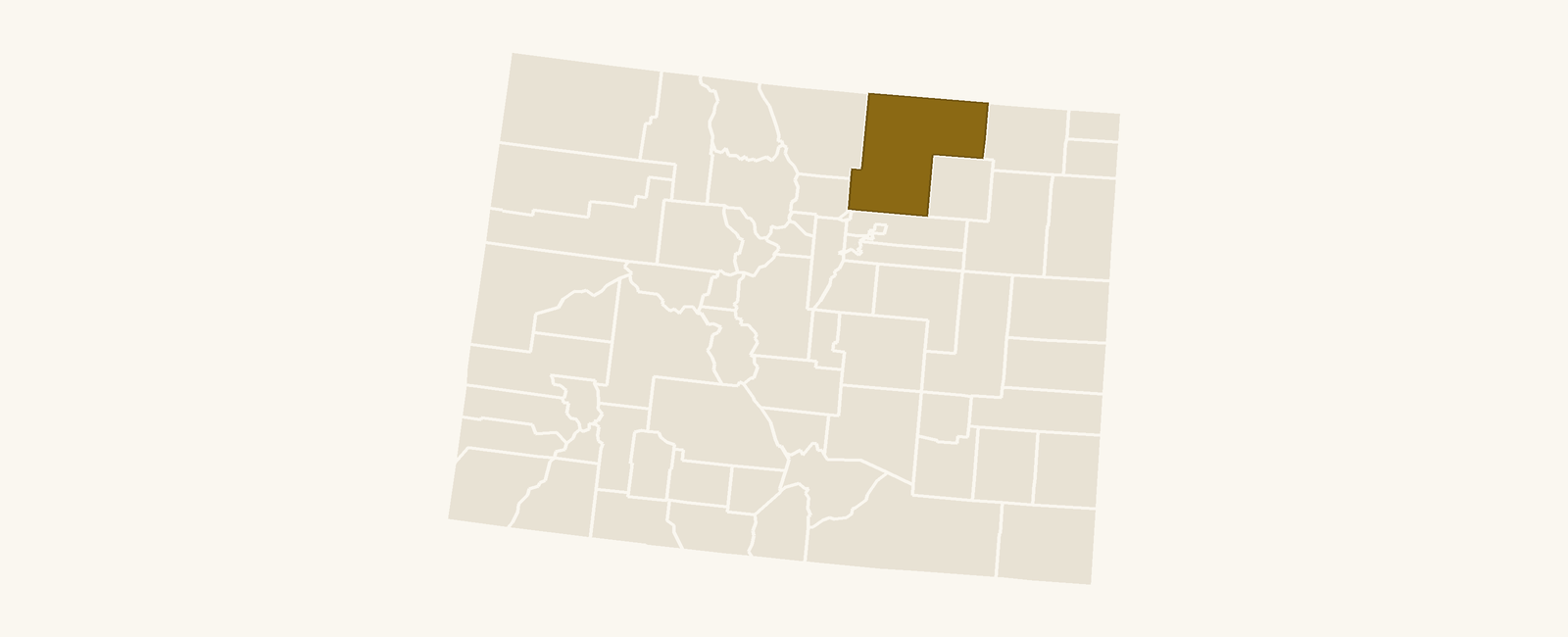
What Weld County's housing looks like
Start with the basic shape of the market. Weld County has a population of 340,711 and 125,033 housing units, and Greeley, the county seat, holds about one-third of the residents among 32 incorporated municipalities. For anyone doing Weld County Colorado real estate investing, that means one big city and a lot of smaller towns and rural parcels.
Mostly owner-occupied, mostly single-family. About 76% of homes are owner-occupied, and 73% are single-family detached (U.S.: 61%). Only 4% of housing units are vacant (U.S.: 10%). Few empty houses means you are usually buying from someone who lives there or from an estate, not picking up abandoned stock.
Newer and younger. Just 7% of homes were built before 1940 (U.S.: 12%), so you will meet fewer century-old houses than in many places. The median age of residents is 35.2 (U.S.: 38.9), and 13% of residents are 65 or older (U.S.: 17%). The county is younger than the national picture, which shapes which filings tend to matter.
The median home value is $444K. For buy-and-hold math, HUD's Fair Market Rent for Greeley is $1,647 a month for a 2-bedroom and $2,281 for a 3-bedroom. New construction is also cooling: 2,993 units were permitted in 2025, a change of -14% from 2024. Keep those figures in front of you when you estimate resale and rental exits. Census ACS and HUD publish them.
Source: U.S. Census ACS 2023
Thinner equity changes who your motivated sellers are
The number that stands out most is mortgage-free ownership. Only 26% of owner-occupied homes in Weld County are owned free and clear, against 39% nationally. More owners carry a loan, so a missed-payment problem can turn into a sale problem faster, and a seller has less room to give up in price.
Do not assume big equity. In a divorce or an estate, a house may still carry a mortgage that has to be paid at closing. An owner who looks well off on paper may have little left after the loan and costs. Run the numbers on each property before you talk price.
Probate matters, but it is not the whole story. With fewer residents 65 or older than the national share, estate sales are likely a smaller slice of the picture than in retirement-heavy counties. They still happen, and they can be a good fit for an investor who is patient and kind. A younger county also means more sellers with working-age life events: a job change, a split household, or a payment shock after a refinance.
Which court filings come before a sale in Weld County
Each filing tells you something different about the person on the other side. None of them guarantees a seller. They simply mean a situation is moving, and a conversation may be welcome or not.
Pre-foreclosure. In Colorado, a deed of trust foreclosure begins with a notice of election and demand (NED) filed with the public trustee, who records it (C.R.S. 38-38-101, 38-38-102). It tells you the lender has started the process and that a sale date will follow. The owner may want to sell, catch up, or work something out with the lender, so your first question is what they want.
Divorce. A dissolution of marriage filing can mean a home must be sold or one spouse must be bought out. Timing and decisions often depend on both parties and the court, so be patient and talk to the right person, which may be an attorney. Be careful not to take sides.
Probate. When an owner dies, the home may be sold by a personal representative. Authority comes from the court, not from a relative's say-so. Ask who is legally authorized before you discuss terms.
Tax sale. Unpaid property taxes can lead to a tax lien, which is a different path from foreclosure and is aimed at investors in the lien, not necessarily at buying the house. More on that below.
The underlying filings are public records, in the 19th Judicial District. If you want them delivered with owner and property already matched, that is what Keystone's Weld County page covers.

How the process works in Colorado, in plain terms
Foreclosure is run by the public trustee, not a judge. Most Colorado foreclosures of deeds of trust are handled outside a standard lawsuit. In Weld County, the Public Trustee handles them, though a court order authorizing the sale (a Rule 120 order) is still required (C.R.S. 38-38-105). For property that is not agricultural, the initial sale date is set 110 to 125 calendar days after the NED is recorded; for agricultural property it is 215 to 230 days after the NED (C.R.S. 38-38-108). That gives you a rough window, though a sale can be delayed, cancelled, or resolved before it happens.
After the sale. Under Colorado law, only certain junior lienors or their assignees can redeem after a public trustee sale, not the owner, and they must file a notice of intent to redeem within eight business days of the sale (C.R.S. 38-38-302). Details can be technical, and a Colorado attorney can confirm any deadline.
Tax liens are a separate track. Weld County holds an annual tax lien sale, which by law must begin on or before the second Monday in December (C.R.S. 39-11-109). The redemption interest rate is set each September 1 at nine percentage points above the federal discount rate, rounded to the nearest full percent (C.R.S. 39-12-103(3)). At least three years after the tax lien sale, the lien holder may apply for a public auction of a certificate of option for a treasurer's deed (C.R.S. 39-11.5-102(1), in effect since July 1, 2024). The owner can still redeem the lien until that auction (C.R.S. 39-11.5-106(4)). In practice, buying a lien is not a shortcut to a house.
The tax calendar tells you about pressure. Property taxes can be paid in two halves (by the last day of February and by June 15) or in full by April 30, and unpaid taxes become delinquent on June 16 (C.R.S. 39-10-102, 39-10-104.5). An owner whose valuation protest the assessor denies can appeal to the County Board of Equalization, which in Weld County is the Board of County Commissioners (C.R.S. 39-8-101, 39-8-106).
Probate and divorce. These are court cases rather than public trustee processes. Weld County's court system is the 19th Judicial District, with District Court and County Court judges, and probate cases are heard in the district court (C.R.S. 15-10-201). An attorney can say which court hears a specific matter and what authority someone has to sell.
How to approach owners respectfully and legally
The people in these filings are dealing with debt, a death, or a marriage ending. Your first message should be short, honest and easy to ignore. Say who you are, that you buy houses, and that there is no pressure. Do not imply you are connected to the court or the lender.
Be careful with phone calls. Before you dial anyone, check the federal Do Not Call rules at donotcall.gov and the Colorado No-Call List Act (C.R.S. 6-1-901 et seq.), and follow them. A letter or a note at the door is often better received than a cold call, and nobody should be called repeatedly after saying no.
Know the special rules for distressed owners. Colorado has laws that apply when someone buys a home from an owner facing foreclosure, the Colorado Foreclosure Protection Act (C.R.S. 6-1-1101 et seq.), and they are strict about disclosures and contract terms. An attorney can review a purchase agreement and process before they are used. In probate, deal only with the person who has legal authority. In an open divorce, a sale of marital property needs both spouses' consent or a court order (C.R.S. 14-10-107).
Offer information, not urgency. If an owner would be better off keeping the house or working with a lender, say so. Honest conversations lead to referrals and repeat business.
What to look at before making an offer
Know the payoff. With only 26% of owner-occupied homes free and clear, assume a mortgage until you learn otherwise. Equity, liens and the seller's net all shape what a fair offer looks like. A title company or attorney can tell you what is actually owed.
Know the property type. Most homes here are single-family detached, but rural and farm parcels are common too. Agricultural property has its own, longer foreclosure timeline (C.R.S. 38-38-108), and a title professional can confirm what is actually being sold.
Run the exit. At a median value of $444K, the spread has to survive repairs, carrying costs and your own profit. Buildings are less often pre-1940 (7%), so the repair budget may be driven by systems and finishes more than by antique construction. For rentals, compare the purchase price with HUD's Greeley Fair Market Rent of $1,647 (2-bedroom) and $2,281 (3-bedroom), and remember that fewer new permits can affect competing supply and resale.
Keep your paperwork clean. Put the terms in writing, tell sellers about your role and give them time to review. If you want to see how Keystone works, read how it works or look at Colorado.
Questions investors ask
How long does a foreclosure take in Weld County?
For property that is not agricultural, the initial public trustee sale date is set 110 to 125 calendar days after the NED is recorded. For agricultural property it is 215 to 230 days (C.R.S. 38-38-108). Sales can be delayed, cancelled or resolved earlier, and an attorney can confirm current deadlines.
Can the owner get the house back after a foreclosure sale in Weld County?
No. Colorado gives the owner no right to redeem after a public trustee sale; only certain junior lienors or their assignees can redeem, and they must file a notice of intent to redeem within eight business days of the sale (C.R.S. 38-38-302). Redemption rules are technical, and a Colorado attorney can confirm how they apply to a particular case.
Does buying a tax lien get me the house?
Not directly. Weld County holds an annual tax lien sale, which by law begins on or before the second Monday in December (C.R.S. 39-11-109). At least three years after the tax lien sale, the lien holder may apply for a public auction of a certificate of option for a treasurer's deed (C.R.S. 39-11.5-102(1), in effect since July 1, 2024). The owner can still redeem the lien until that auction (C.R.S. 39-11.5-106(4)).
Are probate leads a big part of Weld County investing?
They matter, but residents 65 or older are 13% of the population against 17% nationally, so probate is likely a smaller share here than in older counties. When you do deal with an estate, speak with the person who has legal authority to sell.
Can I call owners I find in court filings?
Telemarketing calls are covered by the National Do Not Call Registry, the FTC's Telemarketing Sales Rule and Colorado's telemarketing law; texting and auto-dialed calls carry more rules. An attorney licensed in Colorado can say which rules apply to a given campaign.
General information about Colorado law. Laws change, so check the current statute. This is not legal advice and does not create an attorney-client relationship. Talk to an attorney licensed in Colorado before relying on it.
See Weld County leads for 7 days, free
Real court filings with the owner and property matched. No credit card.