Investing in Warren County, Ohio: where motivated sellers show up in the court record
A county of mostly owner-occupied, single-family homes behaves differently from an urban rental market. Here is what that means for finding and treating motivated sellers in Warren County.
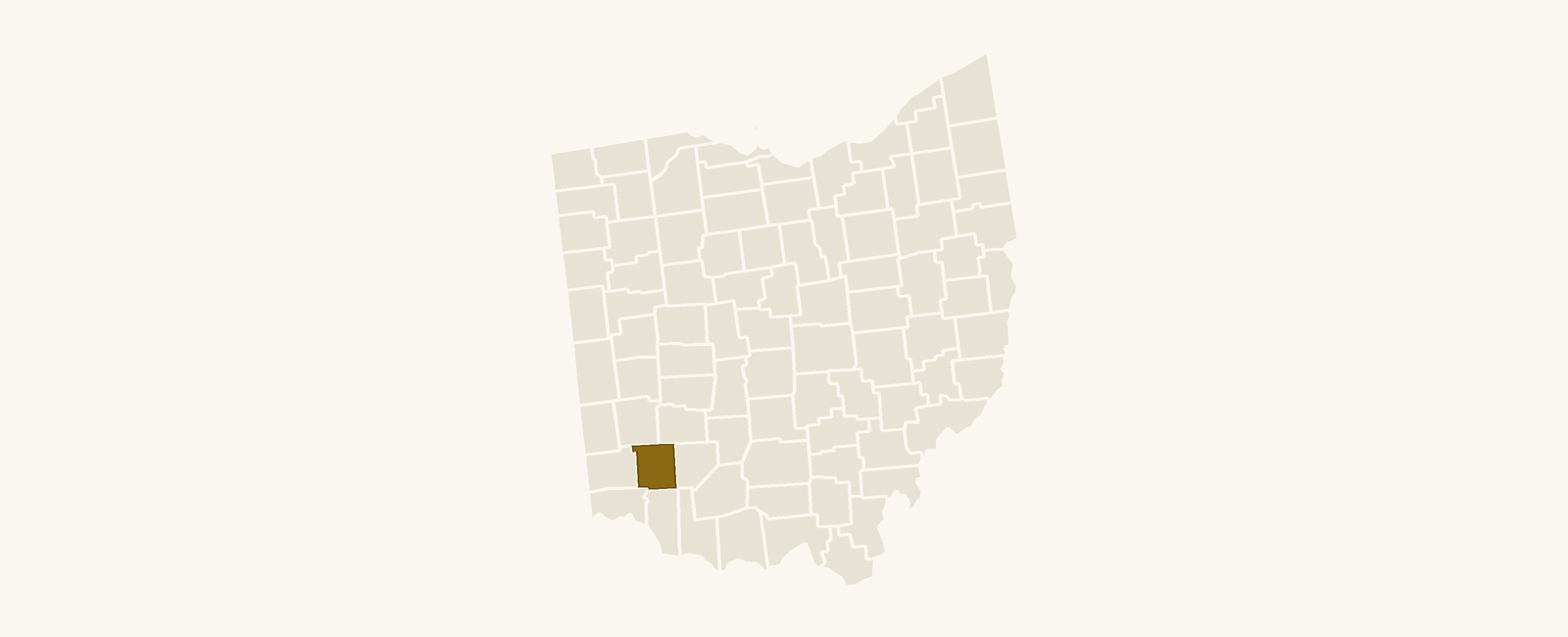
What the housing looks like for Warren County Ohio real estate investing
Warren County has 94,910 housing units and a population of 246,364, and 80% of homes are owner-occupied. The median home value is $320K. That is a market of people who live in the houses they own, not one dominated by landlords.
Single-family is the default. About 77% of homes are single-family detached, compared with 61% nationally. For an investor, that means fewer small multifamily buildings and more standard houses that retail buyers also want. Your exit is usually a resale or a single-family rental.
The stock is younger than the national average. Only 6% of homes were built before 1940, against 12% across the U.S. Expect fewer century-old houses with surprises behind the walls. Still budget for age-related systems in any home you buy, because a younger county is not the same as a problem-free house.
Vacancy is thin. Just 5% of housing units are vacant, half the U.S. figure of 10%. Few empty houses sit around, so distressed properties that do come to market tend to attract attention. New construction is active too: 1,442 units were permitted in 2025, up 17% from 2024. Source figures come from the Census Bureau's American Community Survey and the Building Permits Survey.
Source: U.S. Census ACS 2023
What the equity and age numbers mean for sellers
Just 29% of owner-occupied homes in Warren County have no mortgage, well under the U.S. share of 39%. Most owners still owe something. In a county with a median value of $320K, that matters in two ways.
Pre-foreclosure fits this county. With more owners carrying loans, a missed-payment situation is a realistic reason for a sale. Equity varies a lot from owner to owner, so never assume it. A seller who bought recently may have little room, and a long-time owner may have plenty.
Estates are a smaller but real source. Residents 65 or older are 15% of the county, below the U.S. 17%, and median age is 39.8 against 38.9 nationally. This is a working-age, family-oriented county. Probate matters here, but you will meet as many mid-life heirs and divorcing couples as retirees. Where a home is free and clear and the owner has died, the heirs may hold meaningful equity and a strong wish for a clean, quick, fair sale.
Local employers help explain the stability. Lebanon's largest employers include ADVICS (automotive brake systems, 969 employees), Countryside YMCA, and Mane, Inc. (fragrance and flavoring). A manufacturing and services base like that tends to keep housing demand steady, though a layoff or reduced hours can still push a household into trouble.
Which court filings tend to come before a sale here
Each filing type tells you something different about the owner's situation. Understanding the meaning matters more than the label.
- Pre-foreclosure: A lender has started a court case over an unpaid mortgage. The owner may want to sell before a judgment, or may be looking for any alternative.
- Probate: An owner has died and the estate is being opened. The home may be sold by the executor or administrator, or distributed to heirs who live elsewhere and do not want to manage it.
- Divorce: A couple is separating and the home is often the largest shared asset. A sale may be agreed, ordered, or negotiated between the spouses.
- Tax sale: Property taxes have gone unpaid long enough that the debt is being pursued through the legal process.
- Partition: Co-owners disagree about what to do with a property, and one asks a court to resolve it, which can end in a sale.
All of these are public records. Keystone delivers them matched to the owner and property in Warren County, and you can try a county free for 7 days with no credit card.

How the process works in Ohio, in plain terms
Foreclosure is judicial. Ohio lenders go through the courts, so a judge must order the sale and then confirm it (R.C. 2329.31). Ohio owners can redeem by paying the judgment, interest and costs at any time before the court confirms the sale (R.C. 2329.33). In Warren County, the Sheriff's Office conducts foreclosure sales of real estate online. Ohio law requires residential sheriff's sales to be held on the state's official sheriff sale website, with every sale open for bidding for at least seven days (R.C. 2329.153). At the first auction a property cannot sell for less than two-thirds of its appraised value; a residential foreclosure that does not sell goes to a second auction 7 to 30 days later with no minimum bid (R.C. 2329.20, 2329.52).
Bidders need money ready early. Other bidders must post a deposit set by statute according to the appraised value, on the schedule stated in the sale notice (R.C. 2329.211). A judgment creditor who is the purchaser is not required to make a deposit under Ohio Revised Code 2329.211, which is why lenders often bid on their own cases. Timelines and owner rights during a case vary, so confirm specifics with an Ohio attorney.
Probate goes through the county's probate court. It is a division of the Court of Common Pleas held at the county seat in Lebanon (R.C. 2101.01). Many heirs are new to the process and need plain explanations, not pressure.
Divorce is handled by the Domestic Relations Division. It is part of the Court of Common Pleas (R.C. 2301.03). Many couples work toward cooperation, so a calm, flexible offer fits better than a hard sell.
Property taxes follow a set calendar. Warren County taxes are paid in two halves, on dates the Treasurer sets. Ohio adds a penalty to a half-year's taxes left unpaid after the due date, and half of that penalty is waived if the full amount is paid within 10 days (R.C. 323.121). Valuation complaints go to the three-member Board of Revision (R.C. 5715.02) and are due by March 31 of the following year, or by the close of first-half collection if that is later (R.C. 5715.19). A value change can raise a bill that an owner on a tight budget did not expect.
How to approach owners respectfully and legally
Almost everyone you contact is dealing with a death, a breakup, or money pressure. Lead with courtesy. Say who you are, why you are writing, and that there is no obligation.
Be honest about what you are. Tell people you are an investor who buys homes, not an agent or a lender. Never imply you can stop a foreclosure, and never suggest a court filing obligates them to talk to you.
Respect phone rules. If you call, screen against the National Do Not Call Registry and follow the federal Telemarketing Sales Rule and Ohio's telemarketing rules, including calling-hour limits and honoring opt-out requests. A letter or a short in-person note is often better received, particularly for an heir who just lost a parent.
Give people room. An executor may need the heirs' written consent or the court's permission to sell (R.C. 2127.01, 2127.011), or an attorney's advice before agreeing to anything. A divorcing spouse may not be able to sign alone. Encourage sellers to talk with their own attorney, and back off when they say no.
What to check before you make an offer
A court filing tells you why an owner might sell. It does not tell you whether the deal works. Before you put a number on paper, run through the basics.
- Authority to sell. In probate, confirm who legally can sign. In divorce or partition, confirm everyone with an interest agrees or that a court order permits the sale. Have a title company or attorney confirm.
- Liens and loan balances. With only 29% of owners mortgage-free, expect a payoff in many deals. Equity is not a given.
- Condition. With a younger-than-average stock (6% built before 1940), major age-related problems may be less common, but roofs, HVAC and water heaters still wear out. Inspect every house.
- Exit value. With a $320K median home value and low vacancy, retail buyers are competing for decent houses. Price your repairs against what a finished home realistically brings.
- Rental math. HUD Fair Market Rent in the Cincinnati, OH-KY-IN area is $1,353 for a 2-bedroom and $1,785 for a 3-bedroom. Compare those against the purchase price, taxes and repairs before deciding to hold. Figures come from HUD.
For more on the process, see how Keystone works and the Ohio overview.
Questions investors ask
Is Warren County, Ohio a good place to invest in real estate?
It suits investors who want single-family homes. About 77% of homes are single-family detached and 80% are owner-occupied, with vacancy at 5%. It is a competitive, steady market, not a deep-discount one, so your edge comes from fair offers and good preparation.
Is foreclosure judicial in Ohio?
Yes. Lenders must go through the courts, a judge orders the sheriff's sale, and the court must confirm it afterward (R.C. 2329.31). The owner can redeem by paying the judgment, interest and costs at any time before the court confirms the sale (R.C. 2329.33), and an Ohio attorney can confirm the timeline in a given case.
How are foreclosure sales run in Warren County?
The Sheriff's Office conducts them online on the state's official sheriff sale website, and each sale is open for bidding for at least seven days (R.C. 2329.153). Bidders other than the lender post a deposit set by statute, on the schedule in the sale notice (R.C. 2329.211).
Can I call people who have a probate or divorce filing?
Calls are regulated. Federal rules on telephone solicitations set the National Do Not Call Registry, a calling window of 8 a.m. to 9 p.m. local time and company do-not-call lists (47 C.F.R. 64.1200), and Ohio requires telephone solicitors to register with the Attorney General unless an exemption applies (R.C. 4719.02). Whether a call offering to buy a house is covered depends on the facts, so an Ohio attorney can confirm. Many owners respond better to a short, respectful letter than to a cold call, especially after a death.
Do rents support buy-and-hold here?
HUD Fair Market Rent for the Cincinnati, OH-KY-IN area is $1,353 for a 2-bedroom and $1,785 for a 3-bedroom. With a $320K median home value, run the numbers on each property including taxes and repairs before deciding to hold.
See Warren County leads for 7 days, free
Real court filings with the owner and property matched. No credit card.