Investing in Norfolk City, Virginia: where motivated sellers show up in the court record
Norfolk is a renter-heavy city with a young population and less free-and-clear equity than the national average. That shapes which court filings matter and how you should treat the owners behind them.
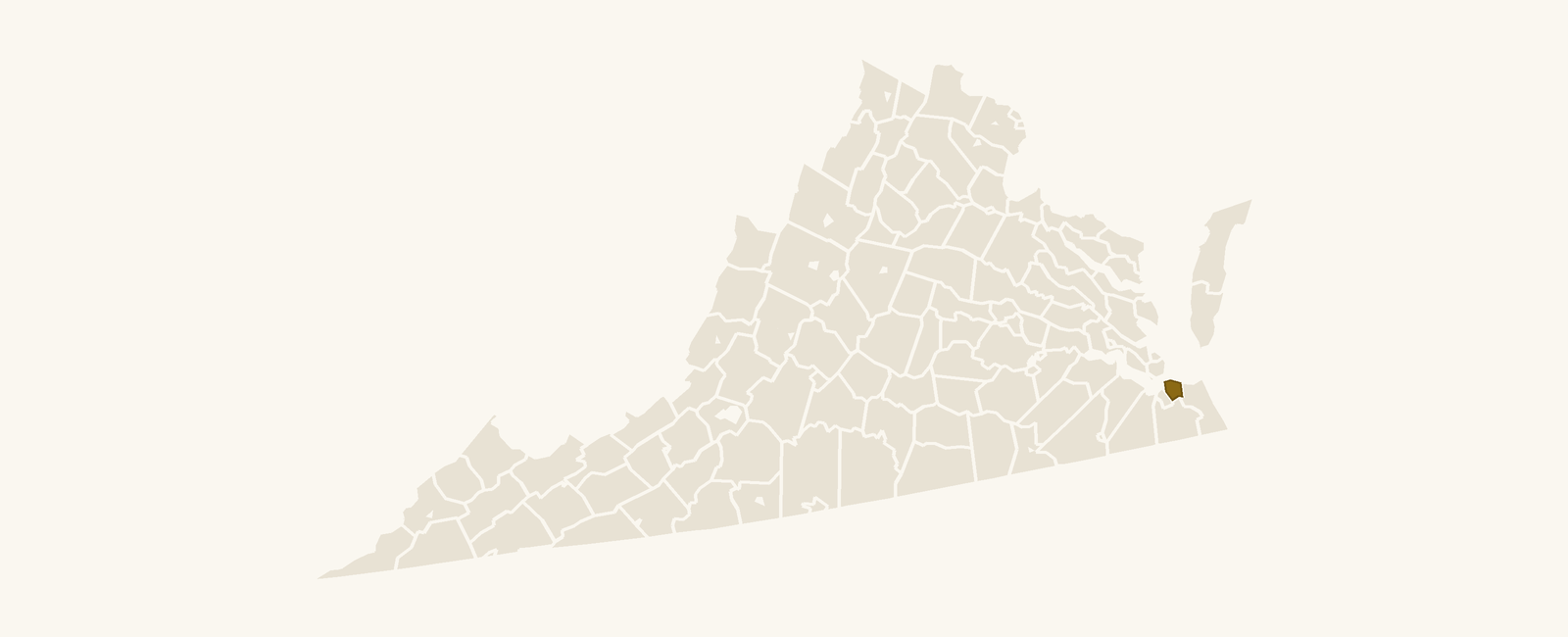
What Norfolk's housing looks like for an investor
Norfolk City real estate investing starts with a basic fact: this is a city of renters. Of Norfolk's 102,542 housing units, only 46% of homes are owner-occupied, and the median home value is $272K. The population is 235,037, and the median resident is 32.4 years old, well under the U.S. figure of 38.9.
Less free-and-clear equity. Just 27% of owner-occupied homes have no mortgage, against 39% nationally. For you, that means a typical distressed owner is more likely to owe a lender, and your offer has to work around a payoff.
Fewer detached houses, older stock. Single-family detached homes make up 49% of units (U.S.: 61%), so you will see more attached homes, condos and small multifamily. And 15% of homes were built before 1940 (U.S.: 12%), which is a reason to budget for repairs on older properties.
Demand signals. Vacancy is 8% (U.S.: 10%), a bit tighter than the nation. New construction is thin: 156 units were permitted in 2025, a 64% drop from 2024. Check local demand block by block before you assume a steady base of renters and buyers.
Source: U.S. Census ACS 2023
Which court filings come before a sale in Norfolk
Two filing types are most useful here: pre-foreclosure and tax sale. Each tells you something different about the owner's situation.
Pre-foreclosure. A lender's move toward foreclosure means the owner has fallen behind on a mortgage. Because fewer Norfolk owners are mortgage-free, this is a natural place to find owners who might sell rather than lose the property. Equity varies, so run the numbers on each house instead of assuming.
Tax sale. Owners who fall behind on real estate taxes can end up at a court-ordered sale. Penalties and interest are added to unpaid tax, so a small lapse can grow over time.
Divorce and probate also push homes onto the market. Norfolk Circuit Court handles divorce, and custody, support and visitation can be heard in Norfolk Juvenile and Domestic Relations District Court. With a younger population and 13% of residents aged 65 or older, expect these to be a smaller share of sales than in older counties. Keystone currently offers pre-foreclosure and tax sale leads for this county.
How the process works in Virginia, in plain terms
Virginia is generally a non-judicial foreclosure state. Most mortgages use a deed of trust, which lets a trustee sell the property after default without a full lawsuit. The notice and timing rules are set by statute and by the loan documents, so confirm specifics with a Virginia attorney before you rely on any timeline.
Tax sales in Norfolk. Under Virginia law, real estate can be sold for delinquent taxes through a circuit court proceeding, and the sale is not final until the court enters an order confirming it. Winning a bid is not the same as owning the property.
Read the terms. Auction format, deposits and buyer fees are set for each sale, so read the published terms closely and get your own counsel involved before you bid.
Under Virginia law, the owner can redeem the property at any time before the date of the sale by paying all taxes, penalties, interest, fees and costs; a partial payment is not enough. Check with an attorney on how that applies to a specific property.
Reading Norfolk's tax bills and assessments
Assessments can change from year to year. Virginia law lets an owner who believes an assessment is wrong apply to the circuit court to correct it, but an owner who never appeals can be stuck with a bill they believe is too high.
This matters to you in two ways. First, a higher assessment can strain a household that is already stretched, which is part of how tax delinquency starts. Second, when you price a buy-and-hold deal, build the annual tax cost into your numbers and remember it can change.
Do not treat a missed tax payment as proof of anything about a particular person. It is only context.
How to approach Norfolk owners respectfully and legally
The people behind these filings are dealing with debt, a lost income or a stressful family situation. Lead with honesty and give them room.
- Say who you are, that you are an investor, and what you can and cannot do.
- Do not imply you are a lender, a court or a government office.
- Never pressure anyone to sign quickly. Encourage them to talk with an attorney, a housing counselor or their lender.
- If you phone, follow the National Do Not Call Registry and Virginia's telemarketing rules, including calling-hour limits. Confirm the current requirements with an attorney.
- A short, plain letter often lands better than a cold call.
Military households. Some owners may be on active duty. Federal protections can apply to service members, so ask a lawyer before you move on a deal involving one.
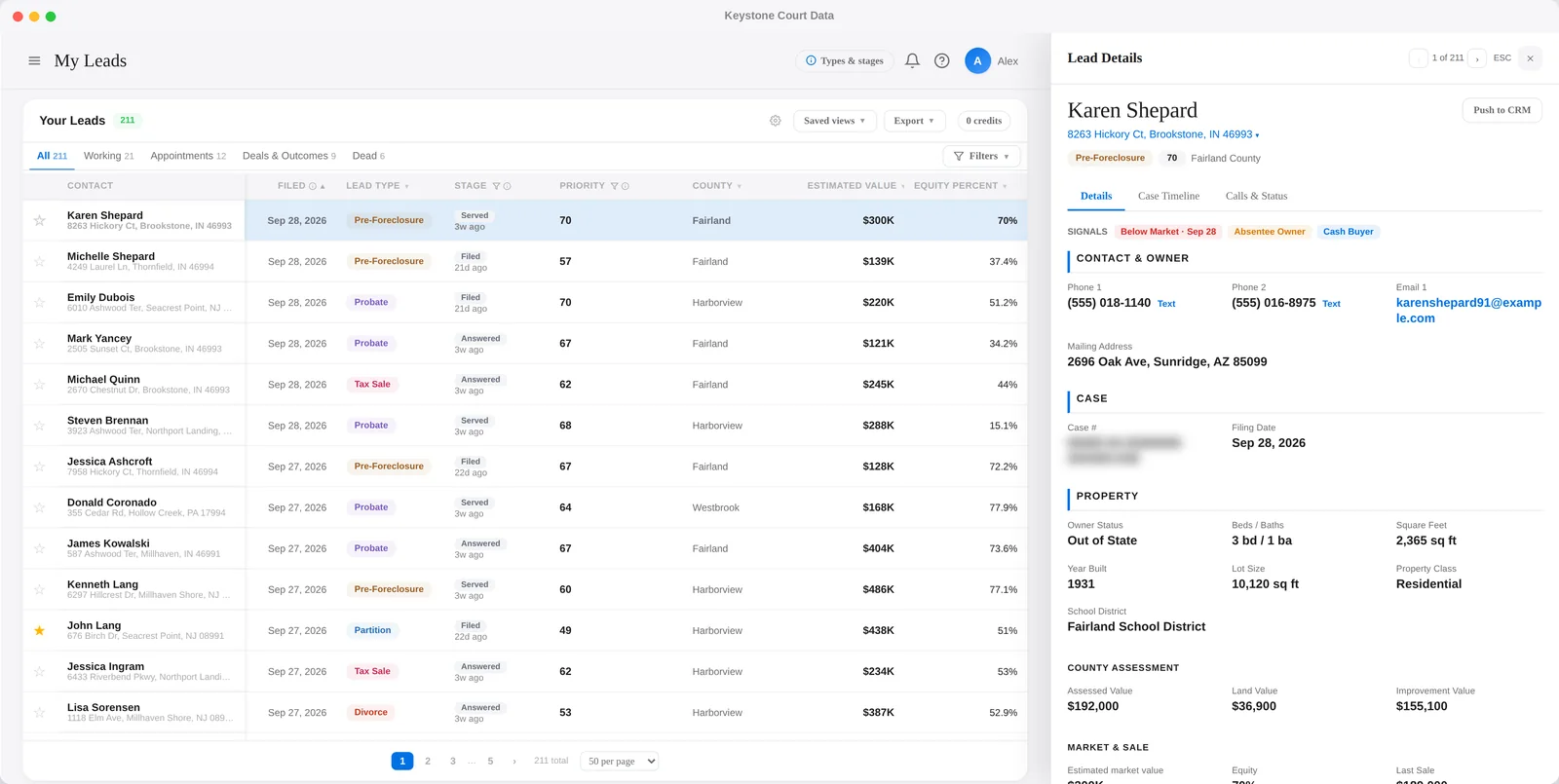
If you do not want to sort court filings yourself, Keystone delivers Norfolk City leads with the owner and property already matched. You can try a county free for 7 days with no credit card.
What to check before you make an offer
Know the payoff. With 27% of owner-occupied homes free and clear, many owners still owe a lender. Work out what they owe, any back taxes and any other liens before you name a number.
Budget for age. Norfolk has a higher share of pre-1940 homes (15%) than the nation (12%). Plan for inspections of roofs, wiring, plumbing and foundations, and for lead paint rules where they apply.
Test the rent math. HUD's Fair Market Rent for the Virginia Beach-Chesapeake-Norfolk area is $1,667 for a 2-bedroom and $2,298 for a 3-bedroom. Those are area-wide benchmarks, not guarantees for a specific block, so confirm with your own comparables.
Mind the property type. Fewer detached houses means more condos and attached homes. Check association rules and fees before you assume you can rent or renovate freely.
Use a Virginia attorney. For tax sale bids, confirmation, title and foreclosure timing, get advice before you commit money.
Questions investors ask
Is Norfolk a good place to buy rentals?
Renters are the majority here, since only 46% of homes are owner-occupied. HUD's Fair Market Rent for a 2-bedroom is $1,667 and for a 3-bedroom is $2,298 in the metro area. Verify against your own comparables and factor in the age of the housing stock.
Does Virginia require a court to approve a foreclosure?
Most Virginia foreclosures are non-judicial and are carried out by a trustee under a deed of trust. Notice and timing rules come from statute and the loan documents. Confirm the details for a specific property with a Virginia attorney.
How does a Norfolk tax sale work?
Under Virginia law, real estate with long-unpaid taxes can be sold through a circuit court proceeding, and the sale is not final until the court confirms it. Each sale publishes its own terms for deposits and fees. Talk to an attorney before bidding.
Are estate sales common in Norfolk?
They happen, but 13% of residents are 65 or older compared with 17% nationally, and the median age is 32.4. Pre-foreclosure and tax sale situations are likely to be a bigger part of your outreach here than in an older county.
Can I call owners I find in a filing?
You can, but follow the National Do Not Call Registry and Virginia telemarketing rules, and keep the conversation honest and low-pressure. A letter is a gentler first step for many owners. Ask an attorney about the current rules.
See Norfolk City leads for 7 days, free
Real court filings with the owner and property matched. No credit card.