Investing in Montgomery County, Ohio: where motivated sellers show up in the court record
A market guide for investors, wholesalers and agents: what the county's housing looks like, which court filings tend to come before a sale, and how to treat owners well.
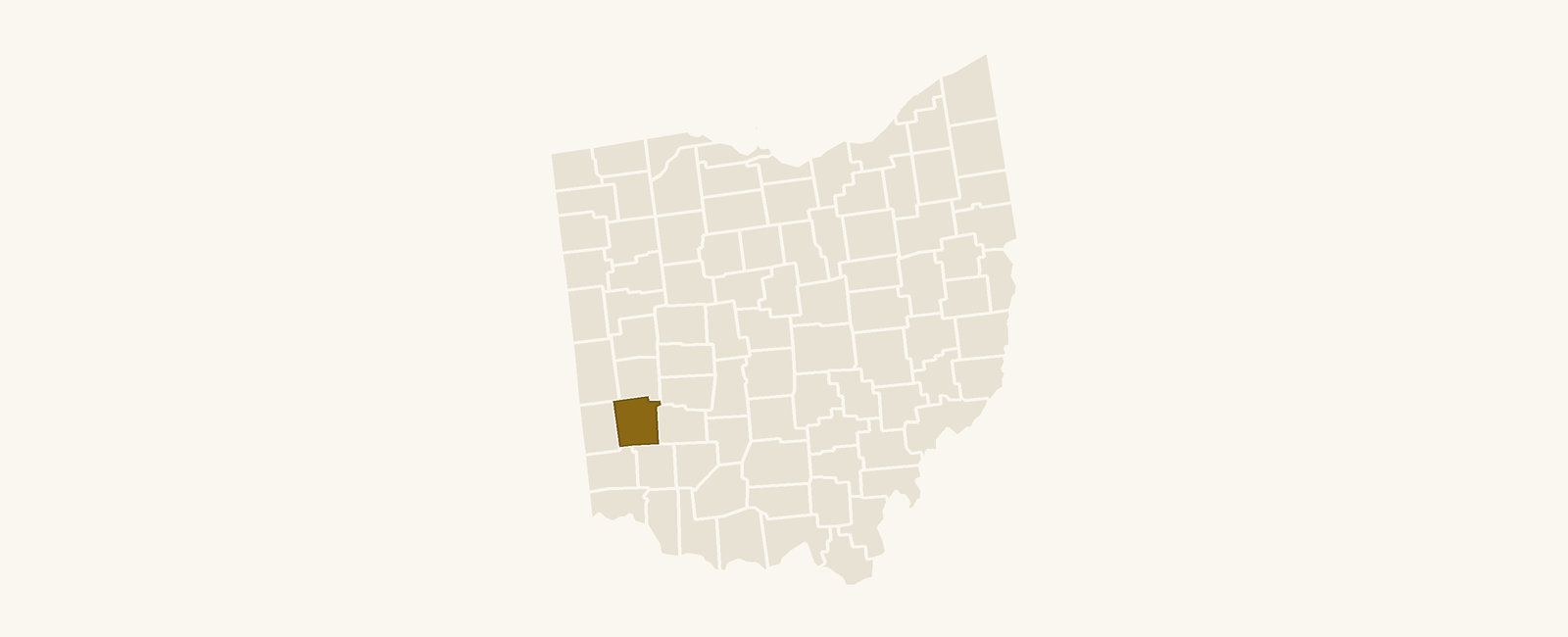
Montgomery County Ohio real estate investing starts with older single-family homes
Montgomery County has 252,475 housing units and 535,528 residents, with Dayton as the county seat. Of those homes, 67% are single-family detached, compared with 61% nationally. If you are looking for deals here, you are mostly looking at houses.
The price point is modest. The median home value is $167K, and 62% of homes are owner-occupied. That leaves a meaningful share of renter-occupied housing, which matters if you plan to buy and hold.
The housing is older than average. 16% of homes were built before 1940, versus 12% across the U.S. Houses from that era often carry original plumbing, wiring, foundations and lead paint questions, so a seller's "it just needs cosmetics" deserves a real inspection.
Vacancy sits at 9%, slightly under the national 10%. That is not a sign of a dead market, but it does mean you should look at each street rather than assume every block has the same demand.
Two figures are close to the national picture. Residents 65 or older make up 18% of the county (U.S.: 17%), and 38% of owner-occupied homes have no mortgage (U.S.: 39%). Neither is a standout, but both tell you that estates and equity-rich owners are a normal part of this market. Source: U.S. Census Bureau, American Community Survey.
Source: U.S. Census ACS 2023
What rents and new construction say about buy-and-hold here
HUD's Fair Market Rent for the Dayton-Kettering-Beavercreek area is $1,273 per month for a two-bedroom and $1,651 for a three-bedroom. Set those next to a $167K median home value and you can see why investors look at rentals here. Fair Market Rent is a federal benchmark, not a guarantee of what a given house will rent for, so test it against your own comparables.
New supply is picking up. The county permitted 1,079 new housing units in 2025, a 16% change from 2024 in the upward direction. New construction competes with the renovated older houses you may be planning to rent out, so factor it into your rent assumptions.
Source for rents: HUD Fair Market Rents. Source for permits: Census Building Permits Survey.
Which court filings tend to come before a sale in Montgomery County
Owners rarely wake up wanting to sell at a discount. A court filing often marks the point where the choice gets forced. Here is what each one means in this county.
- Pre-foreclosure: a lender has filed suit over an unpaid mortgage. Some owners want to sell before the case reaches a court-ordered sale.
- Probate: an owner has died and the home is part of an estate. Heirs who live elsewhere, or who do not want to manage an older house, may be open to selling.
- Divorce: a couple needs to split an asset that neither may be able to keep. Divorces are heard by the Domestic Relations Court, a division of the Common Pleas Court that sits in Dayton.
- Tax sale: unpaid property taxes have moved the property toward a tax-driven sale process.
- Partition: co-owners, often heirs, cannot agree and one asks the court to force a sale or division.
Each of these is a public court record. Keystone delivers them with the owner and property already matched, so you can spend your time on conversations instead of paperwork. You can see how that works on the Montgomery County page.

How the process works in Ohio and in Montgomery County
Foreclosure goes through the courts. Ohio foreclosures are judicial, meaning the lender sues and a judge decides. In Montgomery County, when a foreclosure action demands a judicial sale, the county Sheriff conducts a public auction by default, unless a Private Selling Officer is requested by motion. Notices of sale are published in the Dayton Daily News, and each notice lists parcels for only one case number.
Buyers at the auction have obligations. Under the court's local rule, residential buyers other than the first lien holder must make a deposit immediately after the sale, with the amount depending on appraised value. The balance is due to the Sheriff within 30 days of the confirmation and distribution entry. Successful bidders also have 30 days from the sale to get a title examination and may ask the Court to set aside the sale if title is unmarketable. Read the full rule at the Montgomery County Common Pleas local rule on sheriff's sales.
Probate runs through the county court. In Ohio, estates are handled by the probate division of the county court of common pleas. An executor or administrator generally needs court authority before selling estate real estate, and the exact steps depend on the will and the situation, so ask an attorney.
Divorce has built-in pauses. Parents with children under eighteen must attend the court's mandatory "Helping Children Succeed After Divorce" seminar, held at Sinclair Community College. The court also offers mediation for open cases, in person or virtually by request. Those steps can affect how fast a couple decides what to do with the house.
Deadlines and redemption rights in foreclosure, tax and partition matters depend on the specific case. Confirm them with the court or an attorney before you rely on them.
How to approach Montgomery County owners respectfully and legally
The people behind these filings are dealing with debt, grief or a marriage ending. Lead with honesty. Say who you are, say you buy houses, and say plainly that they are free to say no.
Do not pressure anyone. No false deadlines, no hints that you are connected to the court or the lender, and no promises you cannot keep. Ohio and federal telemarketing rules apply if you phone, including the National Do Not Call Registry and Ohio's own telemarketing requirements, so check your calling practices against them before you dial. A handwritten letter or a short, plain note is often a better first touch than a cold call.
Match the tone to the situation. For a probate family, offer patience and let them talk to their attorney. For a divorcing couple, remember both people have a say and that one of them may be reluctant. For a foreclosure, be clear that you are an option, not a rescue, and encourage them to seek independent advice. You should be as comfortable being told no as being told yes.
What to look for before you make an offer in Montgomery County
Because so much of the housing is older single-family stock, start with the building itself. Plan for the systems you cannot see: roof, sewer line, electrical, and any signs of water in a basement. Price your repair budget from a contractor's walk-through, not from a guess.
Check title and liens early. A foreclosure can involve more than one lender, and an estate may carry unpaid debts. In a sheriff's sale, the 30-day title examination window is a reason to move quickly on the title work. Have a title company or attorney confirm what is actually being conveyed.
Confirm who can sign. In an estate, that means the person with court authority. In a divorce, it may mean both spouses or a court order. In partition, it may mean several co-owners agreeing.
Run the numbers both ways. With a $167K median value and HUD rents of $1,273 for two bedrooms and $1,651 for three, a rental can pencil out, but only after repairs, taxes, insurance and vacancy. Know your exit, whether that is a flip, a wholesale assignment or a hold, before you commit.
Questions investors ask
Is foreclosure in Ohio judicial or non-judicial?
Ohio foreclosures are judicial, so the lender must file a lawsuit and the court decides. In Montgomery County, a foreclosure that demands a judicial sale ends by default with a public auction run by the county Sheriff. A Private Selling Officer can be used instead if one is requested by motion.
Who runs the foreclosure sale in Montgomery County?
The county Sheriff conducts the public auction by default. Notices are published in the Dayton Daily News, and each notice lists parcels for only one case number. Buyers other than the first lien holder must make a deposit right after the sale, with the balance due within 30 days of the confirmation and distribution entry.
Can an executor sell a house in Montgomery County?
Often yes, but the executor or administrator usually needs authority from the probate court, and the will and estate details affect the steps. The estate's attorney is the right person to confirm what is required. As a buyer, ask for proof of that authority before you sign anything.
Do divorces create motivated sellers in Montgomery County?
They can. When a couple cannot keep or agree on the house, a sale may be the simplest answer. Divorces are heard by the Domestic Relations Court in Dayton, and mediation and a parent education seminar for families with children can shape the timing.
Is it legal to call homeowners facing foreclosure or probate?
Calling is generally allowed, but you must follow the National Do Not Call Registry and Ohio's telemarketing rules, and you cannot mislead or pressure anyone. When in doubt, ask an attorney, and consider a respectful letter instead.
See Montgomery County leads for 7 days, free
Real court filings with the owner and property matched. No credit card.