Investing in Hernando County, Florida: where motivated sellers show up in the court record
A county with a lot of older owners, a lot of paid-off homes and a tax calendar that runs on fixed dates. Here is what that means for deals, and how to approach sellers decently.
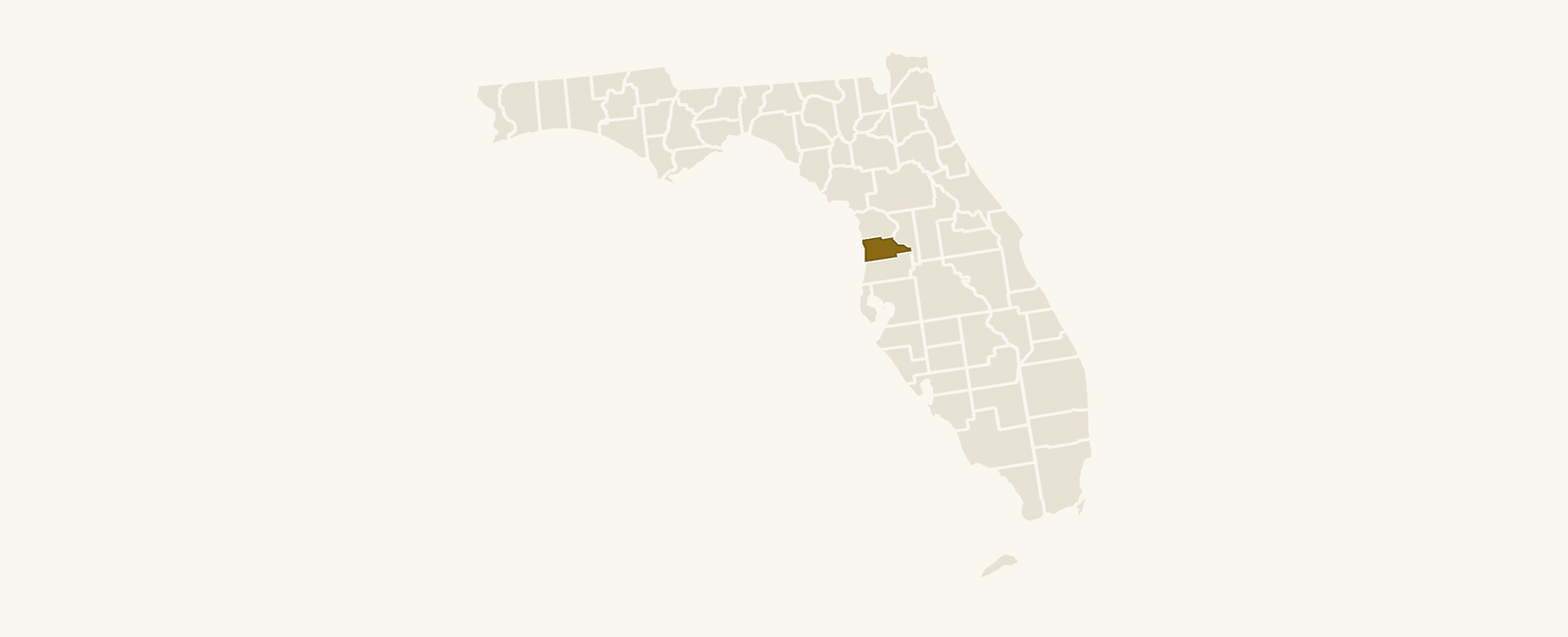
What Hernando County housing looks like
If you are weighing Hernando County, Florida real estate investing, start with who owns the homes. The county has 201,512 residents and 90,991 housing units, and 82% of homes are owner-occupied. The median home value is $241K.
The stock is mostly the kind of house a retail buyer understands. 75% of homes are single-family detached (U.S.: 61%), and 0% were built before 1940 (U.S.: 12%). You are not dealing with a pile of century-old houses, so your repair budgets will more often be about roofs, air conditioning and general wear than about very old systems.
Equity is the headline. 45% of owner-occupied homes have no mortgage (U.S.: 39%). When a house like that changes hands because of a death, a divorce or a tax problem, the seller often has room to negotiate, and a fair cash offer can still leave them with real money.
Two more numbers matter. Housing unit vacancy is 12% (U.S.: 10%), so some inventory sits empty, and new units permitted in 2025 came to 1,975, a change of -21% from 2024. Fewer new builds can leave existing homes carrying more of the demand, but treat that as a reason to check your own numbers, not a promise.
Source: U.S. Census ACS 2023
An older county means probate matters more
27% of residents are 65 or older, against 17% nationally, and the median age is 48.1. That age profile points to a steady flow of estates in which a house passes to heirs who may live elsewhere and may not want it.
Probate is often the most useful lead type here. The home is frequently paid off, the heirs often have no emotional or financial reason to keep it, and the estate needs someone to handle a property that is sitting empty. That is a real service when you handle it well.
Not every estate can sell quickly. In Florida, who may sign a deed depends on whether a personal representative has been appointed and what authority they have. Some estates need the court's involvement before a sale and some do not, so a buyer should have a title company or attorney confirm authority before agreeing to anything.
The same age profile can show up before probate begins. An owner who has died but whose estate has not been opened yet leaves a house with no one clearly in charge, which is a delicate time to make contact.
Which court filings come before a sale in Hernando County
Different filings mean different seller situations. Knowing what each one means keeps you from treating every owner the same way.
- Pre-foreclosure: A lender has filed suit over unpaid mortgage debt. Because 45% of owner-occupied homes have no mortgage, this pool is narrower here than in many counties, but the owners in it may be motivated and may have equity if they have owned for years.
- Probate: An estate has been opened after a death. The decision-makers are heirs and a personal representative, not the person who owned the house.
- Divorce: A marriage is being dissolved and a shared home often has to be sold or bought out. Both spouses usually have a say, and emotions run high.
- Tax sale: Taxes went unpaid and the property has moved into the certificate and tax deed process, covered below.
These are public records. Keystone Court Data delivers them with the owner and property already matched, county by county; you can see what is offered for this county on the Hernando County page.

How the process works in Florida, in plain terms
Foreclosure is judicial. In Florida a lender has to file a lawsuit in court and win a judgment before a foreclosure sale. That means an owner usually has time between the filing and a sale, and time is what makes a negotiated sale possible. Exact timelines vary by case, so confirm deadlines with an attorney.
Probate runs through the circuit court. A personal representative is appointed by the court and handles the estate, including any sale of real estate. Some estates are simple and some are contested, so do not assume a quick close.
The tax calendar here is fixed. Taxes are due November 1 and may be paid through March 31. Early-payment discounts run from 4% for payments made in November down to 1% in February, with no discount in March. Unpaid taxes become delinquent on April 1, unless the tax notice was mailed late enough to push that date back.
After that, parcels with unpaid taxes are advertised once a week for 3 weeks, and tax certificates are sold on them. Once 2 years have passed since April 1 of the year a certificate was issued, its holder can apply for a tax deed. That leads to a public auction, so it does not guarantee the holder gets the property.
If you bid at a tax deed auction, know the local rules. The opening bid is built from the taxes, fees and interest the applicant paid, and for property on the latest roll as homestead it also includes half of the latest assessed value. The property is advertised for four consecutive weeks before the sale, and the sale itself runs online. The highest bidder must pay a non-refundable cash deposit, and the rest of the price is due shortly after the sale by cashier's check, money order or cash; personal checks are not accepted. The Hernando County Clerk's tax deed page explains these points.
How to approach Hernando County owners respectfully and legally
Many people you will contact here are grieving, divorcing or behind on payments. Many are also older. Be plain about who you are, say you are a buyer, and let them end the conversation without pushback.
Keep first contact low pressure. A short, honest letter is often better than a phone call. Say why you are writing, that you buy houses as an investor, and that there is no obligation. Do not imply you are affiliated with the court, the lender or the county.
Follow the calling rules. If you phone, check the National Do Not Call Registry requirements and Florida's telemarketing rules, including the state's own do-not-call list and restrictions on calling times and automated dialing. Rules vary by situation and change, so confirm your practices with an attorney. Honor every request to stop.
With heirs, remember they may be dealing with a death and may live out of state. With older owners, suggest they involve family or an attorney before signing. A deal that holds up when a relative reads it is a better deal.
What to look for before you make an offer
Start with authority and title. In an estate, confirm who can legally sign. In a divorce, confirm whether both spouses must sign and whether a court order controls the sale. In a pre-foreclosure, understand where the case stands and what the lender is owed. An attorney or title company should confirm these points.
Do the rent math on buy-and-hold. HUD Fair Market Rent in the Tampa-St. Petersburg-Clearwater area is $1,917 a month for a 2-bedroom and $2,448 for a 3-bedroom. Compare those to your purchase and repair costs against the $241K median home value, and remember that Fair Market Rent is a benchmark, not a guarantee of what a particular house will rent for.
Budget for condition, not age. With 0% of homes built before 1940, look hard at roof, air conditioning and water damage, which are common surprises in Florida homes left empty. With vacancy at 12%, a house that has sat unoccupied deserves a careful walkthrough.
Finally, price for the seller you actually have. Equity-rich owners can often accept a fair offer and still come out well, so a fast cash close with an honest number is a legitimate fit. Pushing a lowball on someone who does not understand their options is how an investor loses a reputation in a county this size.
Questions investors ask
Is Florida a judicial foreclosure state?
Yes. Lenders have to file a lawsuit and obtain a court judgment before a foreclosure sale. That gives owners time to sell, but timelines vary, so confirm any deadlines with an attorney.
Can an executor sell a house in Hernando County?
A court-appointed personal representative can generally sell estate real estate, but the authority and any court approvals depend on the estate. A title company or attorney should confirm authority before you sign a contract.
When do property taxes become delinquent in Hernando County?
Unpaid property taxes become delinquent on April 1, unless the tax notice was mailed late enough to push that date back. Taxes are due November 1 and may be paid through March 31, with early-payment discounts that shrink each month until March.
Why do paid-off homes matter to investors here?
45% of owner-occupied homes in Hernando County have no mortgage. When one of those homes is sold after a death, divorce or tax problem, the owner often has equity, which changes how you structure and price an offer.
Can I call owners from court filings?
You can, but you must follow the National Do Not Call Registry and Florida's telemarketing rules, and you should stop when asked. Many investors start with a respectful letter instead. Confirm your practices with an attorney.
See Hernando County leads for 7 days, free
Real court filings with the owner and property matched. No credit card.