Investing in Duval County, Florida: where motivated sellers show up in the court record
A working investor's guide to Duval County: what the housing stock says, which court filings tend to come before a sale, and how to treat owners fairly.
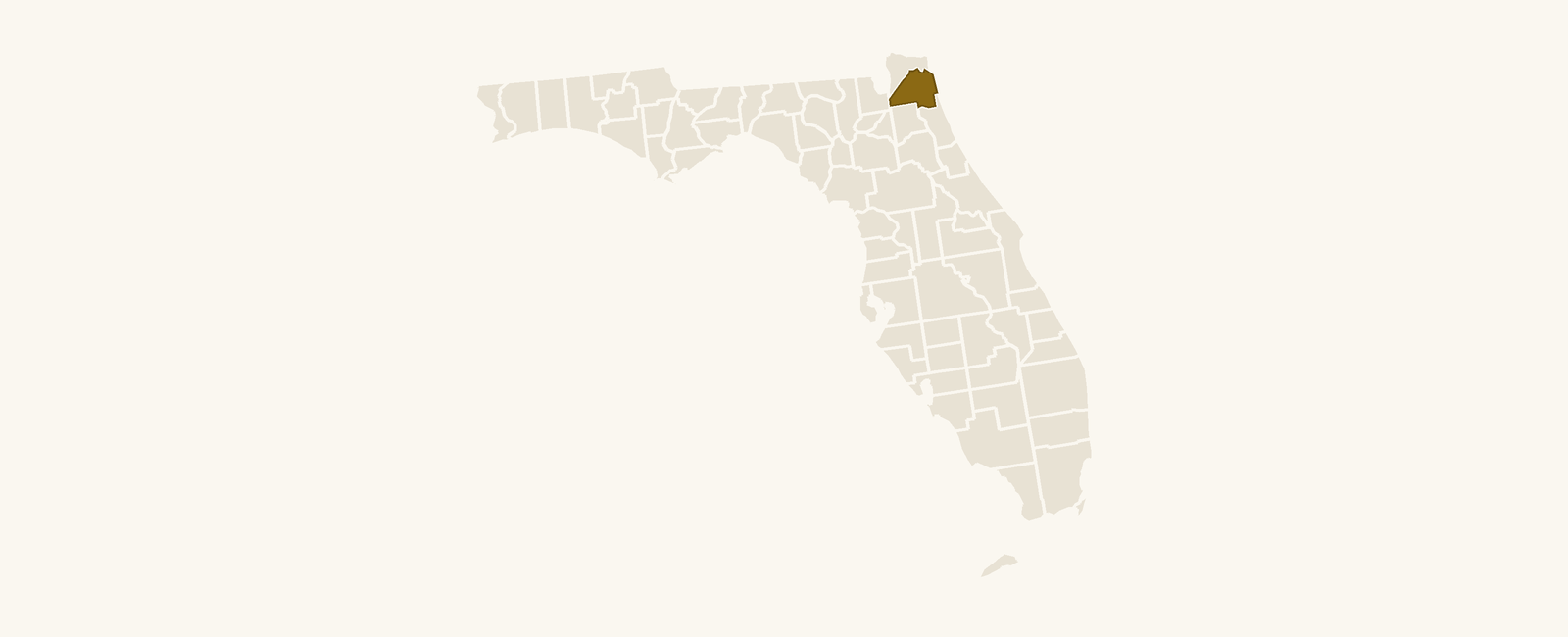
Duval County Florida real estate investing starts with the housing mix
Duval County has 1,007,189 residents and 445,946 housing units, and the median home value is $275K. That is a large, mostly ordinary housing market, and it is the backdrop for every lead you will work here.
Most homes are houses people live in. About 58% of homes are owner-occupied, and 60% are single-family detached, close to the U.S. figure of 61%. Vacancy sits at 9% against 10% nationally, so you are not buying into an unusually empty or unusually tight market.
The age of the stock helps with repair estimates. Just 5% of homes were built before 1940, compared with 12% across the U.S. You will still find dated systems and deferred maintenance, but fewer of the century-old problems that blow up a rehab budget in older northern cities.
Equity is mixed. About 35% of owner-occupied homes have no mortgage, versus 39% nationally. That means a somewhat larger share of owners are paying a loan, and a missed payment can turn into a court case. It also means that when an estate or divorce does come up, you should not assume the house is debt-free. Confirm before you talk numbers.
Source: U.S. Census ACS 2023
What rents, age and new construction mean for a buy-and-hold plan
HUD's Fair Market Rent for Jacksonville is $1,694 a month for a 2-bedroom and $2,077 for a 3-bedroom. Those figures are a useful reference point for what a rental might support, though your actual rent depends on the house and the block.
Builders were permitted for 6,017 new housing units in 2025, a change of -7% from 2024. Slightly less new supply coming online can help resale and rental demand for existing homes, but it is one input, not a forecast.
The median age of residents is 36.7 against 38.9 nationally, and 15% of residents are 65 or older (U.S.: 17%). A younger population leans toward renters and first-time buyers. The senior share is a bit below average, so probate is a steady source of sellers here rather than the main one. Plan for a mix of lead types instead of leaning on a single one.
Court filings that tend to come before a sale in Duval County
A court filing is a sign that something has changed in an owner's life. It is not a sign they want to sell, and it is certainly not permission to pressure anyone. Here is what each type usually means.
- Pre-foreclosure: A lender has started a lawsuit over missed payments. The owner may be looking for a way out, a way to catch up, or a buyer.
- Probate: An owner has died and the estate is being opened. The house may be sold by a court-appointed personal representative, or kept by heirs.
- Divorce: A couple may need to sell or buy one another out. Timing is often driven by a settlement or court order.
- Tax sale: Unpaid property taxes can lead to a tax certificate and, eventually, a tax deed process. Owners in this position are often behind on more than one bill.
- Partition: Co-owners, often heirs, cannot agree and one asks the court to force a sale or division.
Jacksonville is the county seat, and the county's court system sits there. These filings are public records. If you would rather receive them already matched to the owner and property, Keystone delivers Duval County leads on the day of filing, and you can try a county free for 7 days with no credit card.

How the process works in Florida, in plain terms
Foreclosure is judicial. In Florida a lender generally has to sue in court to foreclose. The owner is served, can respond, and a judge decides the case. A sale, if one happens, is run through the court process. The owner often has options along the way, such as catching up, negotiating with the lender or selling, so the situation can change quickly.
Probate goes through the circuit court. A personal representative is appointed by the court and is the person with authority to act for the estate. Their authority, and what they can sell and when, depends on the type of administration and the will. Do not assume that an heir who answers the door can sign a deed.
Homestead rules can matter. Florida has strong homestead protections that can affect who inherits a primary residence and what creditors can reach. This is a place where reading general guidance is not enough. Ask an attorney or title company before you rely on any assumption.
Notice periods, redemption rights and timelines vary by case type and can change. Confirm the specifics with the county court or a Florida attorney. The Florida Statutes are available from the state legislature for background reading.
How to approach owners respectfully and legally
Start from the owner's situation, not your deal. Someone facing foreclosure is often scared and embarrassed. A family that just lost a parent is grieving. A couple in a divorce may be exhausted. A short, honest introduction goes much further than urgency or a pitch.
Be clear about who you are. Say your name, that you buy houses, and why you are reaching out. Do not imply you are affiliated with a court, a lender or the government. Let people say no and respect it the first time.
Mind the calling rules. If you phone, check the federal Do Not Call Registry and your own internal do-not-call list first, and follow the Florida telephone solicitation rules, which cover calling hours, caller identification and automated calls and texts. Rules differ for calls, texts and mail, so confirm what applies to your outreach with an attorney.
Do not give legal or tax advice. If an owner asks whether they should sell or fight a case, encourage them to talk to a Florida attorney or a HUD-approved housing counselor. A good buyer is fine being one option among several.
What to look for before making an offer
A filing tells you the story is in motion, not that the deal works. Before you put a number in front of anyone, slow down on these points.
- Who can legally sell: In probate, confirm the personal representative's authority. In a divorce, confirm what the court has ordered. In partition, expect more than one party to agree.
- Liens and what is owed: Mortgages, tax balances, judgments and association dues can all come ahead of your payout. Have a title company confirm the picture.
- Court approval and timing: Some sales need court approval or are affected by a court schedule. Build that into your contract and your financing.
- Occupancy: Find out whether the home is occupied by the owner, heirs or tenants, and plan around that respectfully.
- Condition and repair budget: Most Duval homes are not very old, but roofs, plumbing, HVAC and moisture damage still deserve a real inspection.
- Your exit: Test the deal against the $275K median home value for the county, the HUD rent figures if you plan to hold, and what comparable houses near the property really sell for.
Questions investors ask
Is Florida a judicial or non-judicial foreclosure state?
Florida is a judicial foreclosure state, meaning a lender generally has to file a lawsuit in court. That gives owners a window to respond, negotiate or sell. Confirm timelines for a specific case with an attorney.
Who handles probate in Duval County?
Probate is handled by the circuit court, and a court-appointed personal representative acts for the estate. That person, not just any heir, is usually the one with authority to sell. Ask for proof of their authority before you sign anything.
Are court filings in Duval County public?
Yes, court filings are generally public records, though some details can be restricted. Keystone delivers them matched to the owner and property if you do not want to build that yourself.
Can I call owners I find through court filings?
You can, but you must follow the federal Do Not Call rules and Florida's telephone solicitation rules, including calling-hour limits and rules on automated calls and texts. Be honest about who you are and stop when asked. Check with an attorney about what applies to your outreach.
Do rents in Duval County support buy-and-hold?
HUD's Fair Market Rent for Jacksonville is $1,694 for a 2-bedroom and $2,077 for a 3-bedroom. Those are benchmarks, not guarantees. Compare them to your purchase price, repair costs, insurance, taxes and vacancy before deciding.
See Duval County leads for 7 days, free
Real court filings with the owner and property matched. No credit card.