How to Write a First Letter to a Homeowner Facing Foreclosure
A good letter to a homeowner in pre foreclosure is short, honest and calm. Here is how to write one that gets read instead of thrown out.

- 1Decide what you can honestly offer
- 2Read what the filing means
- 3Write to one person, by name
- 4Open with the situation, gently
- 5Say who you are and what you do
- 6Offer choices, not pressure
- 7Close with an easy next step
Why a letter to a homeowner in pre foreclosure matters
A homeowner who has fallen behind on the mortgage often has a pile of unopened mail on the kitchen counter. Some of it is from the lender, some from the court, and a lot of it from people who want something. Your letter lands in that pile.
The first few seconds decide everything. Most people decide whether a letter is worth reading before they finish the first line. If it looks like a mass mailing, shouts in capital letters, or hints at a deadline you cannot verify, it goes in the trash.
A letter to a homeowner in pre foreclosure also has a job beyond getting a reply. It is often the first time a stranger has treated the person as an adult with options instead of a problem to be processed. That respect is what makes a seller willing to call you later.
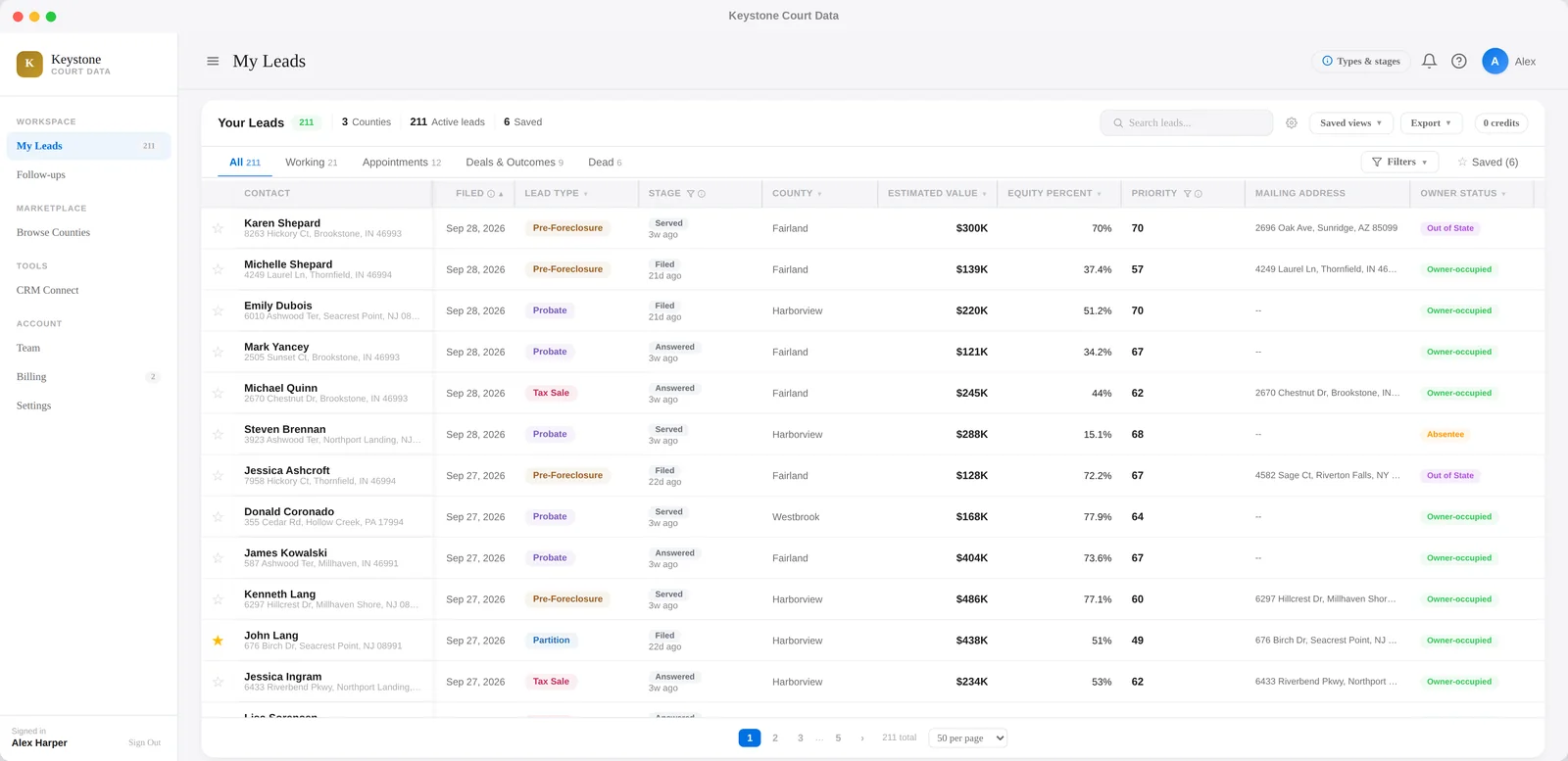
Pre-foreclosure is not one fixed moment. Depending on the state, it may mean the lender has sent a notice of default, or that a lawsuit has been filed, or that a sale has been scheduled. The filing itself tells you which stage the owner is in, and your letter should match it. These records are public, and Keystone delivers them matched to the owner and property so you can spend your time on the writing instead of the paperwork.
The steps
- 01
Decide what you can honestly offer
Before you write a word, be clear about what you actually do: buy for cash, help list the home, or just talk through options. A letter built on a real offer is easier to write and easier to trust.
- 02
Read what the filing means
Look at the stage the case is in, whether that is a notice of default, a filed lawsuit or a scheduled sale. The stage changes how much time the owner likely has and what tone fits. Rules and timelines vary by state, so do not state deadlines in the letter unless an attorney has confirmed them.
- 03
Write to one person, by name
Address the letter to the owner by name and sign it with yours. Use a handwritten or plainly typed look rather than a flashy postcard. A letter that feels like it came from one person to one person is far more likely to be opened.
- 04
Open with the situation, gently
Acknowledge that things may be difficult without quoting the details of their debt. Something like "I understand you may be dealing with a tough situation with your home" is enough. Do not guess at why it happened.
- 05
Say who you are and what you do
State your name, your business and what you can and cannot do in one or two plain sentences. Make clear you are not the lender, the court or a government agency. If you are a licensed agent or hold any state registration, say so.
- 06
Offer choices, not pressure
Tell the owner they have options, and that talking with you is only one of them. Mention that a housing counselor or attorney can explain their rights. Owners tend to respond to people who do not need them to say yes.
- 07
Close with an easy next step
Give one phone number and one email, and invite them to reach out whenever it suits them. Add a line saying they can tell you not to contact them again. Keep the whole letter to one page and check the formatting before it goes out.
Common mistakes in a pre foreclosure letter
Sounding like a vulture. Phrases like "we buy ugly houses" or "stop foreclosure now" read as pressure. The reader is already stressed, and you are adding to it.
Promising what you cannot deliver. You cannot guarantee that a foreclosure will stop, that a lender will agree to anything, or that a sale will close by a certain date. If you are not sure, say so, and tell the owner to confirm details with the lender, a housing counselor or an attorney.
Other mistakes show up again and again:
- Writing "Dear Homeowner" or "Dear Resident" instead of using the person's name.
- Quoting private details from the filing as if to prove you know their business.
- Making the letter long, with a wall of text and several offers.
- Using fake urgency, such as invented deadlines or "last chance" language.
- Posing as a lender, a government program or a court office.
- Leaving out your real name, company and contact information.
Ignoring state rules. Some states regulate who may contact owners in foreclosure, what must appear in a written solicitation, and what a buyer may or may not do with a contract. Rules differ a great deal from state to state, so confirm yours with an attorney before you mail anything.
What to do after the letter goes out
Give it time. Owners in this situation often need a while to open the envelope, talk to family and decide whether they trust you. A quiet mailbox does not mean no.
If someone replies, answer quickly and kindly. Ask what they are hoping for before you talk about what you can do. Some owners want to keep the house, some want out, and some just want to understand their choices. All of those are fine.
If you follow up by phone, only call numbers you are legally allowed to call. The National Do Not Call Registry and state telemarketing rules still apply, and some states add extra limits or require registration. Honor every request to stop contact right away and keep a record of it.
If the owner is not a fit, say so honestly and point them toward free help from a HUD-approved housing counselor. You may not do business together, but they will remember how you treated them, and so will the people they talk to.
Finally, track what you send and what happens. A simple note of the date mailed, the letter version used and any reply tells you which wording works, and it protects you if a question comes up later.
Questions investors ask
What should I say in a letter to a homeowner in pre foreclosure?
Keep it brief and kind. Say who you are, what you can do, and that the owner has other options too. Invite them to reply when they are ready, and do not ask for a decision.
Is it legal to send a letter to someone facing foreclosure?
Sending mail is generally allowed, but some states set rules for foreclosure-related solicitations, disclosures and contracts. Those rules vary, so confirm what applies in your state with an attorney or your state regulator before you mail.
Should I mention that I saw their foreclosure filing?
You can say you understand they may be facing a difficult situation with their home, and that is usually enough. Quoting specifics from the case can feel invasive. Let the owner decide how much to share with you.
Can I follow up my letter with a phone call?
Only if the call is allowed. The National Do Not Call Registry and state telemarketing laws can restrict who you may call and when, so check them first. If someone asks you to stop, stop immediately and note it.
How soon will I hear back after sending a letter?
There is no reliable timeline. Some owners reply quickly, others take a long while or never write at all. Do not send repeated pressure mailings, and let each letter stand as a respectful, standalone offer.
See leads in your county for 7 days, free
Real court filings with the owner and property matched. No credit card.