How to buy a house before the foreclosure sale, step by step
Pre-foreclosure is the window when the owner still holds title and still has choices. Here is how to work inside it honestly, legally and with a plan.

- 1Understand what stage the foreclosure is in
- 2Learn why the owner fell behind
- 3Work out the real numbers
- 4Make honest, low-pressure contact
- 5Present a clear offer and the owner's options
- 6Get the lender and title work lined up
- 7Close before the sale date and confirm the case ends
Why buying a house before the foreclosure sale works for both sides
A homeowner gets a letter from the lender's attorney, puts it in a drawer, and hopes it goes away. Weeks later the notice of a court filing arrives, and the problem is suddenly real. That gap between the first missed payments and the auction is where most pre-foreclosure deals happen.
If you want to buy a house before the foreclosure sale, this is the only stage that gives you real room to work. The owner still holds title, so they can sign a contract. The lender usually prefers a clean sale to the cost and delay of auctioning a property. Once the sale happens, the owner's options narrow sharply and the buyer is often a bidder at the courthouse steps, not you.
What the owner gains. A sale before auction can stop the foreclosure from being the final chapter on their credit and housing history. It may also let them keep any equity that exists, rather than watching it disappear at auction. Many owners simply do not know a sale is still on the table.
What you gain. You get time to inspect, to run title work and to negotiate, which you do not get at auction. You also deal with a person, not a bidding room. The tradeoff is that you carry more responsibility to be straight with someone under stress.
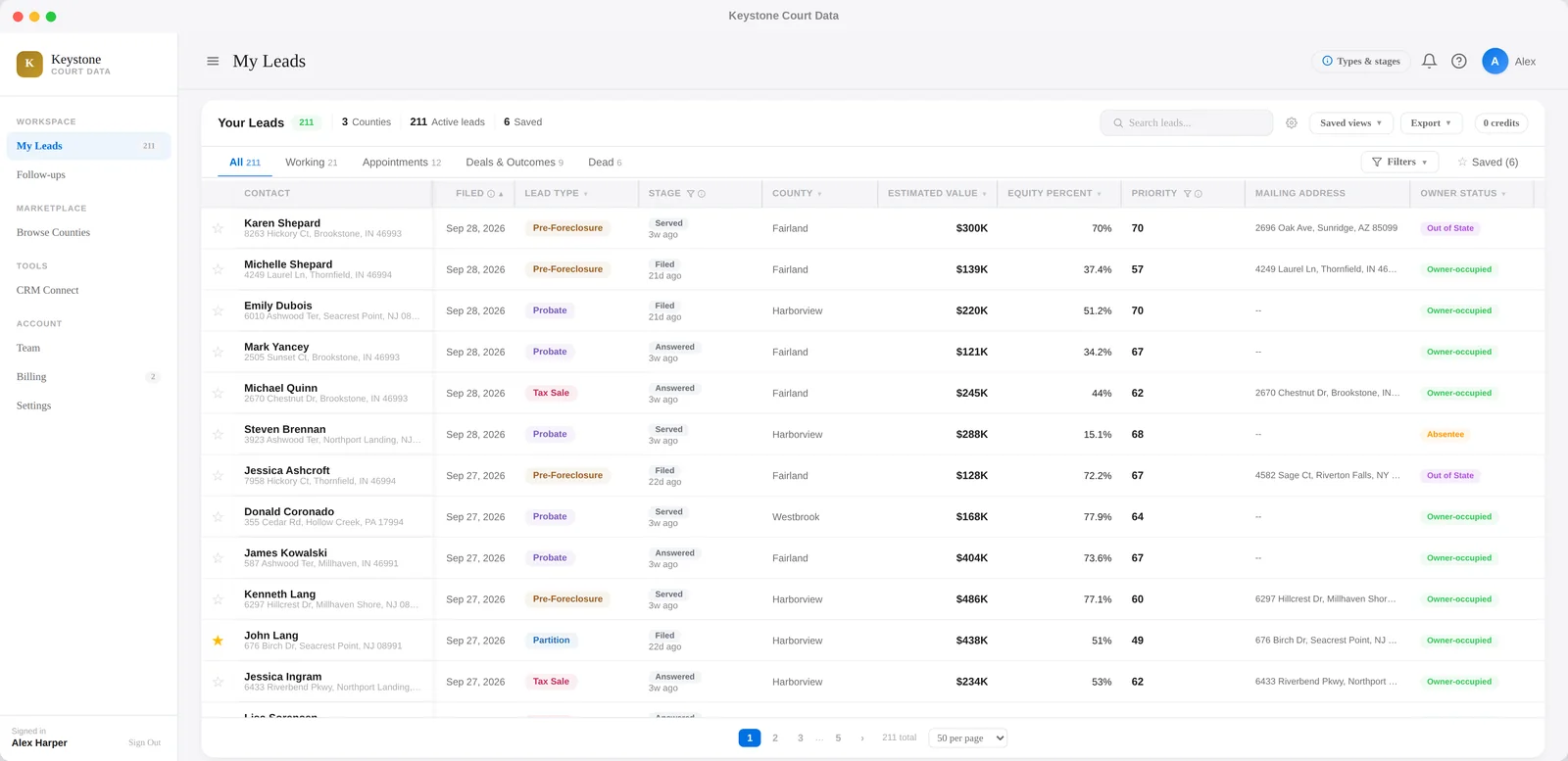
The public court filing that starts a foreclosure is a record you can read at the county court. If you would rather have those filings delivered with the owner and property already matched, that is what Keystone's pre-foreclosure leads do.
The steps
- 01
Understand what stage the foreclosure is in
Read the notice or filing to see whether the lender has only sent a default letter or has started a court case. The stage tells you how much time is left and which parties are involved. Timelines differ widely by state and by whether the process goes through a court, so confirm the schedule with the county court or an attorney.
- 02
Learn why the owner fell behind
Job loss, illness, divorce, a death in the family and a rate change all lead to different conversations. Someone facing a medical crisis needs patience, while an owner with a plan may only need a buyer. Listen first and offer second.
- 03
Work out the real numbers
Estimate the home's market value, then add up the first mortgage, any junior liens, back taxes and likely closing costs. If the total is more than the home is worth, you will need the lender to approve a short sale. If there is equity, the owner may be able to sell at a fair price and walk away with money.
- 04
Make honest, low-pressure contact
Introduce yourself clearly, say you buy homes and explain why you are reaching out. A short letter or a respectful visit often works better than repeated calls. If you phone, check the Do Not Call Registry and your state's telemarketing rules first, and stop when asked.
- 05
Present a clear offer and the owner's options
Explain how your purchase would work, what the owner would receive and what happens to the loan. Encourage them to talk to a HUD-approved housing counselor or an attorney before signing. A fair offer holds up better when the owner has had time to think.
- 06
Get the lender and title work lined up
Order title work early so you know every lien before you commit. If a short sale is needed, submit the lender's required package and keep the owner's attorney or counselor informed. Build your timeline backward from the sale date so you are not left racing the auction.
- 07
Close before the sale date and confirm the case ends
Schedule closing with a title company or attorney experienced in foreclosure sales. After funding, make sure the lender records the satisfaction and the court case is dismissed or otherwise resolved. Keep copies of everything.
Common mistakes when buying before foreclosure
Most failed pre-foreclosure deals fail for the same handful of reasons. Almost all of them come from skipping the math or rushing the person.
- Ignoring the payoff. If total liens exceed what the home can sell for, a normal purchase will not clear title. Without lender approval, there is no deal.
- Forgetting junior liens. Second mortgages, HOA claims, tax liens and judgments can all sit behind or beside the main loan. Each one needs a plan.
- Pressure tactics. Telling an owner they have hours to decide, or hinting at things you cannot back up, is both unkind and risky.
- Vague contracts. Wholesalers who do not clearly disclose their role and intent can run into trouble with state licensing and disclosure rules.
- Ignoring state protections. Many states regulate how buyers deal with owners in foreclosure, including contract terms and cancellation rights. Check yours with an attorney before you write an offer.
Phone calls need care. If you call owners, scrub against the federal Do Not Call Registry and follow your state's telemarketing rules, including calling-hour limits and any state-specific registries. Letters and in-person visits have their own local rules, so confirm those too.
What to do after the owner says yes
An agreement in principle is the start of the work, not the end. The next stretch is about protecting the owner, the lender's position and your own money.
Put everything in writing. Use a contract reviewed by a real estate attorney in your state. State plainly what you are buying, from whom, and how the existing loan and liens will be handled.
Keep the lender in the loop. If the deal is a short sale, the lender must approve it in writing, and that process takes time. Do not assume the foreclosure clock pauses while you wait. Ask the lender's loss mitigation department or the owner's attorney what is possible.
Keep the owner informed. Tell them what you are doing, what has been signed and what happens next. If they decide to pursue a loan modification or another option instead, respect that.
Finally, close through a title company or attorney who understands foreclosure timelines, and confirm that the foreclosure case will be dismissed or closed out once the loan is satisfied.
Questions investors ask
Can I buy a house during pre-foreclosure?
Yes. The owner still holds title, so they can sell the property at any point before the foreclosure sale is completed. The sale has to satisfy the lender or have the lender's approval. State rules on contracts with owners in foreclosure vary, so have an attorney review your paperwork.
What is a short sale and how does it relate to pre-foreclosure?
A short sale is a sale for less than the amount owed, approved by the lender. It is a common path when the home is worth less than the loan. The lender decides whether to accept, and the process can take longer than the owner expects.
Do I have to pay off the owner's whole mortgage?
If the sale covers the loan and liens, the payoff comes out of the proceeds at closing. If it does not, the lender must agree to accept less or the deal cannot clear title. Either way, get exact payoff figures in writing.
Can the owner back out of a contract?
Some states give owners in foreclosure specific cancellation rights or require particular contract language. Because the rules vary, ask a local real estate attorney which ones apply before you sign anything.
Is it okay to call homeowners in foreclosure?
Only if you follow the rules. Check the federal Do Not Call Registry and your state's telemarketing laws, respect calling hours and stop when someone asks. Many investors prefer a short letter because it gives the owner space to respond on their own terms.
See leads in your county for 7 days, free
Real court filings with the owner and property matched. No credit card.