Pre-foreclosure in Salt Lake County, Utah: what investors should know
A county with a young population, low vacancy and a lot of owners who still carry a mortgage. Here is what that means when a homeowner falls behind.
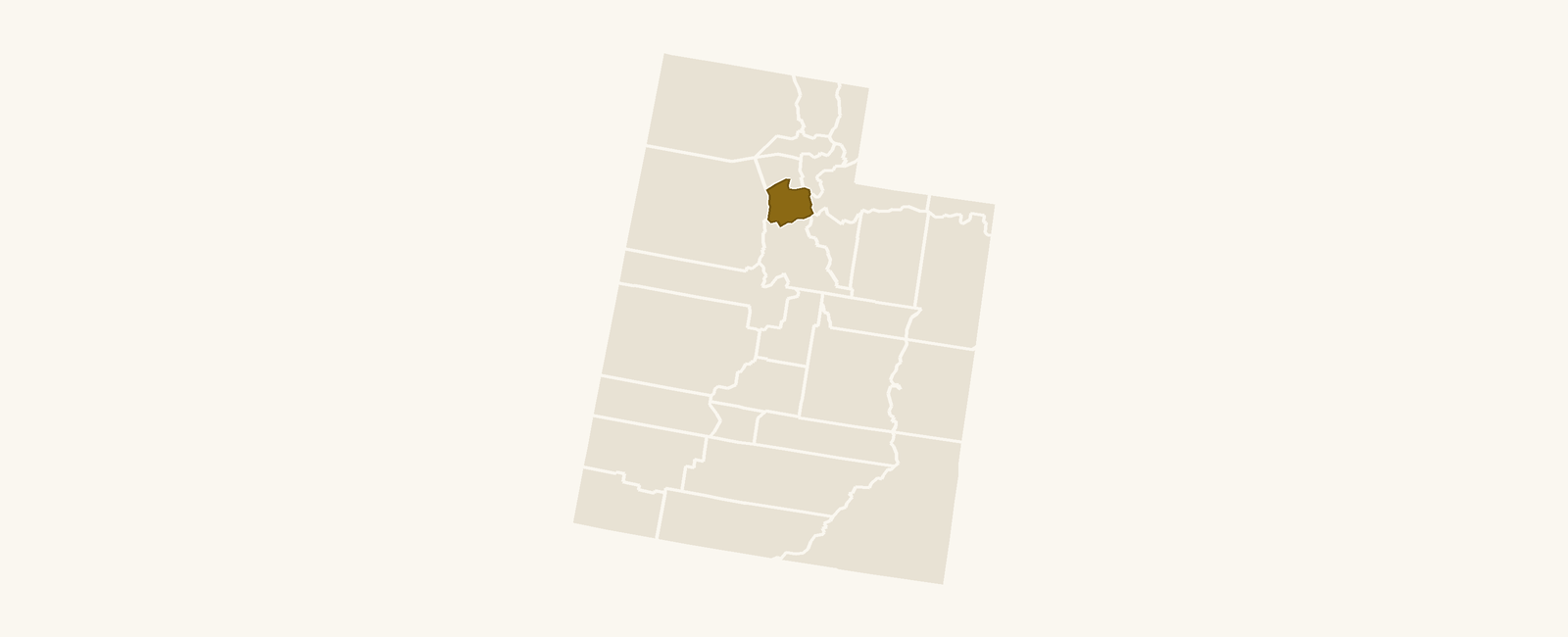
What Salt Lake County housing looks like
Salt Lake County has 440,166 housing units and a population of 1,184,689, with Salt Lake City as the county seat. About 67% of homes are owner-occupied, and 61% are single-family detached, the same as the U.S. share.
The equity picture is mixed. Only 29% of owner-occupied homes have no mortgage, compared with 39% across the U.S. That means more owners here still have a loan, and a missed payment is a more common route to distress than in a county full of paid-off homes. The median home value is $484K, so even an owner who bought a few years ago may have meaningful equity, but you cannot assume it.
Demand is steady. Vacancy is 5%, half the U.S. figure of 10%. New housing units permitted reached 7,179 in 2025, a change of +58% from 2024. Supply is catching up, which is worth keeping in mind when you estimate how fast a finished home will sell or rent.
The housing stock is also young. Just 7% of homes were built before 1940, against 12% nationally, and the median age of residents is 33.8 compared with 38.9 for the U.S. Expect fewer century-old houses with knob-and-tube surprises, and more owners in earlier stages of a mortgage.
For buy-and-hold math, HUD's Fair Market Rent for the Salt Lake City-Murray area is $1,615 a month for a two-bedroom and $2,143 for a three-bedroom. Set those against a $484K median value before you decide a rental exit works.
Source: U.S. Census ACS 2023
Which court filings come before a sale in Salt Lake County
A sale rarely appears out of nowhere. Something usually happens in a household first, and some of those events leave a public court record. These are the types that matter here:
- Pre-foreclosure: the lender has started the process because payments stopped. The owner is still in the home and often still has options.
- Probate: an owner has died and the estate has to be settled. Only 12% of residents are 65 or older (the U.S. figure is 17%), so this is a smaller share of the picture than in older counties, but estate sales still happen.
- Divorce: a couple may need to sell or buy out one spouse. Third District Court, which includes Salt Lake County, also runs a Co-Parenting Mediation Program for unenforced parent-time motions, a reminder that family cases here involve real children and real schedules.
- Tax sale: property with long-unpaid taxes can be sold by the county.
- Partition: co-owners cannot agree and one asks a court to force a sale.
These records are public. If you want them delivered with the owner and property already matched, that is what Keystone's Salt Lake County leads are for.

How the foreclosure process works in Utah
A Utah trust deed gives the trustee a power of sale. In plain terms, that means a trustee can sell the home without a court case, instead of the lender suing first. At the lender's option, a trust deed can instead be foreclosed in court like a mortgage (Utah Code 57-1-23).
The notice of default starts the clock. Under Utah Code 57-1-24, a trustee cannot give notice of sale until at least three months after the notice of default is recorded. A notice of sale then has to be published at least 30 days before the sale date (Utah Code 57-1-25). Within three months of the notice of default, the owner can cure the default (Utah Code 57-1-31), which is why many owners in default are not ready to sell yet. After a trustee's sale, Utah gives no right of redemption (Utah Code 57-1-28).
Treat those timelines as a general outline. Loan documents, bankruptcy filings and loss mitigation can all change what happens, so confirm any deadline that matters to a deal with a Utah attorney.
Probate and divorce follow a different path. Probate is handled by the district court. Once appointed, a personal representative can generally sell estate real property without a separate court order, unless the will or a court order limits that power; even in supervised administration, no interim orders are needed to sell unless the court restricts that power (Utah Code 75-3-504, 75-3-704, 75-3-714). Divorce sales depend on the decree or the parties' agreement.
How to approach owners respectfully and legally
A homeowner behind on a mortgage is often scared, embarrassed or both. A family dealing with a death or a divorce is grieving. Your first message should make it easy to say no.
Be honest about who you are. Say you are an investor, say what you do, and do not suggest you are affiliated with the lender or the court. Never claim a sale is inevitable or invent urgency.
Respect calling rules. Utah law bars unsolicited telephone solicitations to Utah numbers on the National Do Not Call Registry and, without prior express consent, calls between 9 p.m. and 8 a.m., on Sundays and on legal holidays. A caller must identify the business and end the call when the person responds negatively (Utah Code 13-25a-103, 13-25a-108). Federal rules apply as well. Honor every request to stop contact right away. Letters and in-person notes sent respectfully are often better received than cold calls.
- Offer to answer questions without any commitment.
- Suggest the owner talk to a housing counselor or attorney if they are unsure.
- Do not pressure anyone to sign something the same day.
- Keep your offer terms in plain language, in writing.
Utah's real estate licensing law covers foreclosure rescue (Utah Code 61-2f-102), so an attorney can review a purchase agreement before it is used with a distressed owner.
What to look for before making an offer
Start with the loan, not the house. With 29% of owner-occupied homes owned free and clear, a large share of owners here have a mortgage, so confirm the balance and any other liens before you assume there is room for a deal. A title company can tell you what stands between the owner and a clean sale.
Price repairs honestly. Because the stock is relatively young, big structural surprises are less typical than in an older county, but age still matters in plenty of neighborhoods. Walk the property, and build a repair budget from contractor bids rather than guesses.
Test your exit. At a $484K median value, a flip has to clear carrying and resale costs. For a rental, compare the HUD rents of $1,615 for two bedrooms and $2,143 for three bedrooms against your purchase price and financing.
Know the timeline. A pre-foreclosure owner may have months, or may have much less. Ask where they are in the process and have them confirm dates with their lender or attorney.
Questions investors ask
Is Utah a judicial or non-judicial foreclosure state?
Both routes exist. A Utah trust deed can be foreclosed by a trustee's sale without a court case, or, at the lender's option, in court like a mortgage (Utah Code 57-1-23). An attorney can confirm which applies to a specific loan.
How long does an owner have after a notice of default in Utah?
Under Utah Code 57-1-24, a trustee cannot give notice of sale until at least three months after the notice of default is recorded, and the notice of sale must then be published at least 30 days ahead (Utah Code 57-1-25). The owner can cure the default within three months of the notice of default (Utah Code 57-1-31). Bankruptcy and the loan documents can change the timing, and an attorney can confirm it for a specific loan.
Can I call a homeowner who is in pre-foreclosure?
Utah law bars unsolicited telephone solicitations to Utah numbers on the National Do Not Call Registry and, without prior express consent, calls between 9 p.m. and 8 a.m., on Sundays and on legal holidays. A caller must identify the business and end the call when the person responds negatively (Utah Code 13-25a-103, 13-25a-108). Federal rules apply as well. Be open about who you are and why you are calling.
Do divorce and probate filings matter as much as pre-foreclosure here?
They can matter a lot. Both often involve a property that must be sold or divided, and the people involved may have no urgent mortgage problem. They need patience and a gentler approach than a default does.
Where can I see these court filings?
They are public records. Keystone Court Data delivers them with the owner and property already matched, and you can try a county free for 7 days with no credit card.
See Salt Lake County leads for 7 days, free
Real court filings with the owner and property matched. No credit card.