Investing in Waukesha County, Wisconsin: where motivated sellers show up in the court record
A county of owner-occupied single-family homes, an older population and a judicial foreclosure system. Here is what that means if you buy from motivated sellers.
Waukesha County real estate investing: what the housing looks like
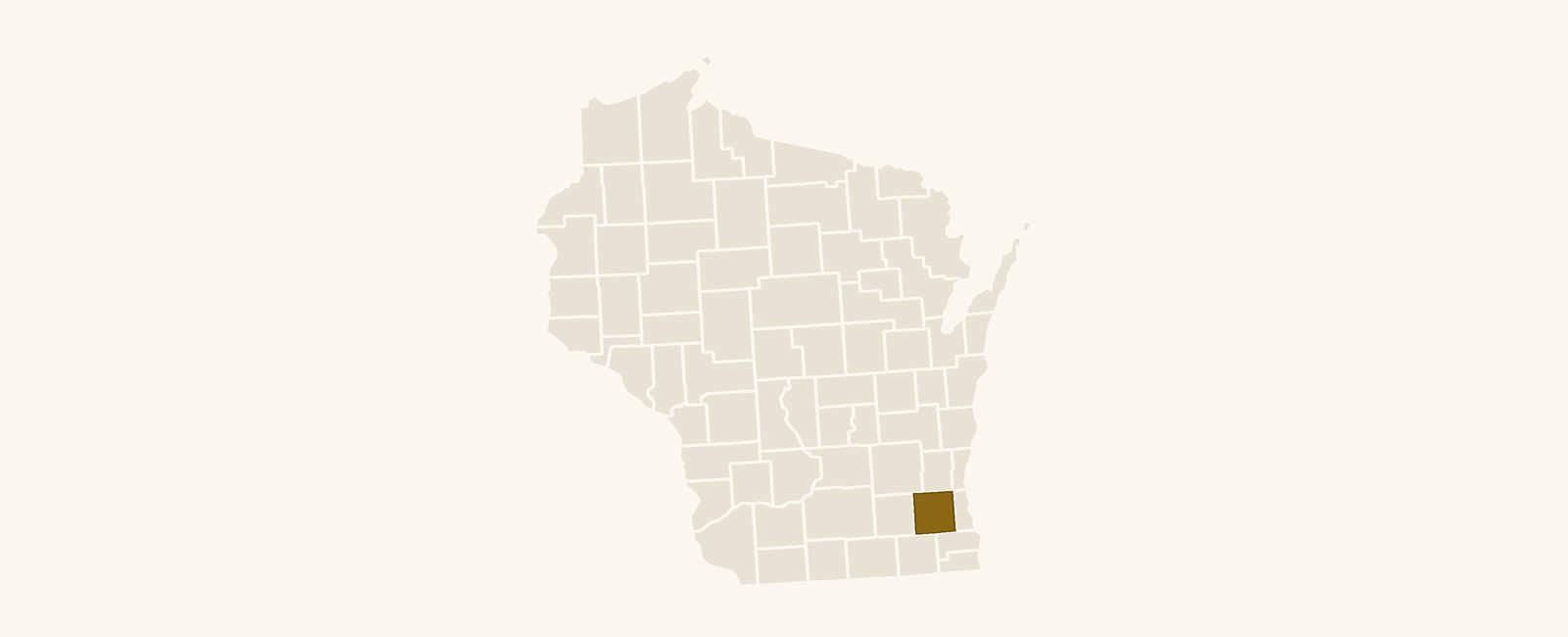
Waukesha County is the state's 3rd largest county, with 409,040 residents, 173,567 housing units and 37 municipalities spread across 576 square miles in southeastern Wisconsin. That is a lot of separate local markets in one county.
Mostly owner-occupied houses. About 76% of homes are owner-occupied, and 69% are single-family detached (U.S.: 61%). The median home value is $374K. Only 4% of housing units are vacant (U.S.: 10%), which tells you this is not a market full of abandoned property. Sellers here are usually people living in the home or heirs of someone who did.
Newer stock than much of the country. Just 7% of homes were built before 1940 (U.S.: 12%). You will still find repair needs, but you are less likely to be pricing out knob-and-tube wiring and failing foundations on every house.
Rents and new supply. HUD Fair Market Rent for the Milwaukee-Waukesha area is $1,263 a month for a 2-bedroom and $1,553 for a 3-bedroom. New permits came to 1,178 units in 2025, a change of -38% from 2024. Less new building can mean existing homes stay in demand, but check any rental plan against your own numbers (HUD, Census permits).
Source: U.S. Census ACS 2023
Which court filings tend to come before a sale here
The county's profile points to three filings that matter most, plus tax delinquency.
- Probate. With 20% of residents 65 or older and a median age of 43.3 (U.S.: 38.9), estates are a natural source of sales. Heirs often live elsewhere, may not want a house to maintain, and want a clean, simple sale.
- Pre-foreclosure. Only 34% of owner-occupied homes are owned free and clear (U.S.: 39%). More owners carry a mortgage, so a missed-payment problem can end in a court filing. These owners often still have equity in a $374K median market and may prefer to sell on their own terms.
- Divorce. When two people share a house and one or both must leave, a sale is often part of the settlement. Timelines are driven by the case, not by the market.
Why the filing matters. A filing tells you a life event has forced a decision. It does not tell you the owner wants to sell to you. Some will refinance, buy out a spouse, or keep the home.
These filings are public. Keystone delivers pre-foreclosure, probate and divorce filings for Waukesha County matched to the owner and property, so you spend your time on conversations.
How foreclosure and probate work in Wisconsin
Foreclosure is judicial. In Wisconsin a lender generally has to go through the court to foreclose a mortgage (see Wis. Stat. ch. 846). That means a case, a judgment, and then a sheriff's sale. For many owner-occupied homes the sale cannot happen until 6 months after the judgment, with other periods for other cases (Wis. Stat. 846.10).
How the sale runs in Waukesha County. The Sheriff's Office conducts foreclosure sales on the 2nd and 4th Wednesdays of each month at 10:00 a.m. in the lobby of the Law Enforcement Center in Waukesha. These are open auctions with no sealed bids, and the plaintiff normally bids the minimum on the first round. A successful bidder must post a 10% deposit right after the sale, in cash or a cashier's or certified check payable to the Waukesha County Sheriff Department.
Redemption matters. The owner can usually redeem the property even after the sale, until the court approves the order confirming the sale. For you, that means a sale is not the end of the story for the owner, and a buyer at auction has to wait for the court.
Probate. The Register in Probate coordinates the Probate Court's judicial and administrative functions, and the county maintains Probate Division local rules. A personal representative needs letters from the court first, and with letters can sell estate property without notice, hearing or court order (Wis. Stat. 860.01). If you are talking with an heir, suggest they ask the estate's attorney what is required before any contract is signed.

The tax calendar and tax-foreclosed property
Most Waukesha County municipalities have property tax due dates of Jan 31 and July 31. The cities of Waukesha and New Berlin and the Village of Sussex use installment dates of Jan 31, March 31 and May 31, and collect their own payments.
Why it matters. If an installment is missed, the whole remaining bill becomes delinquent and is charged interest and penalty from the preceding February 1 (Wis. Stat. 74.11(11)). An owner who is behind on taxes is often behind on other things too, and the cost grows each month.
Tax-foreclosed auctions. Wisconsin counties can foreclose tax liens on delinquent property through an action in rem (Wis. Stat. 75.521), and Waukesha County publishes a list of county-owned property for sale. Most investor margin here comes from earlier conversations with owners, not from these sales.
How to approach owners respectfully and legally
Start with a human tone. The person you contact may have lost a parent, a spouse or a job. Say who you are, why you are writing, and that there is no pressure. A short letter that offers a conversation usually does better than a hard pitch.
Phone rules apply. Calls are regulated. Federal rules on telephone solicitations set the National Do Not Call Registry, a calling window of 8 a.m. to 9 p.m. local time and company do-not-call lists (47 C.F.R. 64.1200). Wisconsin law also bars telephone solicitations, including text messages, to numbers on the state do-not-call registry (the Wisconsin-area-code part of the national registry), bars prerecorded solicitation messages without the recipient's consent, bars blocking caller ID, and requires telephone solicitors who have employees or contractors make the calls to register with the state (Wis. Stat. 100.52). Whether a call offering to buy a house is covered depends on the facts, so a Wisconsin attorney can confirm. If you are unsure whether a call is covered, ask an attorney.
Do not give advice you are not qualified to give. Do not tell an owner what the court will do, or promise that you can stop a foreclosure. Tell them to talk to a lawyer or a housing counselor, and be clear about what you are offering.
Be honest about the deal. If the owner has equity, explain your offer plainly. Wisconsin owners facing foreclosure should know that redemption rights exist, and you should never rush them to sign.
What to look for before making an offer
Payoff versus value. With 34% of owner-occupied homes free and clear, many sellers have a loan balance to clear at closing. Know the likely payoff before you talk numbers, or the deal may not work on either side.
Title and authority. In an estate, confirm who can legally sign. In a divorce, the court may restrict a sale until the case resolves. Have a title company and attorney check both before you commit money.
Repair budget. With only 7% of homes built before 1940, most of the stock is newer, but still walk every property for roof, mechanicals and water issues.
Exit. For resale, the median value is $374K, so your buyers are likely owner-occupants with financing. For rentals, set HUD's $1,263 (2-bedroom) and $1,553 (3-bedroom) Fair Market Rent figures against purchase price, taxes and repairs. Remember the tax calendar, since delinquent taxes are charged interest and penalty back to February 1.
Timing. If the property is headed to a sheriff's sale, remember the owner may redeem until the court confirms the sale. Ask an attorney how that affects your plan.
Questions investors ask
Is Waukesha County a good place to invest in real estate?
It is a stable, mostly owner-occupied market with a median home value of $374K and just 4% vacancy. That suits investors who buy single-family houses from motivated sellers and resell or rent. It is not a place for deep-discount distress on every street.
Does Wisconsin use judicial or non-judicial foreclosure?
Wisconsin foreclosures generally go through the courts. In Waukesha County, the Sheriff's Office runs the sale after a judgment. Exact timelines and redemption periods vary, so confirm with an attorney.
When are sheriff's sales held in Waukesha County?
They are held on the 2nd and 4th Wednesdays of each month at 10:00 a.m. in the lobby of the Law Enforcement Center in Waukesha. The winning bidder must post a 10% deposit right after the sale.
Can the owner still get the house back after a sheriff's sale?
Usually yes. The owner can generally redeem until the court approves the order confirming the sale. An attorney can tell you how that applies to a specific case.
Can I call heirs or owners about buying their house?
Calls are regulated. Federal rules on telephone solicitations set the National Do Not Call Registry, a calling window of 8 a.m. to 9 p.m. local time and company do-not-call lists (47 C.F.R. 64.1200). Wisconsin law also bars telephone solicitations, including text messages, to numbers on the state do-not-call registry (the Wisconsin-area-code part of the national registry), bars prerecorded solicitation messages without the recipient's consent, bars blocking caller ID, and requires telephone solicitors who have employees or contractors make the calls to register with the state (Wis. Stat. 100.52). Whether a call offering to buy a house is covered depends on the facts, so a Wisconsin attorney can confirm. Keep the call short, honest and low-pressure, and stop if asked. A letter is often a gentler first contact.
See Waukesha County leads for 7 days, free
Real court filings with the owner and property matched. No credit card.