Investing in Stark County, Ohio: where motivated sellers show up in the court record
Older houses, long-time owners and a Canton-centered court system shape how Stark County deals come together. Here is what that means for your offers.
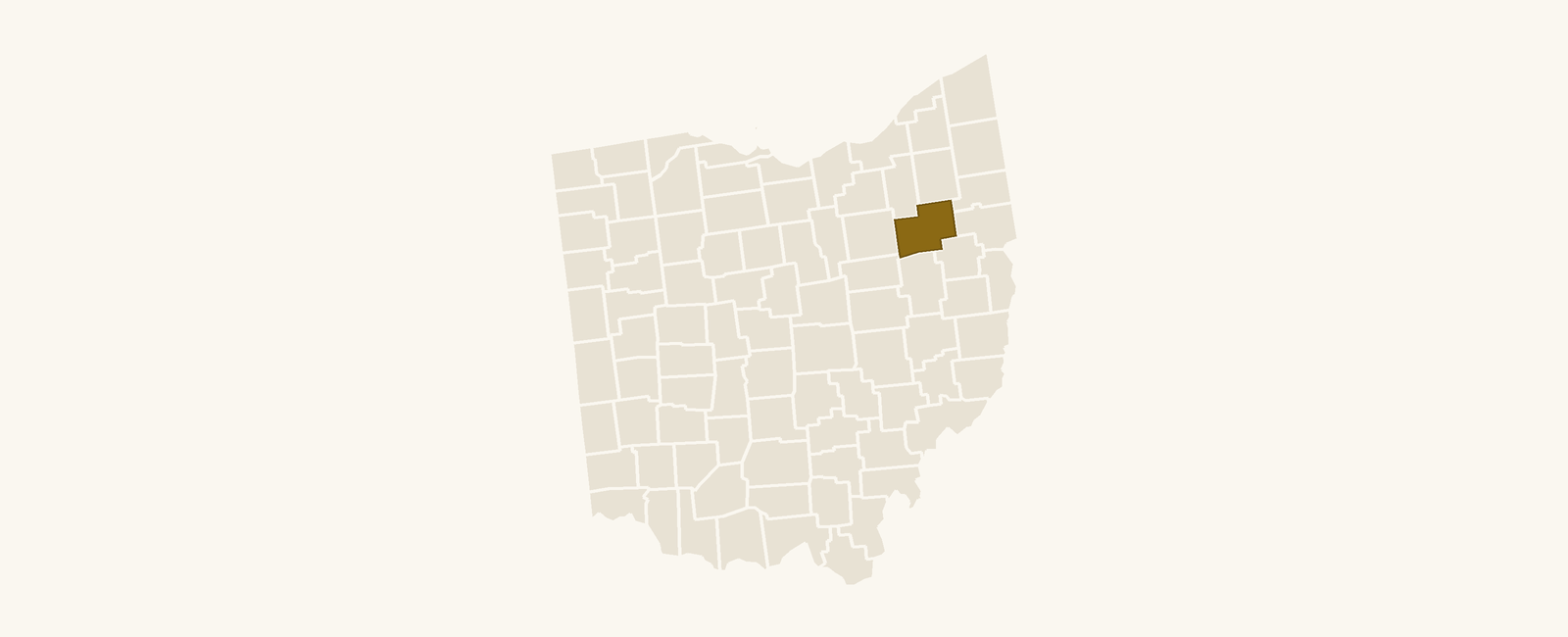
What Stark County housing looks like for an investor
Stark County has about 373,764 residents and 167,525 housing units, with Canton as the county seat. If you are looking at Stark County Ohio real estate investing for the first time, the first thing to notice is how traditional the housing is. Three of every four homes are single-family detached, well above the U.S. figure of 61%.
Older stock means repair budgets. About 21% of homes here were built before 1940, compared with 12% nationally. Expect aging roofs, original plumbing and wiring, and foundations that need a real look. Price your offers on a thorough walk-through, not on a median value alone.
Owners stay put. About 69% of homes are owner-occupied, and only 7% of housing units are vacant, against 10% nationally. Tight vacancy suggests houses do not sit empty for long, which helps when you plan a resale or a rental. The median home value is $178K.
Rents support buy-and-hold math. HUD's Fair Market Rent for the Canton-Massillon area is $1,086 a month for a 2-bedroom and $1,371 for a 3-bedroom. In 2025, 643 new housing units were permitted, up 22% from 2024, so there is some new supply, but it is small next to the existing housing stock. Major employers such as Aultman Health Services, Timken, Sterilite, Shearer's Foods, Canton City Schools and Stark State College give the rental market a varied base.
Source: U.S. Census ACS 2023
Why estates matter more in an older county
About 20% of Stark County residents are 65 or older, against 17% nationally, and the median age is 41.9 compared with 38.9 for the U.S. Many of those owners have lived in their homes for decades. When one of them dies, the house often passes to heirs who live elsewhere and may not want to manage an older property.
The Stark County Probate Court sits in Canton, in the same County Office Building as the Auditor. An estate opened there is a public record, and the person named to administer it is often the one who decides whether to sell. That person may be a grieving family member with little experience, so patience and plain explanations matter more than a fast offer.
Equity is not always obvious. About 39% of owner-occupied homes in the county have no mortgage, matching the national figure. In an estate or a divorce, a free-and-clear house can leave a lot of room for a fair deal. Do not assume every seller is desperate for a discount.
Which court filings come before a sale in Stark County
Each filing type points to a different kind of seller. Knowing what the filing means tells you how to talk to the owner.
- Pre-foreclosure: A lender has started a court case over missed mortgage payments. The owner often still has equity and some time, and may prefer a sale to a judgment.
- Probate: An estate has been opened after a death. The house may need to be sold to divide assets or pay debts.
- Divorce: The Family Court Division of the Stark County Court of Common Pleas handles the case. A shared house often has to be sold or bought out as part of the settlement.
- Tax sale: Delinquent property taxes have led to a tax foreclosure. The owner can redeem the property until the court files an entry confirming the sale.
- Partition: Co-owners disagree, often heirs who inherited together, and one asks the court to force a sale or division.
Each of these filings is public. You do not need to find them one at a time. Keystone delivers Stark County filings with the owner and property already matched, if you would rather spend your time on conversations than on paperwork.

How the process works in Ohio, in plain terms
Foreclosure goes through a judge. Ohio is a judicial foreclosure state, so a lender must sue and win a court judgment before a property is sold. Ohio owners can redeem by paying the judgment, interest and costs at any time before the court confirms the sale (R.C. 2329.33).
Sheriff's sales run online. Residential sheriff's sales in Ohio are held on the state's official online sheriff sale website, and each sale is open for bidding for at least seven days (R.C. 2329.153). Bidders other than the lender must post a deposit set by statute according to the appraised value, on the schedule stated in the sale notice (R.C. 2329.211). At the first auction a property cannot sell for less than two-thirds of its appraised value; a residential foreclosure that does not sell goes to a second auction 7 to 30 days later with no minimum bid (R.C. 2329.20, 2329.52). For you this means a serious auction buyer must be organized and funded well before sale day.
Tax foreclosure sales follow their own rules. They come from a court tax foreclosure. The owner can redeem until the court files its entry confirming the sale (R.C. 5721.25), and the buyer must pay the balance within 30 days of confirmation (R.C. 2329.31). Read the published terms of each sale before you bid.
Probate is handled locally. The Probate Court in Canton oversees estates, and the person appointed to administer the estate sells under a power of sale in the will, the written consent of the surviving spouse and heirs, or a court order (R.C. 2127.01, 2127.011). Timing varies by case, so confirm specifics with an attorney.
How to approach owners respectfully and legally
The people behind these filings are facing a death, a divorce or a debt. Be honest about who you are, what you do and that you are an investor, not a neighbor or a lender. Never imply a deadline that does not exist, and never suggest a court outcome you cannot know.
Start with a letter or a short, kind note. Many families respond better to a calm written introduction than to an unexpected call. Say you are interested in buying the property as-is, leave your contact details and let them decide if and when to reply.
Follow phone rules. If you do call, respect the National Do Not Call Registry, the federal telemarketing rules and Ohio's telemarketing requirements, including calling-hour limits and honoring opt-out requests right away. If someone says no, record it and stop. Consult an attorney if you are unsure how these rules apply to your outreach.
Suggest they get advice. Encourage heirs and divorcing spouses to talk to their own attorney or advisor before signing. A seller who feels respected is more likely to take your offer seriously, and it protects both sides.
What to look for before making an offer in Stark County
Condition first. With so many pre-1940 homes, plan for inspections of the roof, electrical, plumbing, foundation and any lead paint concerns. Single-family houses dominate the county, so your comparable sales will mostly be similar homes, which makes repair estimates the main variable.
Title and liens. Liens can survive a sale, and an estate or partition case can leave several people with a claim to the house. Have a title professional and an attorney review every deal before you commit funds.
Authority to sell. In an estate, confirm the person you are talking to has legal authority to sign. In a divorce, the court order or settlement usually controls who may sell and when.
The tax calendar. Property taxes are due in two halves each year. Ohio adds a penalty to a half-year's taxes left unpaid after the due date, and half of that penalty is waived if the full amount is paid within 10 days (R.C. 323.121). Unpaid taxes can pile up on a house a seller can no longer manage, so understand what is owed before you set a price.
Your exit. Run the numbers for both a resale and a rental. Using HUD's Fair Market Rent figures of $1,086 for a 2-bedroom and $1,371 for a 3-bedroom as a conservative reference, check that rent covers your costs after repairs.
Questions investors ask
Is Stark County a good place to buy rental property?
The numbers are workable for many investors. The median home value is $178K, HUD Fair Market Rent is $1,086 for a 2-bedroom and $1,371 for a 3-bedroom, and vacancy is 7%. Older homes mean you must budget carefully for repairs.
Does Ohio use judicial or non-judicial foreclosure?
Ohio uses judicial foreclosure. A lender must file a court case and obtain a judgment before the property can be sold at sheriff's sale. Timelines vary by case, so confirm details with an attorney.
What should I know before bidding at a Stark County tax sale?
A tax foreclosure sale is court-ordered. The owner can redeem until the court files its entry confirming the sale (R.C. 5721.25), and the buyer must pay the balance within 30 days of confirmation (R.C. 2329.31). Read the published terms of each sale, and have a title company or attorney review the property before you bid.
Can an owner stop a tax foreclosure sale?
A person entitled to redeem may do so at any time before the court files an entry confirming the sale, by paying the county treasurer the taxes, assessments, penalties, interest, charges and costs the court determines are due (R.C. 5721.25).
Is it okay to call heirs or owners in a probate or divorce case?
Calls are regulated. Federal rules on telephone solicitations set the National Do Not Call Registry, a calling window of 8 a.m. to 9 p.m. local time and company do-not-call lists (47 C.F.R. 64.1200), and Ohio requires telephone solicitors to register with the Attorney General unless an exemption applies (R.C. 4719.02). Whether a call offering to buy a house is covered depends on the facts, so an Ohio attorney can confirm. A respectful letter is often a gentler first contact. Stop contact immediately if someone asks you to.
See Stark County leads for 7 days, free
Real court filings with the owner and property matched. No credit card.