Investing in Pulaski County, Arkansas: where motivated sellers show up in the court record
A working investor's guide to the housing stock, the filings that come before a sale, and how to approach owners fairly around Little Rock.
What Pulaski County housing looks like for investors
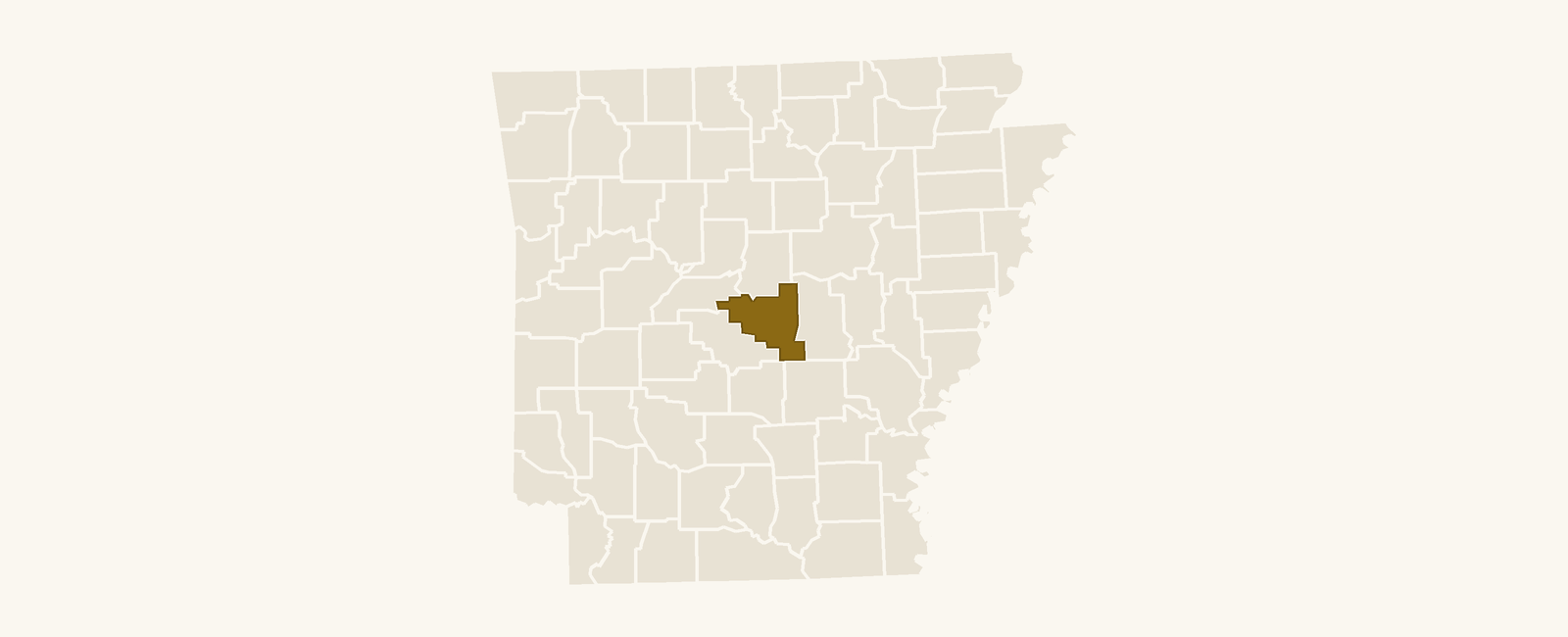
Pulaski County is home to 398,949 people and 192,085 housing units, with Little Rock as the county seat. If you are researching Pulaski County Arkansas real estate investing, start with the shape of the housing, because it tells you what kind of deal you are likely to be pricing.
Mostly single-family, mostly newer. About 64% of homes are single-family detached, compared with 61% nationally. Only 5% were built before 1940, against 12% across the U.S. You will still meet aging houses, but a deep layer of pre-war stock is not the story here.
Median value of $200K. Fifty-eight percent of homes are owner-occupied, so a large share of the county is people living in what they own. That matters because owner-occupants are the ones who end up in divorce, probate and mortgage trouble, which is where court filings begin.
Equity is close to average. About 38% of owner-occupied homes have no mortgage, nearly level with the 39% national figure. Do not assume a typical seller here has unusual equity. Run each property on its own numbers.
The county's residents are slightly younger than the country as a whole, with a median age of 37.5 against 38.9. Residents 65 or older are 16% of the population against 17% nationally. Probate is still a real source of sales, but this is not a retirement-heavy county, so treat it as one lead type among several rather than the only one.
Source: U.S. Census ACS 2023
Which court filings tend to come before a sale here
A court filing is a public sign that someone's circumstances have changed. It is not a guarantee of a sale, and many of these owners will keep their homes. Here is what each type means for the person involved.
- Pre-foreclosure: A lender has started the legal process after missed payments. The owner may be looking for a way out before the process ends, or trying to catch up. Some want to sell, some want to refinance, and some want time.
- Probate: An owner has died and someone is settling the estate. Heirs often live elsewhere, may not want a house to manage, and may be dealing with grief and paperwork at the same time.
- Divorce: A couple is dividing property, and a jointly owned house often has to be sold or bought out by one spouse. Timing and privacy matter a great deal to them.
- Tax sale: Property taxes went unpaid long enough that the property can be sold for the debt. Owners here may be overwhelmed, absent, or holding inherited property they never planned for.
Each type has a different pace. Probate and divorce move on court schedules, while pre-foreclosure and tax sale run on legal deadlines that create pressure. Keep that in mind when you decide how much time an owner may have.
How the process works in Arkansas, in plain terms
Arkansas allows foreclosure both through the courts and, for loans with the right language, outside of court under a statutory process. Which route a lender uses depends on the loan documents, so the same county can show both. The notice periods and timelines are set by statute and can change, so confirm specifics with an attorney or the county court rather than relying on a general summary.
Probate is handled in the circuit court's probate division. A personal representative is appointed to gather assets, pay debts and distribute what is left. Whether that person can sell real estate, and whether court approval is needed, depends on the will and the circumstances, so ask an attorney before you assume anything.
Divorce is also a circuit court matter. The court can order a house sold or awarded to one spouse, and the exact order controls what can happen next.
Property taxes follow a yearly calendar. After a correctly filed petition is received, an assessment appeal hearing is scheduled no later than November 15 of each year. The County Judge hears evidence from parties including the Assessor and the property owner. The County Clerk or the Clerk's designee serves as secretary of the Board of Equalization and records its meeting minutes. For an owner already stretched thin, a disputed assessment is one more source of stress.
These filings are public. If you would rather not collect them yourself, Keystone delivers them ready to work, and you can read more on the how it works page.

Rents, vacancy and new construction: what they say about demand
For buy-and-hold, the HUD Fair Market Rent for the Little Rock-North Little Rock-Conway area is $1,121 a month for a 2-bedroom and $1,504 for a 3-bedroom. Set those next to the $200K median home value and you can see the basic question every rental buyer in this county has to answer: does the particular house earn enough once repairs, taxes and insurance are counted?
Vacancy is above the national figure. Twelve percent of housing units are vacant, compared with 10% across the U.S. That does not mean every neighborhood has empty houses, but it is a reason to check the street, not just the county, before you commit to a rental.
New supply is growing. Permits for 1,705 new housing units were issued in 2025, up 69% from 2024. More new homes can mean more competition for renters and for buyers of rehabbed houses, particularly in the newer price ranges. Plan your exit with that in mind.
How to approach owners respectfully and legally
The people behind these filings are dealing with debt, death or a breakup. The best approach is slow, honest and easy to decline.
Say who you are and why you are reaching out. Tell the owner you buy houses, that you are not a lender or a court official, and that there is no obligation. Never imply you represent the court, a bank or a government agency.
Be careful with phone calls. If you call, follow the National Do Not Call Registry, your state's telemarketing rules and the federal Telemarketing Sales Rule, and keep an internal list of anyone who asks you to stop. A letter is often a gentler first contact, and it gives people time to think.
Do not pressure grieving or distressed people. If an heir says the family needs time, give it. If an owner is working with an attorney or a housing counselor, respect that. Nobody should be rushed to sign a contract during a funeral or a foreclosure notice.
Do not give legal advice. You can explain your offer, but encourage owners to talk with their own attorney, especially in probate, where authority to sell is a legal question.
What to look for before making an offer
Before you put a number on a house tied to a court filing, slow down and answer a few questions.
- Who has authority to sell? In probate, that may be a personal representative or the heirs. In divorce, it may depend on a court order. Do not sign anything with someone who cannot deliver clear title.
- What is owed? Loans, back taxes and other debts can sit ahead of any profit. Have a title company or attorney confirm what must be paid at closing.
- What shape is the house in? With only 5% of homes built before 1940, many Pulaski County houses are newer, but age still shows up in roofs, plumbing, HVAC and foundations. Walk the property if you can, and price repairs conservatively.
- What is the exit? With vacancy at 12% and permits up sharply, decide early whether you will flip, rent or wholesale, and test the numbers against the neighborhood, not the county average.
- How much time is left? Legal deadlines vary by case. Confirm them with an attorney before you promise a closing date to someone under pressure.
If you want to see what a county's filings look like in practice, you can try Pulaski County free for 7 days with no credit card on the Pulaski County page.
Questions investors ask
Is Pulaski County a good place to buy rental property?
It can be, but it depends on the house and the street. HUD rents are $1,121 for a 2-bedroom and $1,504 for a 3-bedroom, against a median home value of $200K. Vacancy is 12%, above the 10% national figure, so verify demand locally before you buy.
Do court filings mean an owner wants to sell?
No. A filing shows that something has changed in the owner's situation, not that they plan to sell. Some will sell, some will resolve the problem, and some will not respond. Treat every contact as a conversation, not a sure deal.
Is foreclosure in Arkansas always handled by a court?
No. Arkansas permits both judicial foreclosure and a statutory process outside court when the loan documents allow it. Timelines and notice rules are set by law and can change, so confirm the details with an attorney or the county court.
Can I call heirs or owners directly?
You can, but you must follow the National Do Not Call Registry, Arkansas telemarketing rules and the federal Telemarketing Sales Rule. Many investors begin with a respectful letter instead. Always honor a request to stop contact.
Should I expect a lot of equity in estate sales here?
Not necessarily. About 38% of owner-occupied homes in Pulaski County have no mortgage, close to the 39% national figure. Some estates will have plenty of equity and others will not, so run the numbers on each property.
See Pulaski County leads for 7 days, free
Real court filings with the owner and property matched. No credit card.