Pre-foreclosure in Yancey County, North Carolina: what investors should know
A plain guide to how foreclosure starts in a mountain county, which other court filings point to a sale, and how to reach owners without pressure.
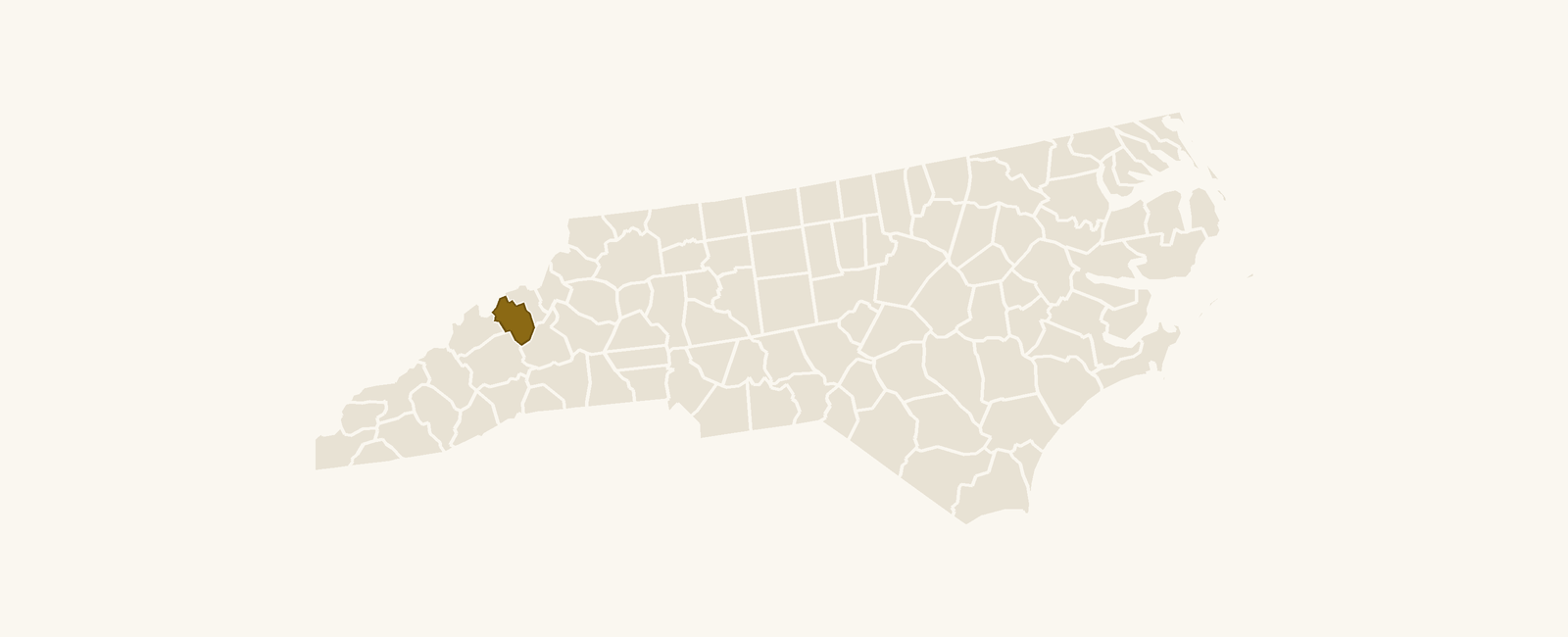
What Yancey County's housing looks like
Yancey County has 11,317 housing units, and 77% of them are owner-occupied. If you are researching pre-foreclosure Yancey County North Carolina, that second number matters most. It tells you that most distressed situations here involve a family living in its own home, not an investor unloading a rental.
The median home value is $222K. That figure is a countywide midpoint, not a price for any one house, so treat it as background and pull your own comparable sales before you talk numbers with anyone.
It is a rural, mountain county, and that shapes how you evaluate a deal. Access roads, water, septic and terrain can matter as much as the house itself, and I come back to that in the due diligence section.
Source: U.S. Census ACS 2023
Which court filings tend to come before a sale
Different filings point to different kinds of sellers. Knowing which one you are looking at tells you how to approach the conversation.
- Pre-foreclosure: the lender has started the foreclosure process after missed payments. The owner is usually under time pressure and often wants options.
- Probate: an owner has died and the estate is being opened. Heirs or a personal representative may want to sell, but they are also grieving and sorting out paperwork.
- Divorce: a home often has to be sold or bought out as part of dividing property. Both spouses usually have a say, and emotions run high.
- Tax sale: unpaid property taxes can lead the county to pursue foreclosure on the lien. Owners in this position may be far behind on everything.
- Partition: co-owners, often heirs who inherited together, disagree about what to do and ask the court to resolve it. These are common with inherited family land.
Pre-foreclosure is the focus here, but the others overlap with it. An estate that stops paying the mortgage can end up in both probate and foreclosure.
How pre-foreclosure works in Yancey County, North Carolina
Mostly non-judicial, with the clerk involved. Most North Carolina home loans are secured by a deed of trust that contains a power of sale. That lets the lender foreclose without a full lawsuit, but it still goes through a special proceeding before the clerk of superior court. For Yancey County, that proceeding takes place in Burnsville, the county seat.
The general sequence looks like this:
- The borrower falls behind and the lender sends required notices. For a home loan on a primary residence, the mortgage servicer must mail the borrower a notice about options to avoid foreclosure at least 45 days before the notice of hearing is filed (G.S. 45-102).
- The lender, through a trustee, files to start the proceeding and the owner is served with a notice of hearing.
- The clerk holds a hearing to decide whether the lender may proceed with a sale.
- If the clerk allows it, the trustee advertises the sale and holds a public auction.
- After the sale, there is an upset bid period, which is ten days under state law, during which others can raise the bid. The sale is not final until that period ends.
Owners can sometimes stop or delay the process by catching up on the loan, working out a modification, or filing bankruptcy. Paying or tendering the full debt secured by the deed of trust, plus the sale expenses, before the sale or before the upset-bid period ends cancels the power of sale (G.S. 45-21.20). That is why the pre-foreclosure window is when a seller is most likely to talk to you. Exact notice periods and procedures can change, and a North Carolina attorney can confirm current rules.
Probate is handled by the same clerk. Estates are opened with the clerk of superior court, and a personal representative needs authority from the court before acting for the estate. Whether that person can sell without further court approval depends on the will and the situation, so ask to see the letters issued by the clerk.
How to approach owners respectfully and legally
Lead with honesty. Say who you are, that you are an investor, and why you are contacting them. Implying a tie to the lender, the court or a government program is misleading. Promising to save the house when it cannot be saved is misleading.
Choose the contact method carefully. If you plan to phone, check the National Do Not Call Registry and your own internal do-not-call list before dialing. North Carolina also has its own telephone solicitation rules, and they apply alongside federal ones. A short, polite letter is often better received than a cold call anyway.
Some practical habits help:
- Keep the first message short. Say you buy houses, that you saw the property may be in a difficult spot, and that they can reach you whenever it suits them.
- Take no for an answer the first time and stop contacting anyone who asks you to.
- Pressuring someone to sign on the spot is best avoided. Owners are usually pointed to an attorney or a HUD-approved housing counselor.
- With probate and divorce leads, wait and be gentle. A condolence-first tone is not a tactic, it is the right way to treat people.
North Carolina also regulates foreclosure rescue transactions (G.S. 75-120 and following), and acting as a real estate broker, which includes offering to sell or negotiating the sale of real estate for others for pay, requires a license from the North Carolina Real Estate Commission (G.S. 93A-1, 93A-2). The Commission or an attorney can say how those rules apply to assigning contracts or to buying from homeowners facing foreclosure.
What to look for before making an offer
A filing tells you a problem exists. It does not tell you whether the deal works. Before you offer, check these things.
- The deed of trust and payoff. Find out who the lender is, what is owed, and whether there are second loans or home equity lines behind it.
- Other liens. Look for unpaid property taxes, judgments, contractor liens and HOA dues that could stay attached to the property.
- Who actually owns it. Inherited land can have several heirs and an unclear chain of title. Everyone with an interest usually has to sign. The exceptions are a court-ordered sale, such as a partition sale, and a sale by a personal representative acting under the will or an order of the clerk.
- Access and utilities. On mountain parcels, legal access, any shared private road agreements, water source and septic permits come up.
- Physical condition and occupancy. Steep sites, drainage and older construction affect repair costs. Find out whether the owner, a tenant or nobody is living there.
- Timing. Whether a hearing or sale date is near, and whether the sale is in an upset bid period, are questions for the owner or their attorney.
Order a title search before you commit money, and have a North Carolina attorney review anything involving an active foreclosure.
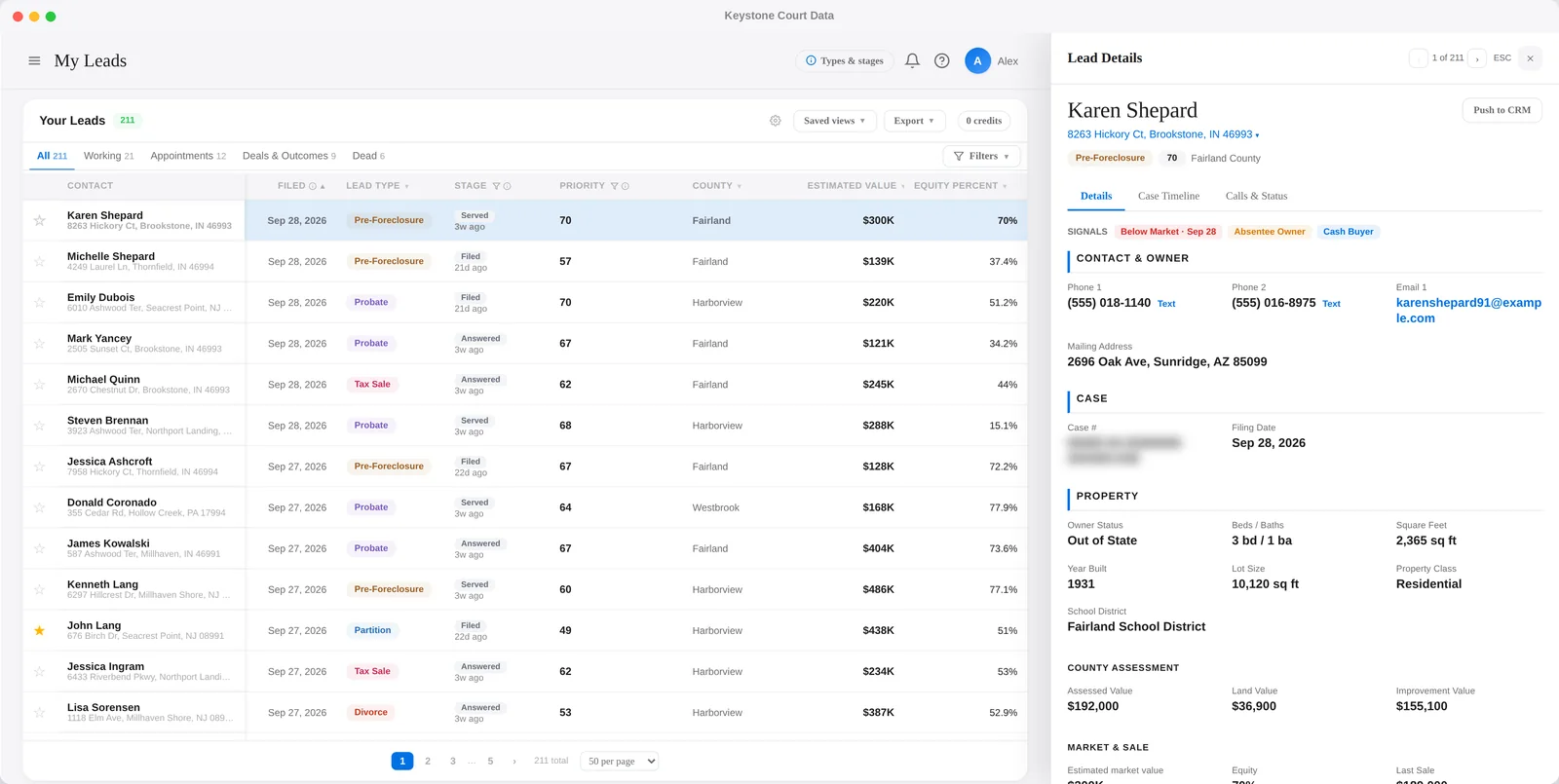
Keystone's Yancey County page describes the lead types available, and you can read more about pre-foreclosure leads in general.
Questions investors ask
Is foreclosure judicial in North Carolina?
Most residential foreclosures in North Carolina proceed by power of sale under a deed of trust, with a hearing before the clerk of superior court. It is not a full civil lawsuit in most cases. Some situations can still end up in front of a judge, so check with an attorney about a specific property.
Can a homeowner in pre-foreclosure still sell the house?
Often yes, as long as the owner still holds title and the sale has not been completed. A sale that pays off the loan can end the foreclosure. A title company or attorney can review a deal to confirm payoff amounts and liens.
What is an upset bid in North Carolina?
After a foreclosure auction, the sale stays open for a short period, ten days under state law, during which someone can submit a higher bid. If that happens, the process repeats until no new bid arrives. The sale only becomes final once the period passes without one.
Can I call homeowners in pre-foreclosure?
Telemarketing calls are covered by the National Do Not Call Registry, the FTC's Telemarketing Sales Rule and North Carolina's telemarketing law; texting and auto-dialed calls carry more rules. An attorney licensed in North Carolina can say which rules apply to a given campaign.
Who handles foreclosure and estate cases in Yancey County?
The clerk of superior court handles both foreclosure special proceedings and estates. An attorney can confirm the status of a specific case.
General information about North Carolina law. Laws change, so check the current statute. This is not legal advice and does not create an attorney-client relationship. Talk to an attorney licensed in North Carolina before relying on it.
See Yancey County leads for 7 days, free
Real court filings with the owner and property matched. No credit card.